Table of Contents
- What Bag-in-Box Packaging for Juice Means
- Start with the Juice and Distribution Conditions
- Bag Materials and Barrier Selection
- Filling Methods and Process Compatibility
- Fitments, Taps and Dispensing
- Filling Method Comparison
- Buyer Checklist
- How to Prepare an Effective RFQ
- Conclusion
A practical B2B guide to selecting bag-in-box packaging for juice, from juice formulation and barrier-film selection to filling compatibility, dispensing fitments and supplier briefing.
Bag-in-Box Packaging for Juice: What It Is
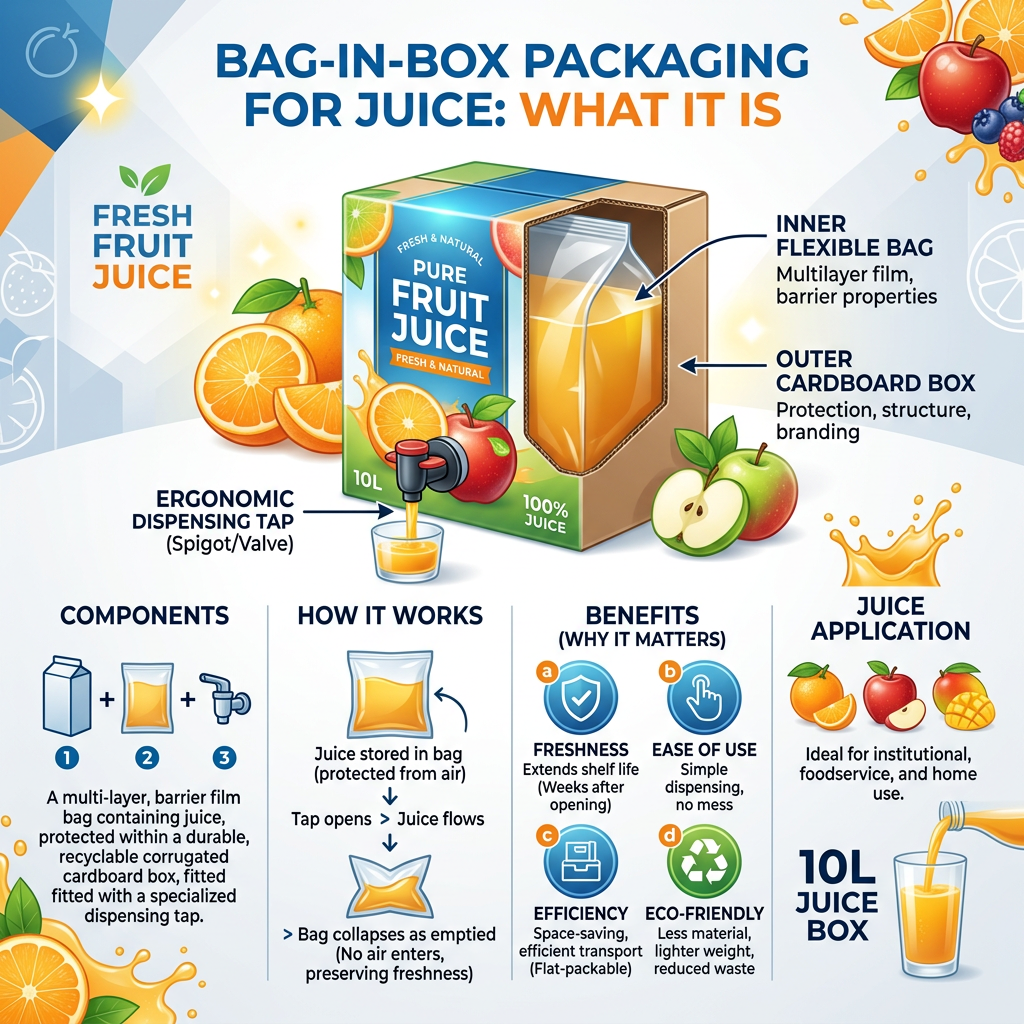
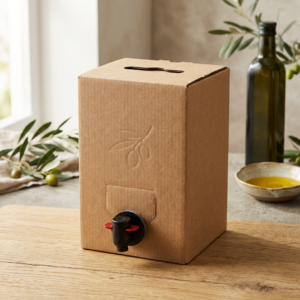
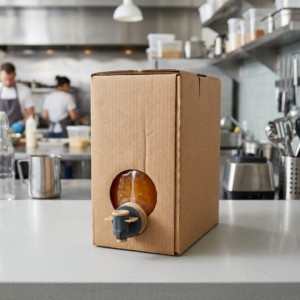
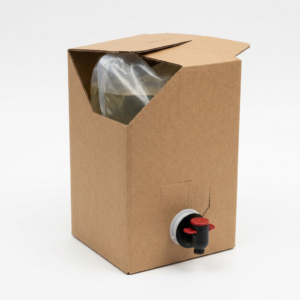
Bag-in-Box packaging for juice is a liquid-packaging system in which juice is held in a sealed flexible bag, connected to a dispensing fitment, and supported by an outer corrugated carton. For B2B juice buyers, it can be a practical format for foodservice, beverage dispensing, institutional supply and selected retail applications because the bag protects the product while the carton provides stacking and handling support.
In this system, the barrier is the material system’s ability to limit the passage of gases, vapour or light-related exposure that may affect a product during its intended shelf life. The fitment is the molded component attached to the bag for filling, closing or dispensing. A tap, cap or valve may be attached to, or work with, that fitment. The correct specification depends on the juice formulation, thermal treatment, filling line, capacity, route to market and expected use after opening.
A bag-in-box is not automatically suitable for every juice simply because it holds liquids. Acid level, pulp content, oxygen sensitivity, preservatives, additives and filling temperature can all change the recommended film structure and closure arrangement. Start by defining the product and process, then ask the packaging supplier to confirm compatibility through appropriate trials.
For a broader explanation of the system components, see this guide to what bag-in-box packaging is.
Start with the Juice and Distribution Conditions

The juice itself should drive the specification. A clear ambient-stable juice, a chilled NFC (not-from-concentrate) juice, a juice concentrate and a pulp-containing beverage can place different demands on the pack. Before selecting films or a dispenser, document the formulation and the complete product journey from filling through opening.
Product characteristics to disclose
- Acidity and ingredients: State the pH range if available, fruit base, sweeteners, acids, preservatives, vitamins, colours and other additives. Ingredient interactions should be assessed rather than assumed.
- Oxygen sensitivity: Juices with flavour, colour or nutrient components that are sensitive to oxygen may need a more carefully selected barrier structure and controlled filling conditions.
- Pulp and viscosity: Pulp, fibres and thicker concentrates can affect flow through a tap or valve. Test the complete bag-and-fitment combination with the actual product.
- Processing: Identify whether the product is cold filled, hot filled, pasteurised, aseptically filled or handled under another validated process. “Aseptic” describes a controlled process designed to maintain commercial sterility; it is not a generic label for any sealed bag.
- Storage and route: Confirm ambient, chilled or frozen conditions; expected transport climate; stacking; and the intended shelf-life target. The outer carton and pallet configuration need to suit this route as well.
It is also important to separate unopened-life requirements from in-use requirements. Once a juice bag is opened and exposed through its dispensing system, product handling, sanitation and the customer’s storage routine become especially important. The pack design can support dispensing, but it does not replace a validated product-handling plan.
Bag Materials and Barrier Selection

Juice bags are commonly made from multilayer flexible films. A multilayer structure combines individual polymer layers so that each can contribute a function, such as sealing, mechanical strength, print protection or barrier performance. The inner product-contact layer must be appropriate for the intended juice and process; other layers may provide strength, puncture resistance or protection against oxygen and light.
Film selection should be made as a system decision, not by choosing a single material name. The bag geometry, seal design, filling temperature, fitment, carton, pallet handling and distribution conditions all affect real-world performance. A structure that works for one capacity or process may require adjustment for another.
Common selection considerations
- Seal integrity: The sealant layer and seal design must suit the filling process and product-contact conditions. Heat exposure, contamination at the seal area and mechanical stress can affect seal consistency.
- Oxygen and aroma protection: Where product quality is sensitive to oxygen pickup or aroma loss, evaluate the barrier needs with the formulation and target shelf life in mind.
- Light protection: Some juice products may benefit from reduced light exposure. Consider the combined protection provided by the bag and opaque outer carton, while confirming the actual distribution environment.
- Mechanical durability: Select for drop, handling, flex-crack and puncture risks appropriate to bag capacity, carton design and logistics. Sharp carton edges, poor pallet restraint and repeated handling can damage even a well-designed bag.
- Material compliance: Confirm that the proposed food-contact materials and documentation align with the destination market and the buyer’s applicable requirements.
Do not treat a high-barrier film as a universal solution. It can add complexity and may not address problems caused by an unsuitable fitment, poor filling control or abusive distribution. Final material selection should be confirmed with the packaging supplier, the juice formulation owner and the filling process.
Filling Methods and Process Compatibility
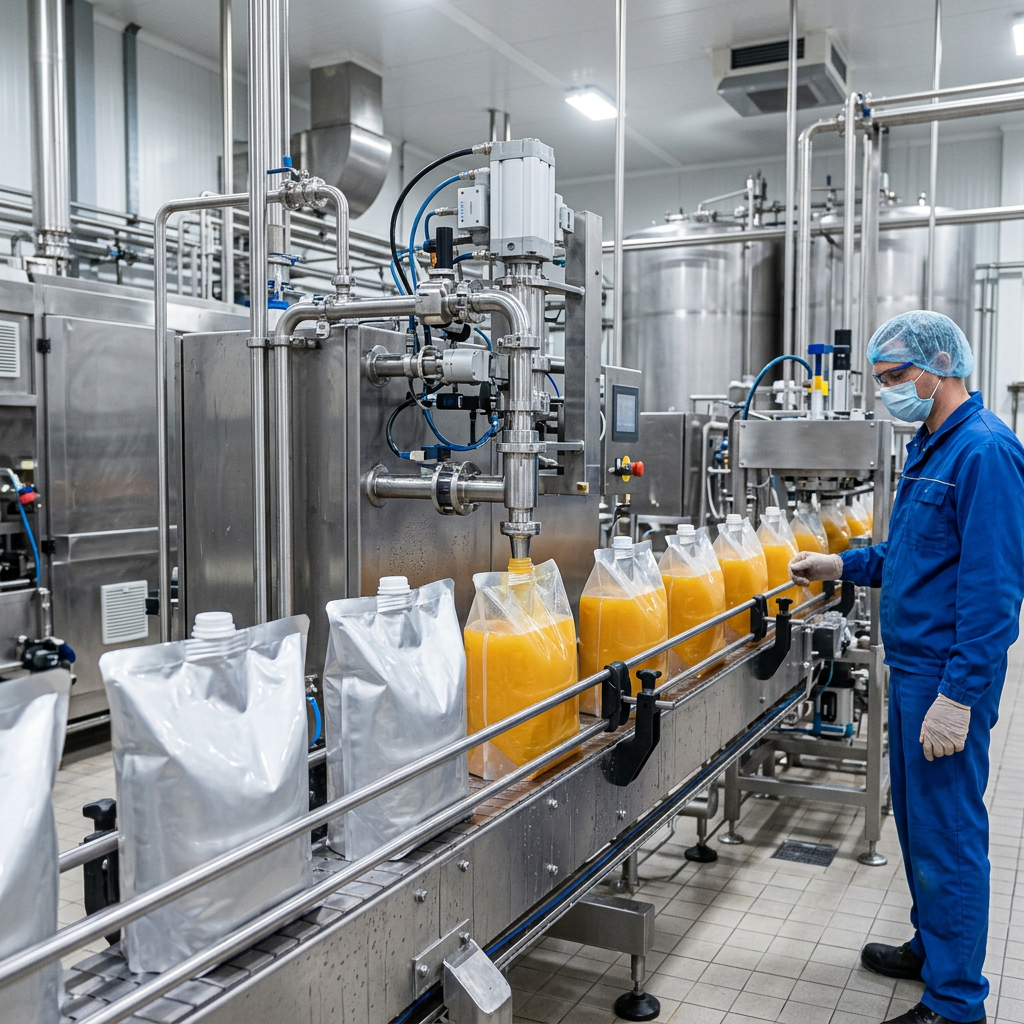
The filling method is one of the first inputs a packaging supplier needs. It determines the heat, hygiene controls and mechanical interfaces the bag, fitment and closure must accommodate. Buyers should share filling equipment details early, including the filling-head type, fitment interface, fill volume, fill temperature, target fill speed and any nitrogen dosing or other process controls.
Cold filling
Cold filling may be used for products whose process and storage plan support it. It avoids hot-fill heat exposure, but the package still needs to match the hygiene standard, product chemistry and cold-chain or other storage requirements. Do not assume that cold-filled juice needs less attention to barrier or seal design.
Hot filling
Hot filling places heat-treated product into the package at an elevated temperature. The selected film, fitment and seal system need to be compatible with the actual temperature and process exposure. Temperature alone is not enough information: dwell time, cooling sequence and whether the filled package is inverted or otherwise handled can also matter.
Aseptic filling
Aseptic filling combines a commercially sterile product with a package and filling environment managed to preserve that condition. It requires a packaging system designed for the equipment and validated process. Buyers should not specify “aseptic bag” without aligning it to the specific filler, sterilisation approach, fitment format and product.
During development, conduct line trials with production-representative bags and the actual juice. Review filling, sealing or capping, leak checks, carton insertion, pallet handling, dispensing and product quality checks at relevant stages. This approach identifies interface issues before larger-scale procurement.
Fitments, Taps and Dispensing for Juice
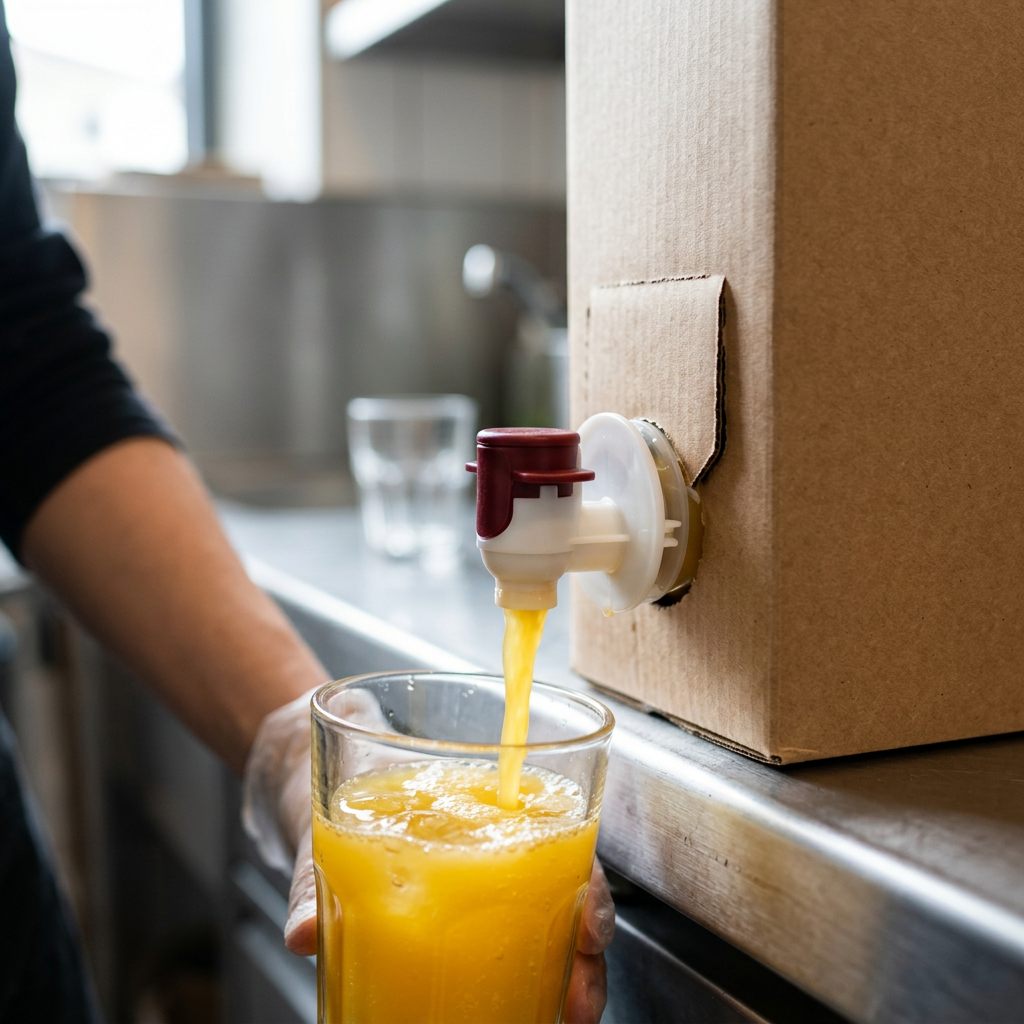
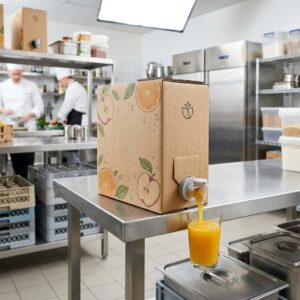
The dispensing interface affects both user experience and product handling. For juice sold to cafés, restaurants, hotels, canteens or beverage-service operators, select the fitment and tap according to how the product will be poured or connected to equipment. A simple manually operated tap may suit gravity dispensing, while a different closure or connector may be needed for a dedicated dispenser.
Assess the following before finalising the fitting: compatibility with the filler; flow behaviour of the juice; opening and tamper-evidence needs; operator ergonomics; drips and resealing; sanitation expectations; and carton cut-out design. Pulp-containing products deserve particular attention because solids can affect dispensing consistency. A larger flow path may be considered, but it must be tested with the actual product, not just water.
Capacity influences fitting choice as well. Small formats may be handled and poured directly, whereas larger foodservice packs are often dispensed from a countertop or back-of-house position. Ensure the carton opening supports the selected tap and that the bag is correctly positioned inside the carton to avoid twisting, stress or restricted flow.
For first-time buyers, reviewing bag-in-box component terminology and functions can make technical discussions with filling-line and packaging teams more efficient.
Juice Filling Method Comparison
| Filling approach | Packaging implications | Key buyer questions |
|---|---|---|
| Cold filling | Specify hygiene conditions, storage plan and product-contact compatibility. Thermal resistance may be less central than for hot filling, but seals and barrier needs still require evaluation. | What storage temperature is used? What sanitation controls apply? What unopened and in-use conditions are intended? |
| Hot filling | Bag film, seals, fitment and carton insertion sequence must tolerate the defined process exposure. Cooling and downstream handling can influence pack stress. | What are the actual fill temperature, dwell time, cooling method and line-handling steps? |
| Aseptic filling | The package must be aligned with the validated aseptic equipment and process. Compatibility involves the bag, fitment, sterilisation approach and filler interface. | Which filler and fitment interface are used? What process validation and packaging requirements apply? |
This table is a scoping tool rather than a process-validation guide. Final material and filling recommendations must be confirmed by the packaging supplier and the filling process owner.
Bag-in-Box Packaging for Juice Buyer Checklist
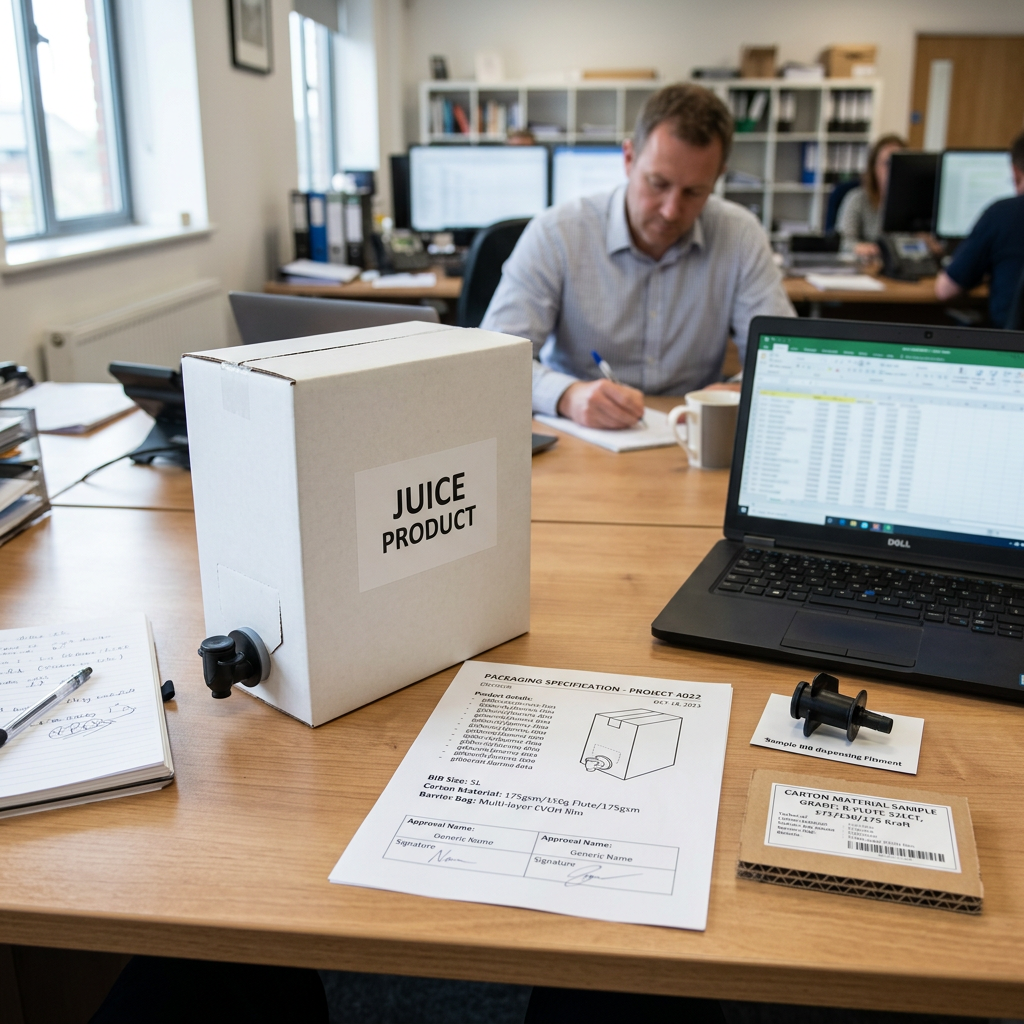
A complete brief reduces avoidable sampling cycles and helps suppliers provide a more relevant proposal. Use this checklist when requesting bag-in-box packaging for juice:
- Product: juice type, ingredient list or formulation summary, acidity information if available, pulp level, viscosity, preservatives and sensitivity concerns.
- Process: cold fill, hot fill or aseptic process; filling temperature; filler make or interface details; intended fill volume; and filling-line constraints.
- Pack format: required nominal capacity, dimensional restrictions, bag style, fitment or tap preference, carton style and dispensing orientation.
- Product life and storage: unopened target, post-opening handling expectation, ambient/chilled/frozen storage and distribution climate.
- Quality expectations: required testing, food-contact documentation needs, artwork approval workflow, traceability expectations and acceptance criteria.
- Commercial scope: forecast quantity, order pattern, destination market, shipping method and whether bags, cartons or a complete system are required.
- Artwork: print files, colour references, mandatory labelling content, carton marking and language requirements for the destination market.
Include the end-use case. A five-litre juice bag used behind a café counter, for example, should be evaluated differently from a larger pack used in institutional foodservice. The liquid may be similar, but dispensing frequency, operator handling, carton access and hygiene routines can differ significantly.
How to Prepare an Effective Juice Bag-in-Box RFQ
An RFQ (request for quotation) should give suppliers enough technical context to assess feasibility, not only a bag size and printed-artwork request. A useful RFQ describes the juice, filling conditions, pack capacity, dispensing method, destination market, estimated demand and required scope of supply. Attach drawings or photographs of the existing fitment and filler interface where relevant.
Ask the supplier to identify assumptions in its proposal. For example, confirm whether the recommendation covers the inner bag only or also includes the carton; whether the proposed fitment has been selected for the specified filling method; and which details need confirmation through trials. This creates a clearer basis for comparing suppliers and avoids treating non-equivalent proposals as directly comparable.
Supplier evaluation should also consider technical communication, sample relevance, quality-control approach, export packaging and ability to coordinate printed flexible packaging with the intended carton format. HUACANG Packaging Manufacturing Co., Ltd. is a Guangzhou-based flexible packaging manufacturer established in 1998, with a 15,000 square metre facility and 9-colour printing and laminating lines serving global B2B customers. For market context, buyers can also review considerations when comparing bag-in-box manufacturers.
Conclusion
Successful bag-in-box packaging for juice begins with the product and the filling process, then brings together the bag film, seals, fitment, carton and logistics plan as one system. Define the juice formulation, processing method, dispensing use and destination-market requirements before approving a structure. Confirm final material selection with the packaging supplier and validate it on the intended filling process using the actual product.
FAQ
What material is used for bag-in-box juice bags?
Bag-in-box juice bags commonly use multilayer flexible films. The structure is selected for sealing, mechanical durability and the barrier needs of the specific juice. The final material should be confirmed with the packaging supplier based on the formulation, filling temperature, target product life and distribution conditions.
Can bag-in-box packaging be used for pulp juice?
It can be considered for pulp-containing juice, but the product must be tested with the intended fitment and dispensing arrangement. Pulp level, particle size and viscosity can affect flow, so a water trial alone is not sufficient.
What filling information should a juice packaging supplier receive?
Provide the filling method, filler interface, fill temperature, nominal volume, processing controls, storage conditions and intended dispensing method. Include product formulation information and destination-market requirements where available.
Is aseptic bag-in-box packaging the same as hot-fill bag-in-box packaging?
No. Hot filling uses elevated product temperature, while aseptic filling is a controlled process that combines commercially sterile product with a package and filling environment designed to maintain that condition. Each process requires package compatibility assessment.
Discuss Your Juice Bag-in-Box Project
Share your juice type, bag capacity, liquid characteristics, filling process, fitting or valve needs, printing requirements, quantity and destination market so the packaging system can be assessed for your application.