Table of Contents
- What Bag-in-Box Taps and Fitments Do
- Start With the Liquid and Product Risk
- Match the Fitment to the Filling Process
- Select the Tap for the Dispensing Experience
- Material and Barrier Considerations
- Storage and Distribution Considerations
- Procurement Checklist for Taps and Fitments
- Common Selection Mistakes
- Conclusion
A practical procurement guide to selecting Bag-in-Box taps and fitments around liquid properties, pack format, filling conditions, dispensing needs and supplier validation.
What Bag-in-Box Taps and Fitments Do
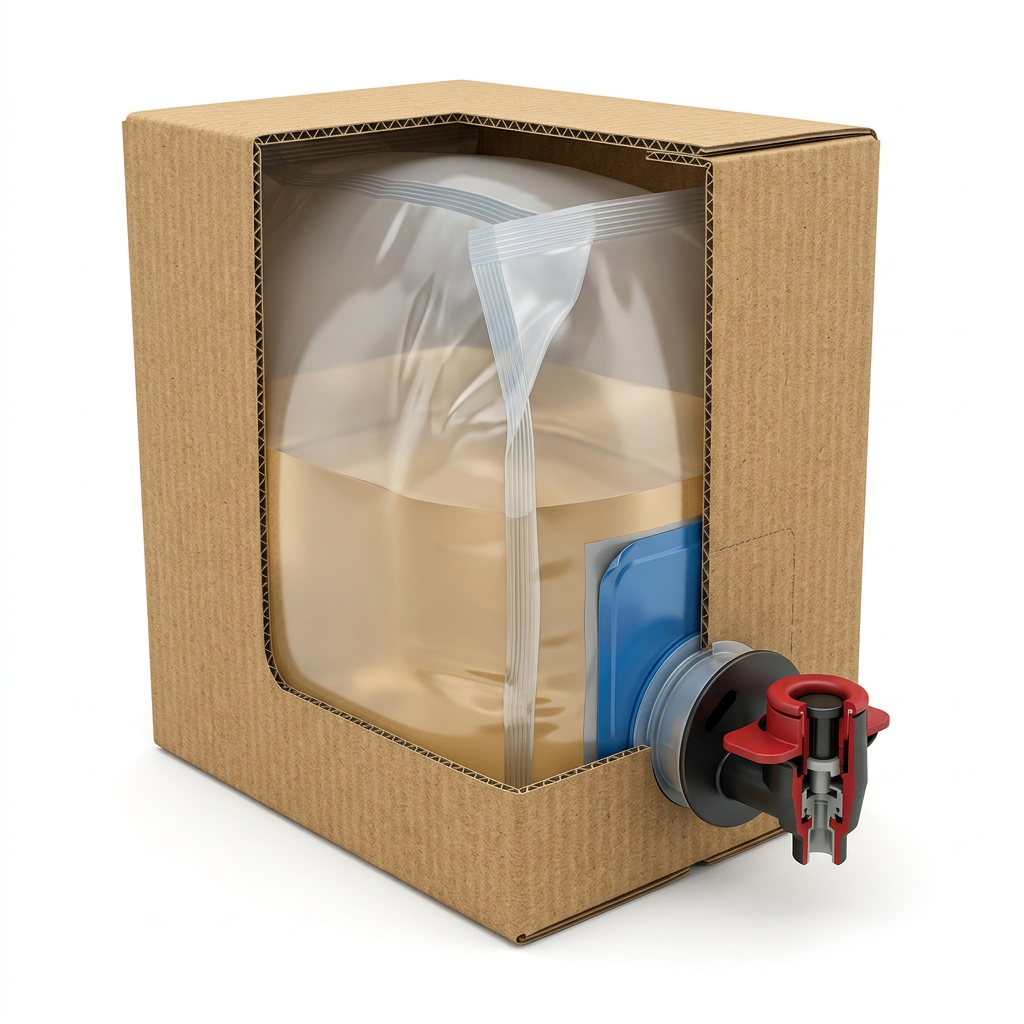
Bag-in-Box tap and fitment selection should begin with the liquid, the filling method, the intended dispensing experience and the distribution environment. A fitment is the component sealed to the flexible bag that creates an opening for filling or dispensing. A tap, also called a dispensing valve, is the consumer- or operator-facing closure that controls product flow. The right combination helps the pack fill consistently, dispense cleanly and protect the product throughout its intended shelf life.
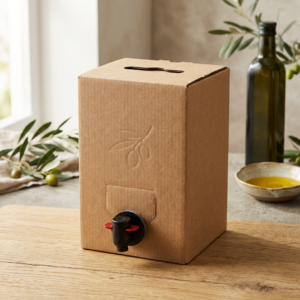
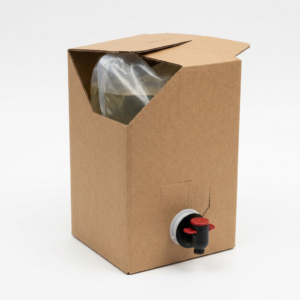
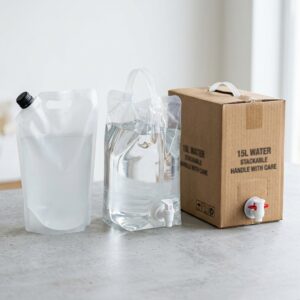
Bag-in-Box (BIB) is a liquid packaging system comprising a flexible inner bag, a fitment or dispensing component, and an outer corrugated carton. The bag carries the liquid; the carton supports handling, stacking and retail or foodservice presentation. For a broader explanation of the pack format, see this guide to Bag-in-Box packaging.
A tap and fitment are not interchangeable commodity parts. Their dimensions, welding area, polymer construction, valve design and interface with the filler can affect leakage resistance, flow control, tamper evidence and ease of use. Final material and component selection should always be confirmed with the packaging supplier and the actual filling process.
Start With the Liquid and Product Risk
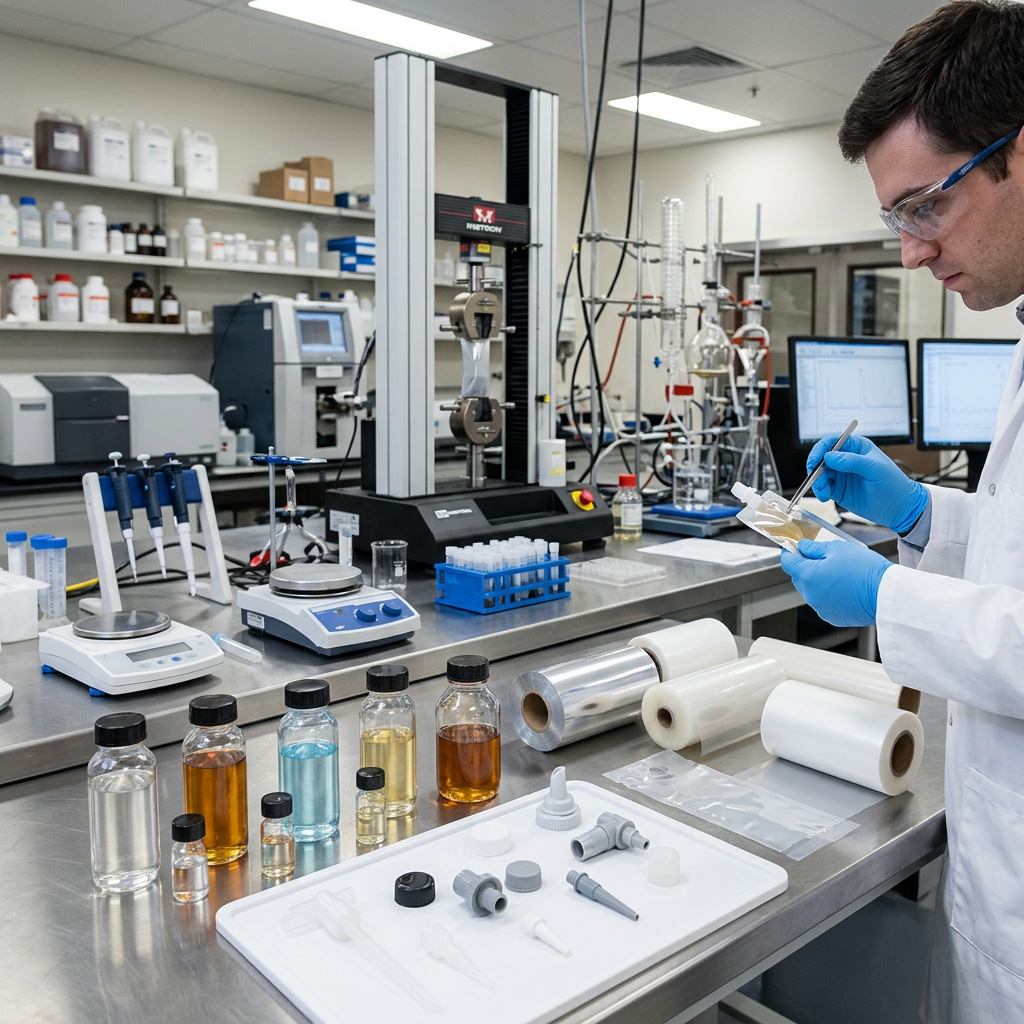
Procurement teams should describe the product before requesting a tap style. Liquid chemistry and physical behavior influence both the bag structure and the dispensing component. Record viscosity, acidity or alkalinity, oil or alcohol content, sugar content, particulates, aroma sensitivity, product temperature at filling, expected storage temperature and required service life.
Low-viscosity products such as water-based beverages, juices and many cleaning liquids generally need controlled flow and reliable shutoff. More viscous products, including sauces, syrups, concentrates and some oils, may require a flow path that can dispense the product without excessive force or prolonged draining. Products containing pulp, spices or other particles need additional evaluation because particles can obstruct narrow passages or interfere with valve closure.
For food, beverage, chemical or personal-care applications, compatibility must cover all product-contact layers and the tap or fitment. A component that appears suitable for one liquid should not be assumed suitable for another. Ask the supplier to review the intended liquid, concentration, filling temperature and use conditions, then validate the complete pack with representative product.
Match the Fitment to the Filling Process
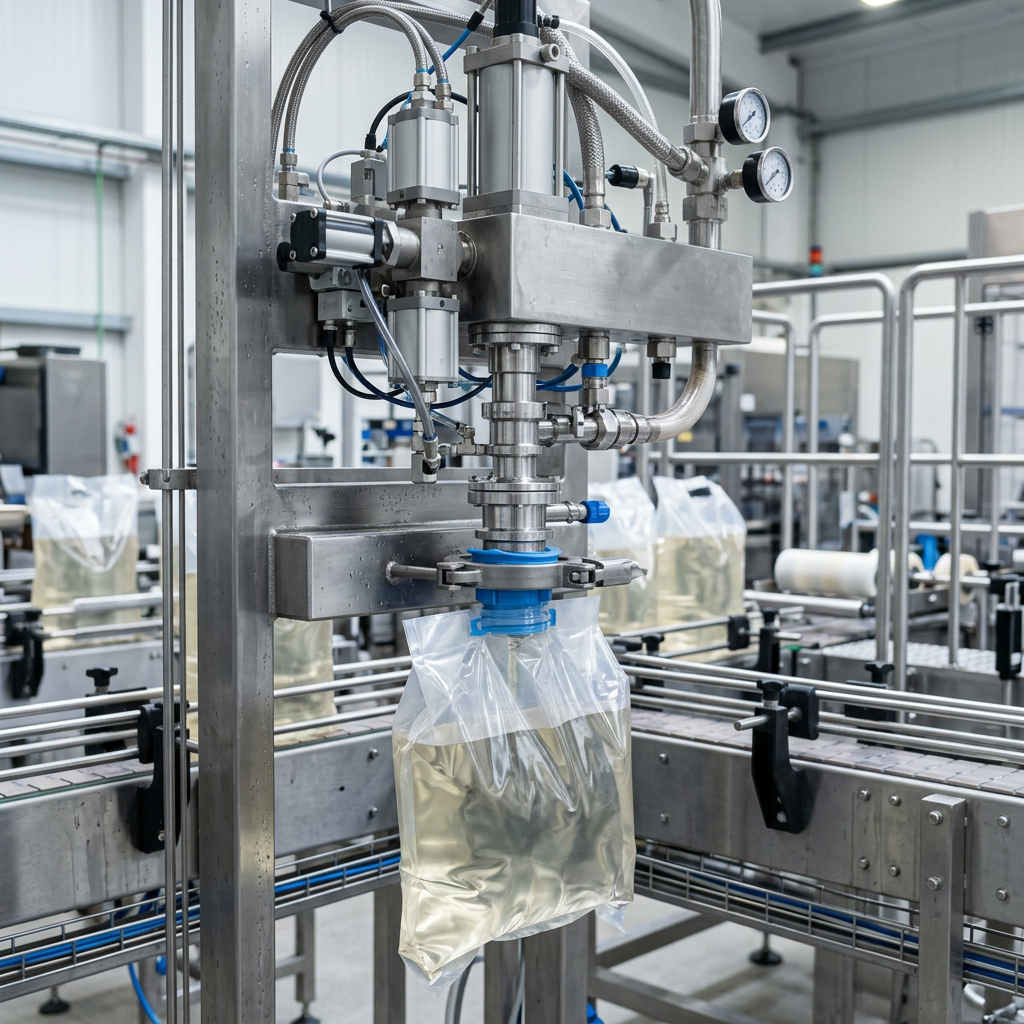
The filling process determines how the fitment will be handled before it becomes a dispensing point. A filling fitment may be designed for manual, semi-automatic or automated equipment, but its suitability depends on the filler head, filling orientation, capping method and operating controls. Share drawings, samples or interface requirements early when a line already exists.
Key questions include whether the bag is filled through the fitment, whether the tap is applied before or after filling, whether the process uses hot filling, and whether the operation needs a specific closure sequence. If product preservation depends on a controlled hygienic or aseptic process, the fitment, bag construction and filling system must be engineered and validated together. “Aseptic” refers to a system intended to prevent contamination after product sterilization; it is not a property that can be assumed from the appearance of a tap.
Fitment placement also matters. A corner position can support upright dispensing and carton integration, while a centered or specially located fitment may better suit particular filling or application requirements. The carton die-cut, bag geometry and tap clearance should be reviewed as one assembly to avoid interference during erection, packing or use.
Select the Tap for the Dispensing Experience
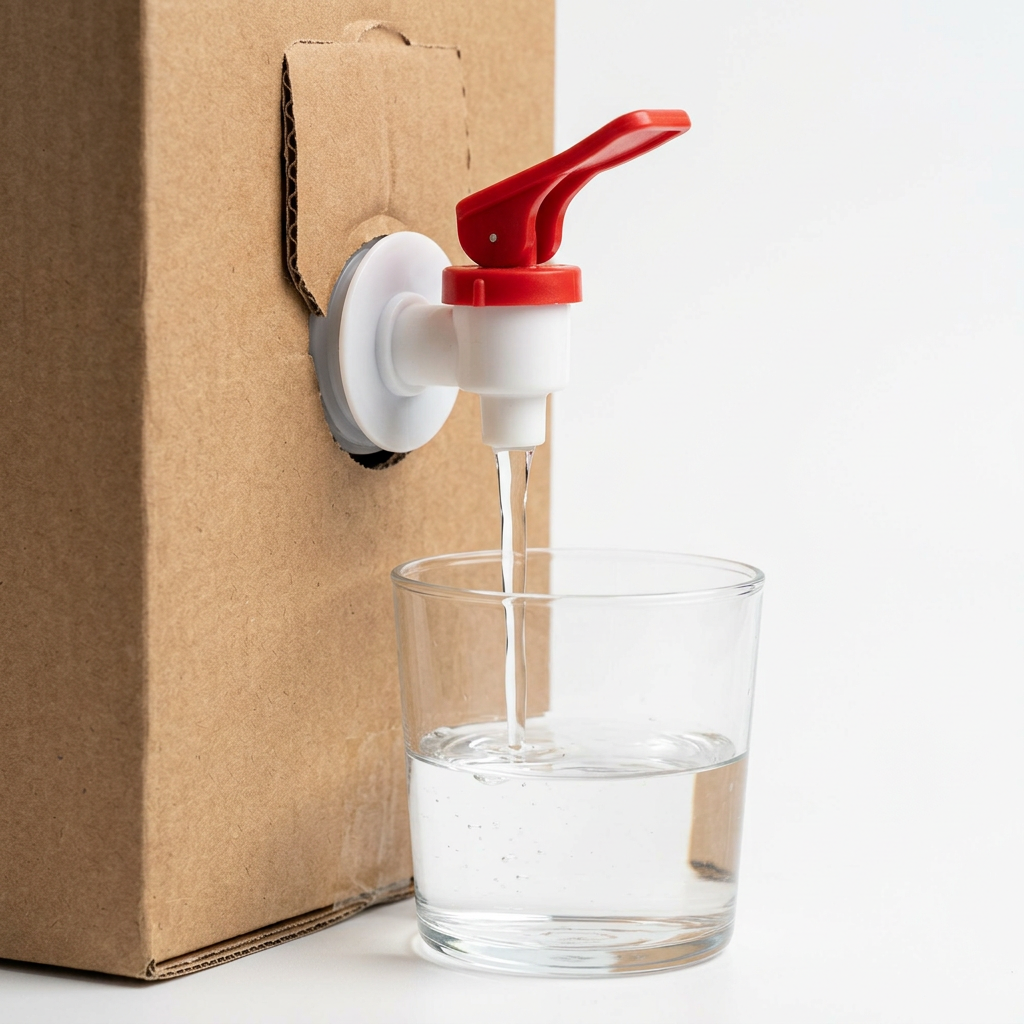
Choose the tap around the use case rather than visual preference alone. A foodservice operator may prioritize quick, repeatable pouring and a secure closed position. A retail consumer may value intuitive opening, clean flow and a design that fits the carton presentation. Industrial users may need a connection or dispensing format that works with downstream equipment.
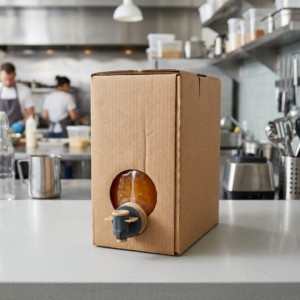
Evaluate the valve’s opening action, flow control, shutoff behavior, residual product management and protection during transport. The outer carton must expose the tap correctly without putting continuous stress on the component. If the pack is intended to dispense while upright, test it in the actual carton and at realistic product levels; dispensing behavior at a full bag can differ from behavior near empty.
Tamper-evident features, caps or protective covers may be relevant where the sales channel or application requires visible opening indication or added protection. These features should be specified by function and validated in the finished pack, rather than selected solely from a component catalogue.
Material and Barrier Considerations
Barrier is a packaging material’s ability to limit the movement of gases, water vapor, light or aroma between the product and its environment. The required barrier level depends on the product and its storage conditions. The flexible bag is commonly a multilayer structure, with different layers contributing sealing, mechanical strength, compatibility and barrier functions.
The fitment and tap must be compatible with the bag’s seal area and with the liquid. A technically suitable bag film does not guarantee a suitable assembled package if the weld between the fitment and bag is not designed for the structure or process. Review the sealing method, fitment flange geometry and component resin with the packaging supplier.
Do not specify a high-barrier structure by default. Extra barrier layers or different constructions may be appropriate for oxygen-sensitive, aroma-sensitive or long-storage products, but selection should follow product testing and target market requirements. Equally, an under-specified structure can create avoidable quality risk. Confirm the final material selection with the supplier and filling process after reviewing the real liquid, conditions and expected distribution cycle.
Storage and Distribution Considerations
Component selection should reflect the full supply chain, including pallet handling, warehouse temperatures, export transport, carton compression and the way users access the tap. Temperature swings can change liquid viscosity and may influence how the package performs. Long routes or demanding handling conditions make finished-pack testing especially important.
Review the carton opening around the tap, the fit of the bag in the carton and the protection available before first use. A poorly aligned die-cut can make a correctly selected tap difficult to reach or vulnerable to accidental force. For products shipped internationally, include the destination market, intended climate and transport conditions in the procurement brief.
Supplier capability is also part of risk management. Buyers evaluating potential partners can use this overview of Bag-in-Box manufacturers as a starting point, then assess whether each supplier can support the required bag, fitment, printing and validation workflow for the application.
Procurement Checklist for Taps and Fitments
A clear request for quotation reduces the risk of comparing components that are not truly equivalent. Provide the following information before finalizing a tap and fitment specification:
- Product name, composition summary, viscosity, presence of particles and relevant compatibility concerns.
- Bag capacity, fill volume, filling temperature, fill orientation and filling equipment details.
- Target storage conditions, distribution route, destination market and expected application.
- Preferred dispensing action, required flow behavior, cap or tamper-evidence needs and carton presentation.
- Bag structure expectations, printing requirements, outer carton configuration and any test or approval process.
Request samples for line trials and filled-pack evaluation before committing to a production specification. Define acceptance criteria in advance, such as seal integrity, filling performance, dispensing function, carton fit and appearance after representative handling. A documented trial process gives purchasing, quality and operations teams a shared basis for approval.
Common Selection Mistakes
One common mistake is selecting a tap from a previous project without reviewing whether the new liquid, fill temperature or carton format has changed. Another is treating the bag and dispensing component as separate purchases even though their seal interface and process compatibility are linked.
Buyers can also underestimate operational details: whether a filler can engage the chosen component, whether operators can access it efficiently, or whether the carton opening supports the desired user experience. Finally, laboratory component checks alone may not reveal problems that emerge after filling, transit, storage and repeated dispensing.
Use a complete-pack validation approach. Confirm the final bag material, fitment, tap, carton and process settings with the packaging supplier and filling team before release. This is the most reliable route to a specification that is practical to source and suitable for the intended product.
Conclusion
Effective Bag-in-Box tap and fitment selection is a system decision. Begin with the liquid and its risks, match the component to the filling process, select dispensing behavior for the user, and verify the bag, fitment and carton as a complete package. Early technical alignment gives liquid brands a clearer procurement specification and reduces avoidable trial-and-error during commercialization.