Table of Contents
- What Is Juice Bag-in-Box Packaging?
- Barrier Requirements for Juice, Nectar and Concentrate
- Juice Packaging Format Comparison
- Aseptic and Hot-Fill Routes for Juice
- Filling and Fitment Selection
- Storage and Distribution Considerations
- What to Include in a Juice BIB Specification
- Final Selection for Juice Bag-in-Box
A practical B2B guide to selecting juice bag-in-box packaging for fruit juice, nectar and juice concentrates. Review barrier needs, filling routes, dispensing fitments, storage controls and procurement specifications.
What Is Juice Bag-in-Box Packaging?
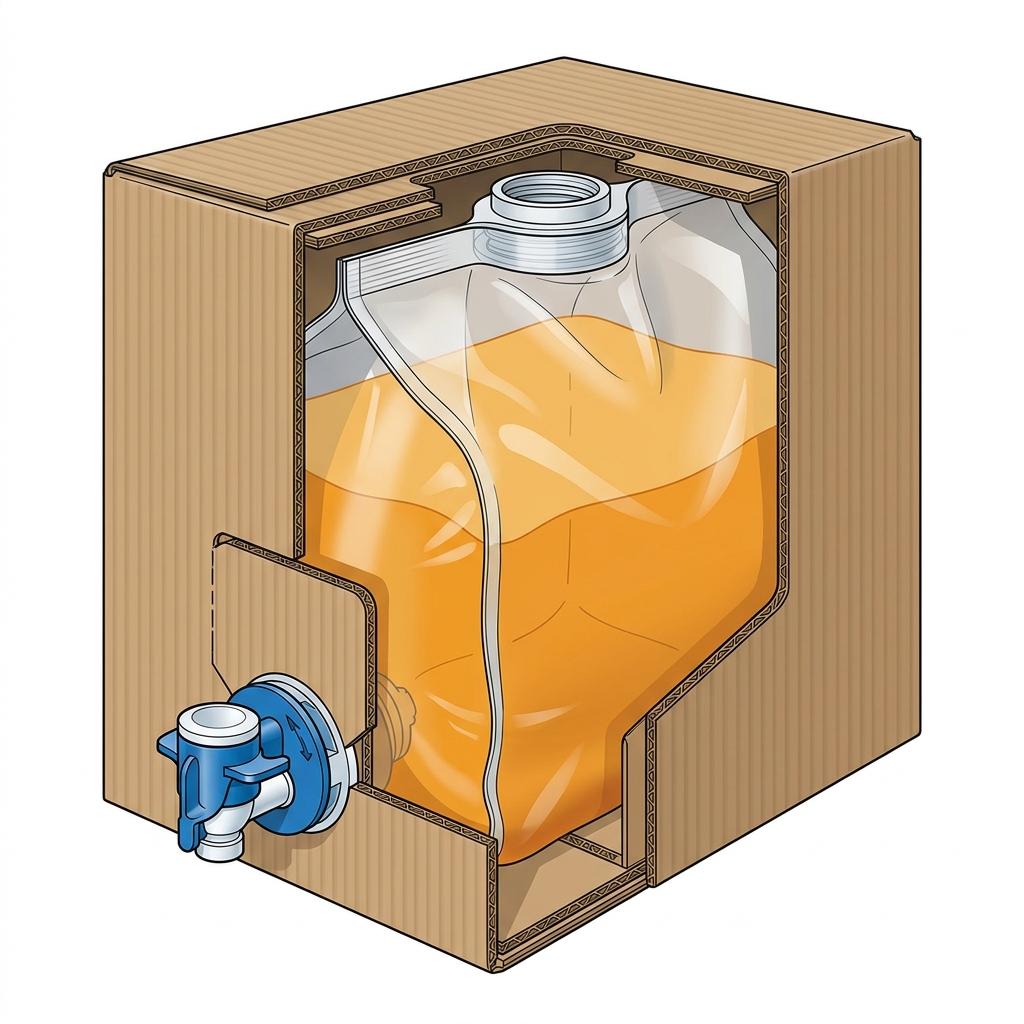
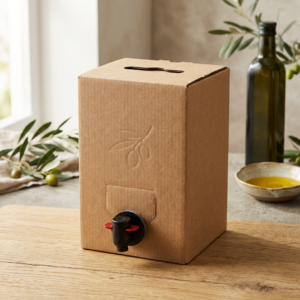
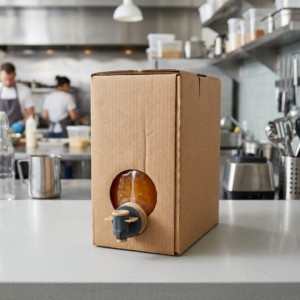
Juice bag-in-box packaging is a liquid packaging system that places juice in a flexible inner bag, usually with a fitment or dispensing tap, inside a protective corrugated outer carton. For juice brands, foodservice operators and ingredient suppliers, the system can be configured for ready-to-drink fruit juice, nectar, juice bases and concentrates. The right configuration depends on the recipe, process, storage route and dispensing method rather than on bag capacity alone.
In this article, barrier means a packaging material’s resistance to the transmission of substances such as oxygen, water vapour or aroma compounds. A fitment is the rigid plastic component sealed into the bag to enable filling, closing or dispensing. Aseptic filling means commercially sterile product is filled into a pre-sterilized package in a controlled sterile environment; it is a complete processing and packaging system, not simply a bag type.
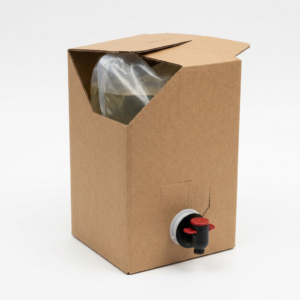
A bag-in-box normally has three coordinated parts: a multilayer liquid-contact bag, a fitment or valve, and a carton that protects the bag during handling and supports stacking. Review how bag-in-box packaging works before comparing formats, especially when a product will move through multiple distributors or will be dispensed after opening.
Barrier Requirements for Juice, Nectar and Concentrate
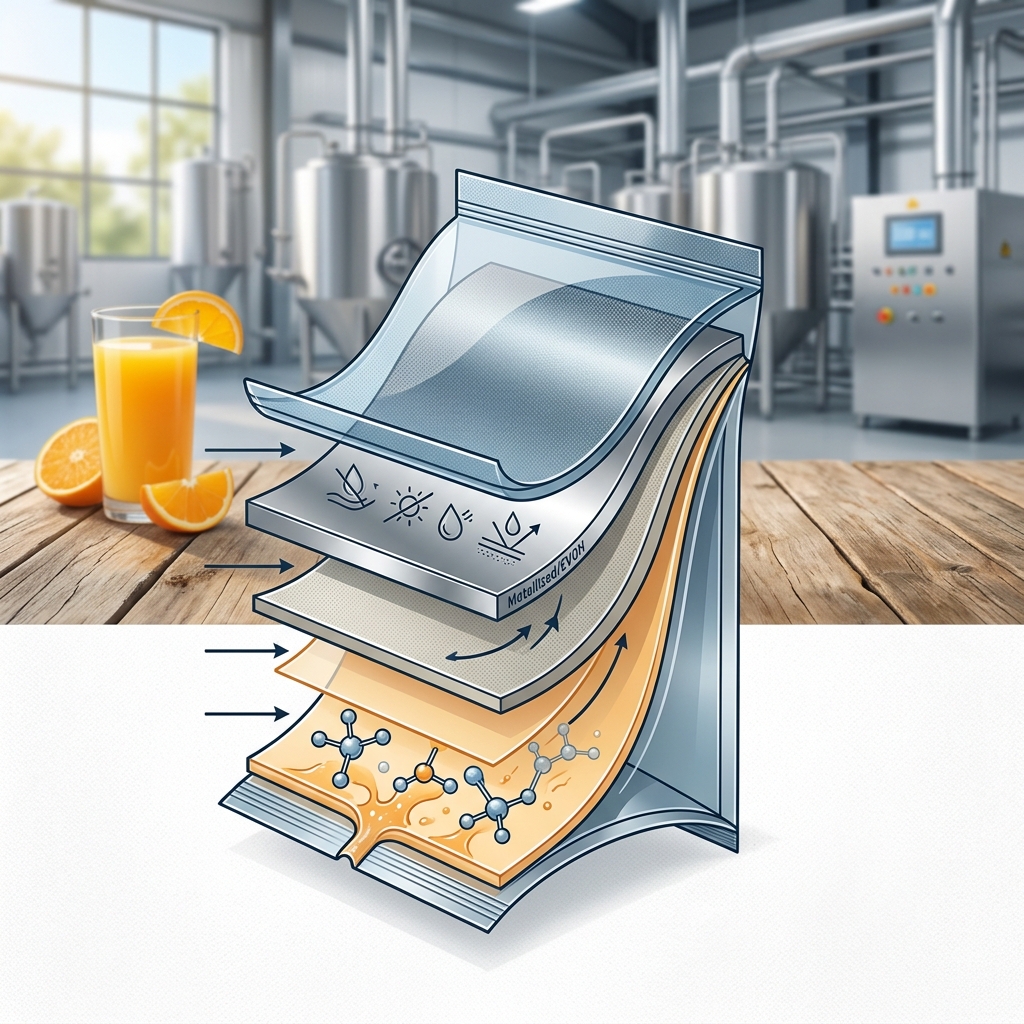
Juices can be sensitive to oxygen pickup, aroma loss, light exposure and flavour change. The level of sensitivity varies materially among clear juice, cloudy juice, citrus blends, berry products, vegetable-fruit blends, sweetened nectar and concentrate. Oxygen barrier is often a central consideration because oxidation may affect flavour, colour and selected nutrients over the intended shelf-life. However, barrier film alone cannot compensate for unsuitable product processing, poor package sanitation, inadequate seals or inappropriate storage conditions.
Multilayer structures combine polymers with different functions. Depending on the approved application, these can include a food-contact sealant layer, structural layers and a barrier layer. The liquid-facing layer must be appropriate for the juice formulation and filling conditions. The barrier layers and total construction should be selected against the product’s oxygen sensitivity, acidity, pulp content, intended shelf-life, filling method and distribution environment.
For juice concentrate bag-in-box, higher soluble solids and product viscosity may change filling behaviour but do not automatically remove oxidation or flavour-protection concerns. For nectar flexible packaging, pulp, stabilizers or fibres can influence how the product flows through a fitment and how completely it is dispensed. A representative product compatibility review should therefore include the actual formula, not only the product category name.
For a broader material-selection framework, see how to choose bag-in-box packaging materials for beverages. Final film structure should be confirmed with the packaging supplier and the filling process after product and line trials.
Technical caveat: UV exposure, elevated warehouse temperatures, headspace management, sanitation and seal integrity can all affect final package performance. Evaluate the finished bag, fitment and carton together, not as independent components.
Juice Packaging Format Comparison
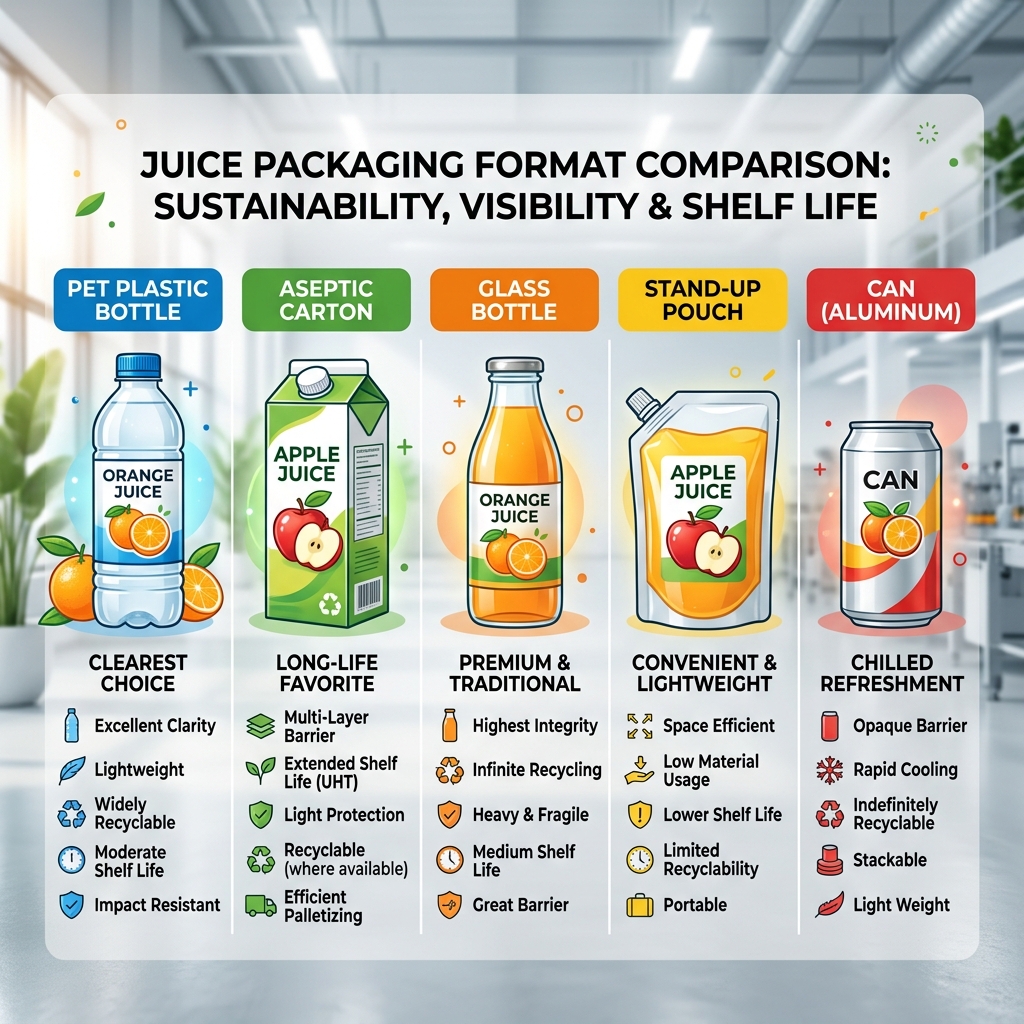
The table below compares common flexible and rigid format approaches for juice. It is a preliminary selection tool, not a substitute for validating the specific package with the juice formula, process and distribution route.
| Format | Typical application | Barrier and protection focus | Filling and dispensing considerations |
|---|---|---|---|
| Juice bag-in-box packaging | Foodservice juice, family-size retail packs, office beverage service, juice bases and concentrates | Film barrier plus carton protection; structure should match product sensitivity and storage plan | Requires bag, fitment, carton and compatible filling equipment; tap or connector selected for service method |
| Juice pouch packaging | Single-serve or smaller consumer portions | Flexible-film barrier is selected around the product and route; external handling protection may be lower than a carton-supported BIB | Spout, straw or tear opening depends on consumer use and filling equipment |
| Rigid bottle or jug | Retail, short-service or reuse-oriented formats | Material, closure and light exposure need review; product remains in a rigid container after opening | Uses bottle filling and closure operations; pour control depends on neck and cap design |
| Drum or large liner system | Industrial juice ingredients and bulk transfer | Liner compatibility and outer-container protection are key | Usually filled and emptied through larger connections for processing operations |
Fruit juice BIB packaging is especially relevant where the customer needs controlled dispensing from a larger pack. A well-matched system can help keep the product enclosed during dispensing, but the practical benefit depends on the tap design, opening instructions, sanitation practices and after-opening storage conditions.
Aseptic and Hot-Fill Routes for Juice
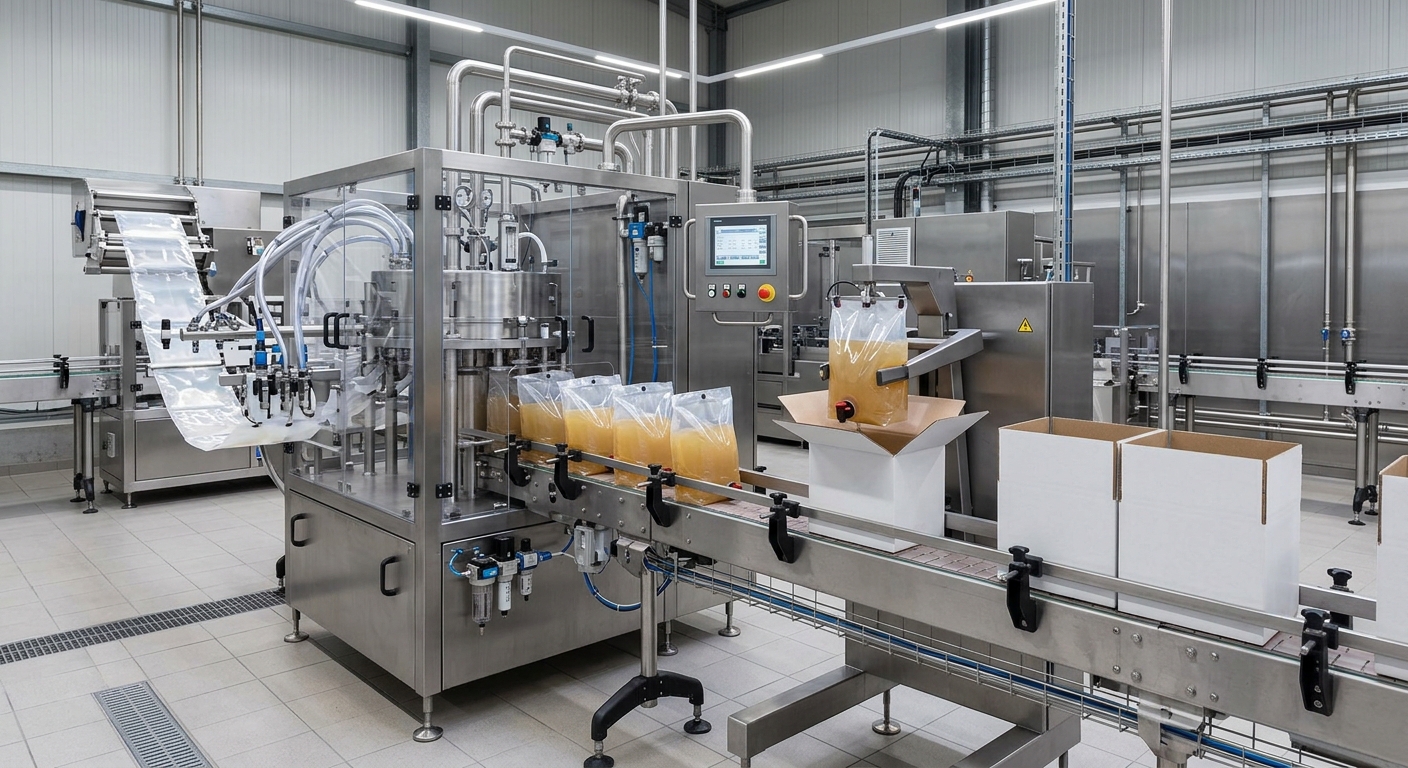
Juice processing and package selection must be designed as one system. An aseptic juice bag is used within an aseptic system where the treated product, package, fitment and filling environment are managed to maintain commercial sterility. This route may be considered for shelf-stable juice products, but it requires suitable line capability, validated sanitation practices and packaging components made for the process.
Hot fill is different. In hot-fill operations, product is filled at an elevated temperature and the pack is closed according to the validated process. The bag film, fitment, seals and handling sequence must tolerate the actual fill conditions. Cooling, carton erection timing and pack handling should also be reviewed so that the system is not exposed to unintended stress.
Neither route should be selected by product name alone. Juice pH, preservative system, thermal history, particulate content, target shelf-life, market regulations and customer storage expectations all influence the process decision. A chilled distribution product may follow a different route from a shelf-stable ambient product, even if both are described as fruit juice.
Read the detailed comparison of aseptic versus hot-fill bag-in-box systems when aligning packaging with your process authority and filling line. The pack manufacturer can advise on compatible construction, but product safety validation remains the responsibility of the brand owner and qualified processing team.
Filling and Fitment Selection
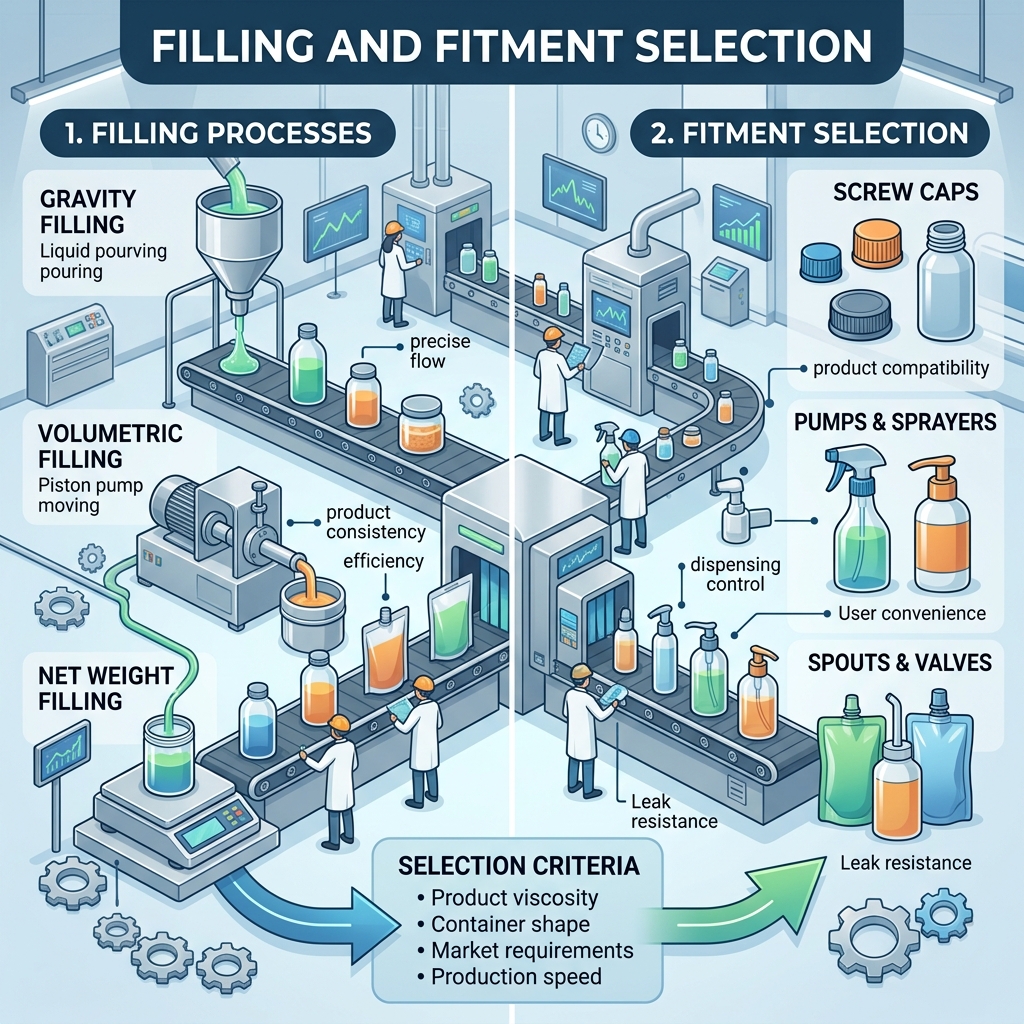
The filling connection and dispensing fitment should be selected around the actual operation. Important inputs include fill temperature, filling head type, required throughput, pack orientation, juice viscosity, pulp level, foaming tendency and the intended end-user dispense method. A low-viscosity clear juice may be suitable for a different outlet geometry than a thick nectar or a concentrate intended for dilution.
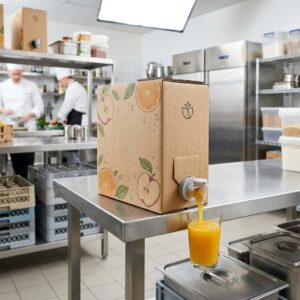
For a juice dispensing bag used in foodservice, buyers should define whether the pack is meant to pour, dispense through a tap, connect to a beverage system or feed a processing line. The fitment must interface with the selected filling equipment and the customer’s dispenser or service routine. It should also be positioned and supported correctly within the carton so users can access it without damaging the bag.
- Specify the bag capacity and target fill volume separately, including any required headspace.
- State product temperature at filling and whether the pack is aseptically filled, hot filled or filled under another validated process.
- Provide viscosity and pulp or particle information, including expected variation across batches.
- Identify the desired filling connector, dispensing valve or tap style and user opening method.
- Confirm whether the outer carton needs a perforated dispense panel, handle arrangement or specific orientation marks.
Use this bag-in-box valve and fitment guide for liquid products to structure early discussions. A sample run on the intended filling equipment is the practical way to confirm filling, sealing, carton loading and dispensing performance.
Storage and Distribution Considerations
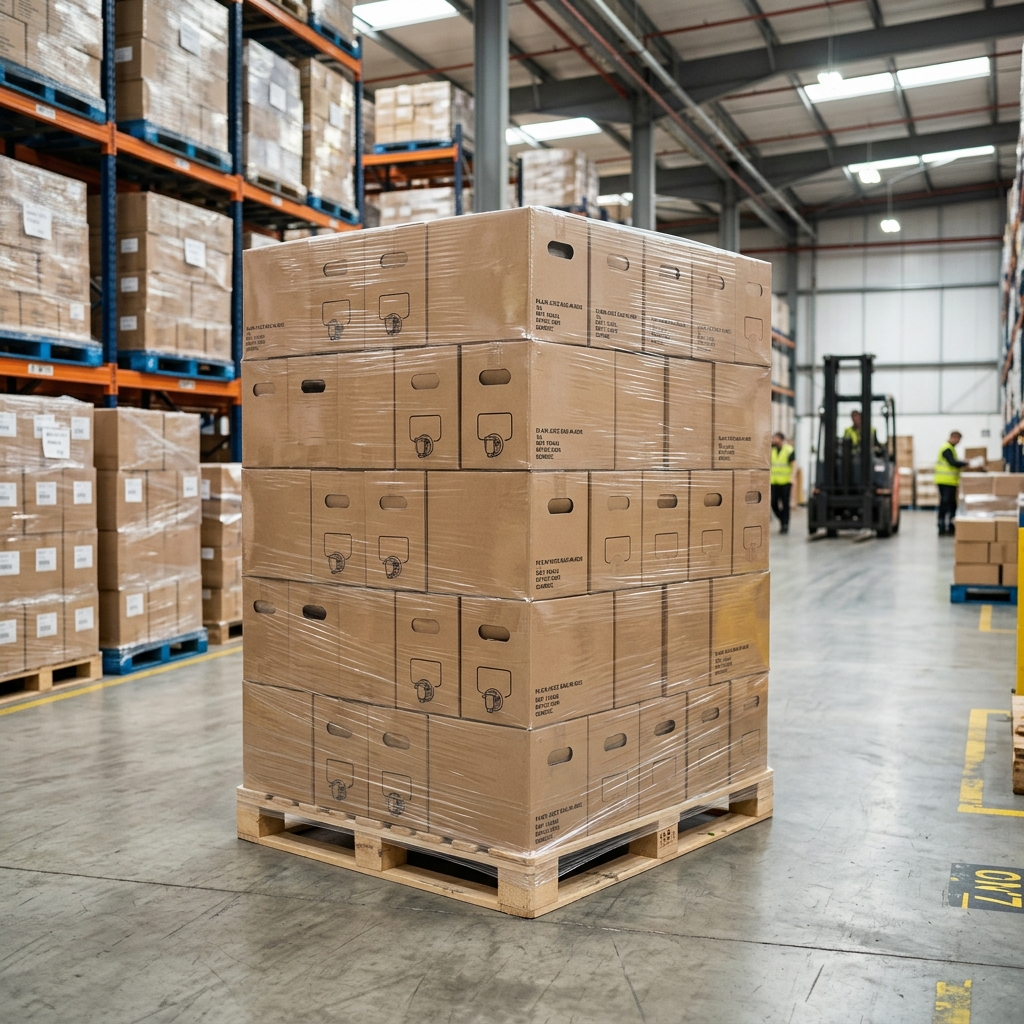
Storage requirements for juice bag-in-box packaging begin with the validated product process and label instructions. Ambient, chilled and frozen distribution each place different demands on the product and pack. Buyers should communicate the expected warehouse temperature range, transport route, pallet configuration, stock rotation method and risk of extended heat or direct-light exposure. These conditions affect both juice quality management and the selection of film, carton and pallet protection.
The outer carton is more than a printed cover. It helps protect the flexible bag from abrasion, puncture and compression during warehousing and transport. Carton size, board selection, die-cut features, bag fit and pallet pattern should be considered together. A bag that is suitable in a controlled filling room can still be vulnerable if the filled carton is loosely packed, repeatedly handled or stacked outside the approved transport arrangement.
After opening, procedures should address dispenser cleanliness, tap handling, product temperature where applicable, cleaning of external surfaces and the brand’s validated use period. Do not derive an after-opening period from packaging format alone. It must be established from the juice formula, filling route, dispensing environment and the applicable food-safety plan.
For projects where shipment efficiency is a key decision factor, compare the protective and operational differences in bag-in-box versus plastic bottles for liquid products.
What to Include in a Juice BIB Specification
A complete purchasing brief reduces the risk of receiving a package that is dimensionally correct but unsuitable for the product or filling line. Give the supplier enough information to assess materials, fitments, carton configuration and printing needs as a unified system.
| Specification item | Information to provide | Why it matters |
|---|---|---|
| Juice and formula profile | Product type, acidity, solids, pulp or fibre, preservatives, aroma sensitivity and any known compatibility concerns | Supports film and fitment compatibility review |
| Process | Filling route, product temperature, sanitation requirements, filling-head interface and planned validation approach | Determines whether the bag and fitment suit the operation |
| Pack format | Capacity, target fill volume, bag dimensions, connector or tap, carton style and dispense-panel requirement | Aligns pack construction with operations and customer use |
| Distribution | Destination market, warehouse conditions, transport, pallet plan and intended product positioning | Informs outer-carton, handling and logistics review |
| Artwork and supply | Print artwork, language needs, coding area, order quantity and delivery destination | Supports practical production planning and market-ready presentation |
Ask for a coordinated review of bag film, seal area, fitment, outer carton and your line interface. If a custom pack is required, the buyer specification should also identify tolerances that are critical to equipment operation, such as fitment position, carton opening direction and case dimensions. See the guide on what B2B buyers should specify for custom bag-in-box packaging for a more detailed procurement checklist.
Final Selection for Juice Bag-in-Box
Effective juice bag-in-box packaging is the result of matching barrier structure, fitment, filling route, carton design and storage conditions to a defined juice application. For clear ready-to-drink juice, focus on the recipe’s oxygen and light sensitivity, the selected process and intended service period. For pulpy nectar, add flow and dispense testing. For juice concentrate bag-in-box, assess viscosity, dilution workflow and the end user’s connection or pour method.
Start with the actual product and operating conditions, then confirm the packaging configuration through representative trials. Final material selection should be confirmed with the packaging supplier and filling process, including evaluation of the filled pack, seals, fitment function, carton performance and intended distribution conditions.
FAQ
What is juice bag-in-box packaging?
Juice bag-in-box packaging combines a flexible liquid bag, a fill or dispensing fitment, and a protective outer carton. It can be used for ready-to-drink juice, nectar, juice bases and concentrates when the material structure, filling process and storage route are properly matched.
What barrier does fruit juice BIB packaging need?
The required barrier depends on the specific juice formula, oxygen and aroma sensitivity, intended shelf-life, processing route and distribution conditions. A multilayer film may combine sealant, structural and barrier functions. The final construction should be reviewed with the packaging supplier using the actual product information.
Can bag-in-box be used for aseptic juice?
It can be used within an aseptic packaging system when the bag, fitment, sterilization method, filling equipment and controlled filling environment are designed and validated for that process. An aseptic claim should not be made based on the bag alone.
Is hot fill suitable for a juice dispensing bag?
It may be suitable when the bag film, seals and fitment are compatible with the actual fill temperature and the complete process has been validated. Product formula, temperature, cooling procedure and line handling need to be assessed together.
Which fitment is best for nectar or juice concentrate bag-in-box?
The best fitment depends on viscosity, pulp or fibre content, filling-head connection, product foaming tendency and the intended dispense method. A tap, valve or connector should be selected after reviewing the product and carrying out representative filling and dispensing trials.
What should buyers provide when requesting a juice BIB quotation?
Provide the liquid type, formula characteristics, pack capacity, filling method and temperature, target fitment or valve, carton and printing requirements, quantity, destination market and distribution conditions. These details enable a more relevant technical review.
Discuss Your Juice Bag-in-Box Project
Share your product, liquid type, bag capacity, material requirements, fitting or valve needs, printing, quantity and destination market to discuss a suitable juice bag-in-box packaging configuration.