Table of Contents
- What Is Bag-in-Box Packaging for Olive Oil?
- Why Barrier Performance Matters for Olive Oil
- Selecting the Barrier Bag Structure
- Choosing Dispensing Options
- Filling, Storage, and Distribution Considerations
- B2B Procurement Checklist
- Conclusion
Bag-in-Box packaging for olive oil combines a protective flexible bag, dispensing fitment, and outer carton. Learn how to evaluate barrier materials, bag formats, taps, filling conditions, and procurement requirements.
What Is Bag-in-Box Packaging for Olive Oil?
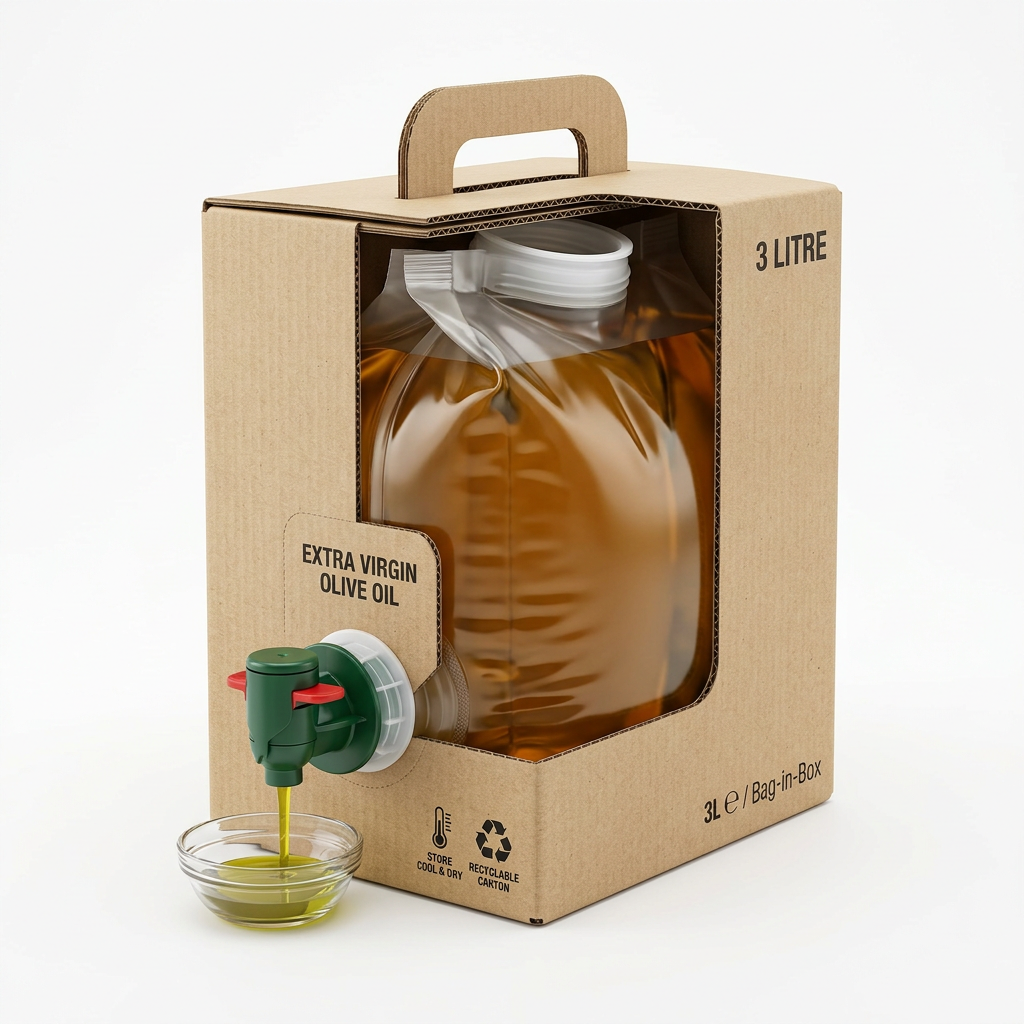
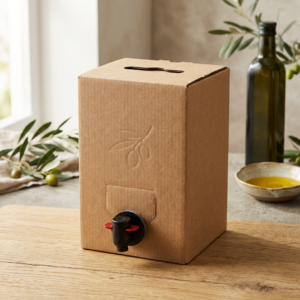
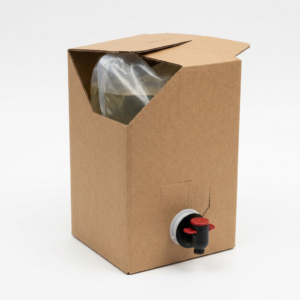
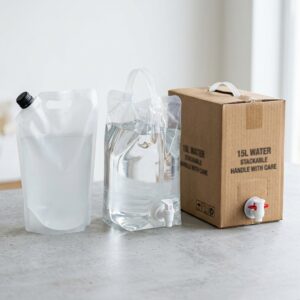
Bag-in-Box packaging for olive oil is a liquid-packaging system consisting of a flexible inner bag, a dispensing fitment, and a protective corrugated outer carton. For olive oil, the bag holds the product while the carton supports stacking, handling, branding, and transport.
This format is commonly considered for foodservice, refill programs, hospitality, retail multipacks, and larger household packs because oil can be dispensed in controlled portions without repeatedly exposing the remaining volume to the same level of air contact as an opened rigid container. The result depends on the selected bag structure, closure design, filling conditions, and the buyer’s intended distribution environment.
In packaging terms, a barrier is a material property’s ability to slow the movement of gases, moisture, aroma compounds, or light-related exposure through a package. A fitment is the component sealed into the bag to provide filling, pouring, or dispensing access. Understanding these two elements is central to specifying an olive oil Bag-in-Box system.
For a broader explanation of the system components, see this guide to what Bag-in-Box packaging is.
Why Barrier Performance Matters for Olive Oil

Olive oil quality can be affected by oxygen, light, heat, and extended storage after opening. Packaging cannot improve the oil itself, but an appropriate packaging design can help reduce avoidable exposure during storage, distribution, and use.
Oxygen management is especially relevant. As an olive oil pack is emptied, a conventional rigid bottle may draw air into the headspace. In a properly functioning Bag-in-Box format, the flexible bag contracts as liquid is dispensed. This can reduce the need for replacement air inside the product container, although actual performance also depends on the tap, sealing quality, bag material, and user handling.
Light protection should be assessed at the system level. The outer carton provides a physical light screen while the bag provides the liquid-contact layer. Buyers should also consider whether the product will be displayed under bright retail lighting, stored in warehouses, or used beside cooking equipment. High ambient temperature and prolonged sunlight should be avoided regardless of the package format.
Barrier needs are not identical for every product. Extra virgin olive oil, refined olive oil, flavored oil, blends, and infused products may have different aroma, storage, and shelf-life requirements. Final material selection should therefore be confirmed with the packaging supplier and the oil producer’s filling and quality teams.
Selecting the Barrier Bag Structure

An olive oil inner bag is usually a multilayer flexible structure rather than a single film. Each layer has a practical role: a food-contact sealant layer supports secure sealing; structural layers provide strength and puncture resistance; and barrier layers are selected to manage gas transfer and protect the product during its intended life cycle.
Common barrier approaches include multilayer films using metallized or aluminum-based barrier components, as well as transparent high-barrier structures. The best option is not automatically the highest-barrier material. It should suit the oil specification, required pack capacity, target market, filling method, carton design, anticipated handling, and applicable food-contact requirements.
Questions to ask when evaluating a bag structure
- What olive oil type, blend, or infusion will be packed?
- What capacity is required, and how will the full bag be supported inside the carton?
- Will the oil be filled at ambient conditions or under a process that introduces different temperature demands?
- What storage duration and distribution route are expected?
- Is the pack intended for retail, foodservice back-of-house, export, or refill use?
- Does the buyer need an opaque presentation, a transparent viewing feature, or specific print and carton requirements?
Mechanical protection is as important as barrier selection. A bag that has suitable barrier properties can still fail in practice if it is underspecified for drop risk, sharp carton edges, transport vibration, poor pallet handling, or incorrect fitment sealing. Bag dimensions, gusset design, film gauge, fitment position, and carton geometry need to work together.
Buyers new to the format can review the main components of a Bag-in-Box package before preparing a technical request for quotation.
Choosing Dispensing Options
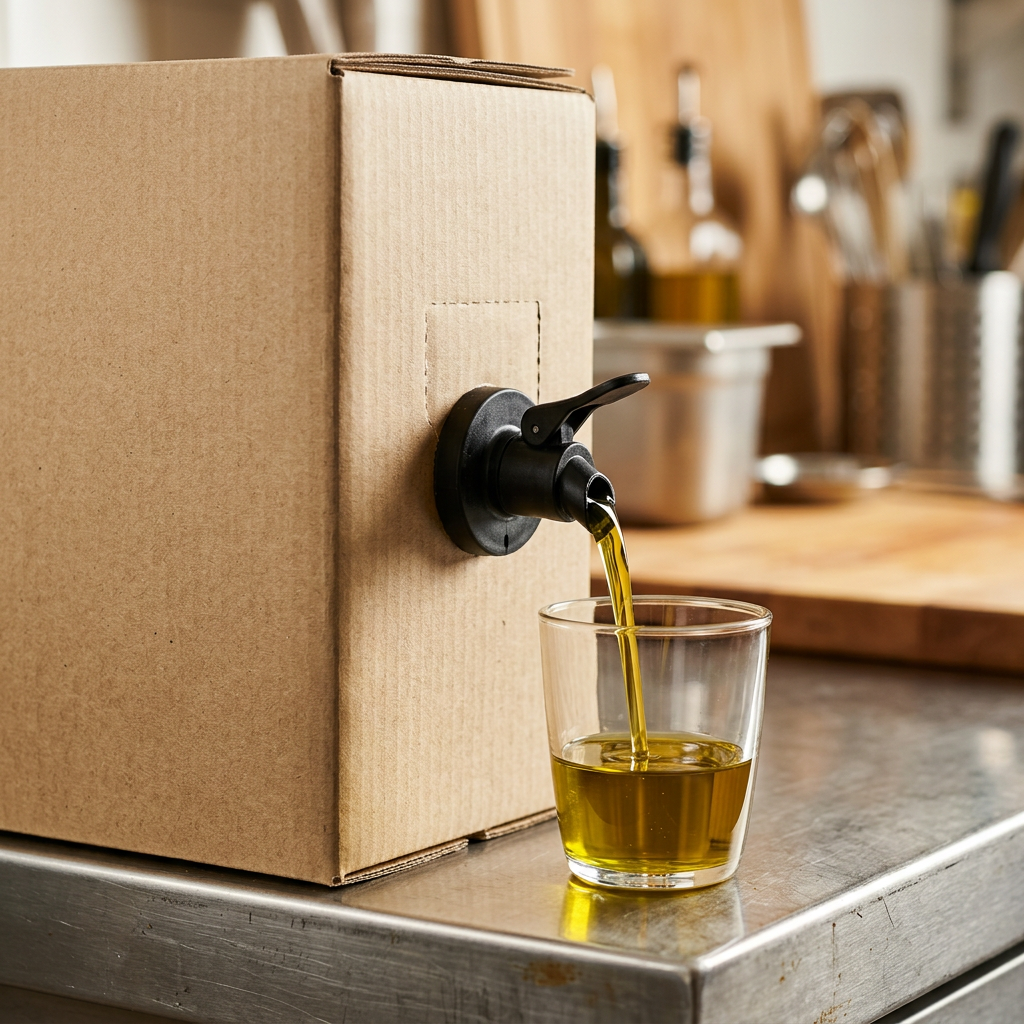
The dispensing option influences user convenience, flow control, residual product handling, and pack orientation. For olive oil, a tap or valve should be chosen based on the expected dispensing frequency and the way the carton will be placed during use.
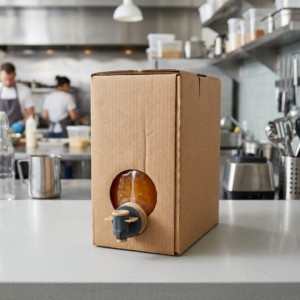
A front-facing tap is often suitable when the carton will sit upright on a shelf, countertop, or foodservice station. It allows controlled dispensing while the carton remains in position. Some buyers may prefer a screw-cap configuration for pouring applications or for equipment that uses a separate dispenser. The suitable solution depends on whether the user needs small, repeatable portions or faster transfer into a vessel.
Fitment placement also matters. A lower-front fitment can support gravity-assisted dispensing from an upright carton. A top fitment may be more appropriate for filling, pouring, or certain handling configurations. Any design should be evaluated with the actual carton orientation and expected end-user behavior.
Confirm compatibility between the oil, bag sealant, fitment resin, closure, and filling equipment. Where product specifications, destination-market rules, or filling conditions require it, conduct relevant package validation before commercial launch. Do not assume that a tap used successfully for another liquid will automatically be appropriate for a particular olive oil program.
Filling, Storage, and Distribution Considerations

A Bag-in-Box specification should be built around the filling line, not only the desired appearance. The filling operation affects fitment selection, bag opening format, seal configuration, hygiene controls, headspace management, and throughput planning. Share the actual filling method with the packaging supplier early in development.
For storage, protect filled cartons from unnecessary heat, direct sunlight, excessive compression, and moisture exposure. Corrugated cartons are designed to provide outer support, but their performance can be affected by warehouse humidity, pallet configuration, and rough distribution conditions. The carton should be matched to bag capacity and intended stacking requirements.
For export projects, buyers should identify the destination market, shipping mode, climate exposure, warehousing pattern, and retailer requirements. Printed cartons and labels may need market-specific information, while the packaging specification may need to align with the customer’s food-contact and traceability requirements. The packaging manufacturer can supply relevant material and production information within the agreed project scope; the brand owner remains responsible for confirming market-specific compliance obligations.
When comparing potential supply partners, assess their experience with flexible liquid packaging, printing capability, quality documentation process, technical communication, and ability to coordinate bag, fitment, and carton requirements. This overview of Bag-in-Box manufacturers and supplier considerations can help structure an initial sourcing review.
B2B Procurement Checklist for Olive Oil Bag-in-Box
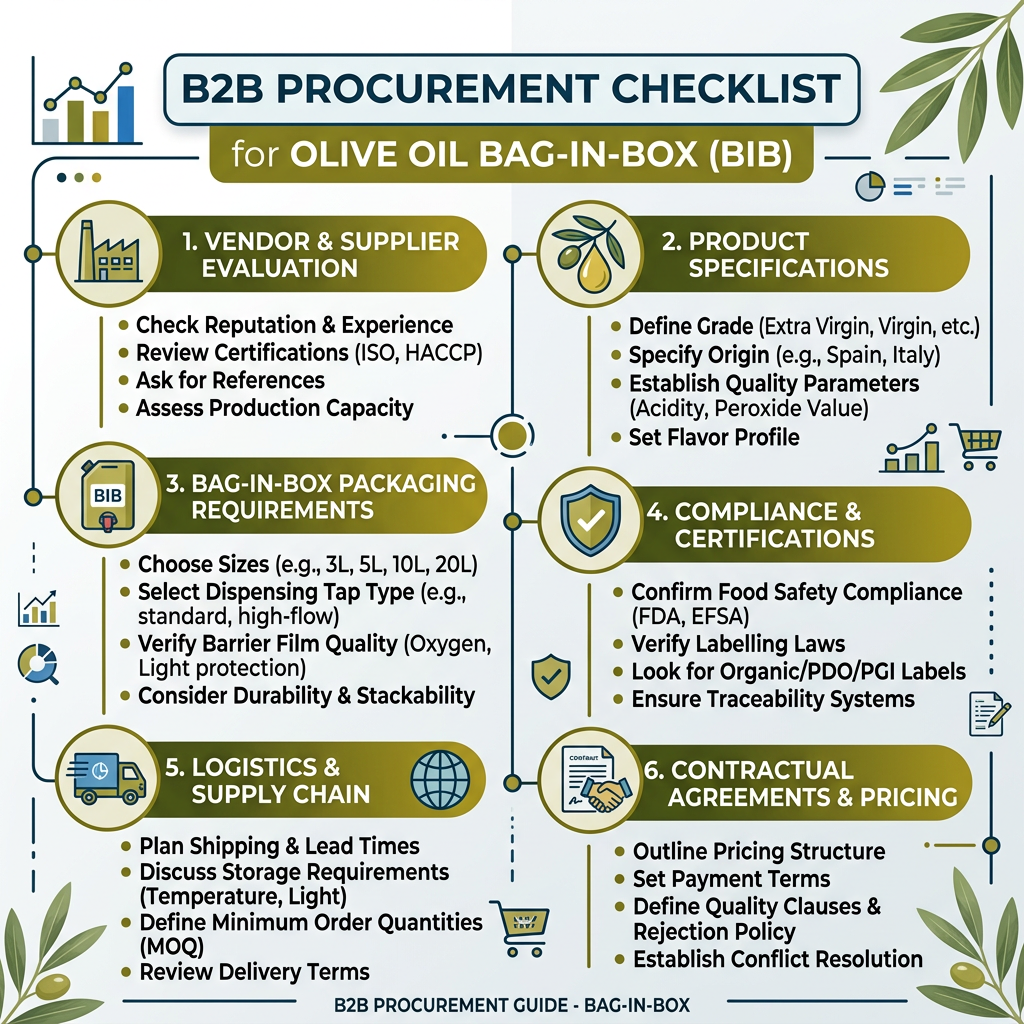
A clear brief helps reduce rework during sampling and production planning. Before requesting a proposal, prepare the following information:
- Product: olive oil category, ingredients, viscosity expectations, and any aroma-sensitive characteristics.
- Pack format: target capacity, bag dimensions if known, carton style, and intended orientation during dispensing.
- Fitment: tap, valve, cap, or other dispensing requirement; preferred placement; and filling-line compatibility.
- Process: filling temperature, filling equipment, sanitation process, and any required package testing protocol.
- Distribution: destination market, shipping method, storage environment, pallet plan, and sales channel.
- Branding: bag printing needs, carton artwork, color requirements, and product information panels.
- Commercial plan: forecast quantity, sampling requirements, purchase schedule, and required documentation.
It is useful to request samples that represent the intended material structure and fitment style, then test them on the actual filling line and in realistic dispensing conditions. Samples should support a technical decision, not replace formal product and market validation.
Conclusion: Specify the Complete Olive Oil Packaging System
Bag-in-Box packaging for olive oil should be specified as a complete system: barrier bag, fitment, sealing design, carton, filling process, storage plan, and end-use dispensing method. A technically appropriate option balances product protection with handling practicality and the buyer’s market requirements.
Start with the oil and use case, then select the bag structure and dispensing configuration around verified filling and distribution conditions. Final material selection should always be confirmed with the packaging supplier and the filling process before a commercial order is placed.
Discuss Your Olive Oil Bag-in-Box Project
Share your olive oil type, bag capacity, material and barrier needs, fitting or valve preference, printing requirements, quantity, and destination market to discuss a suitable Bag-in-Box specification.