Table of Contents
- What Are Double-Bottom Pouches?
- When Should Brands Use Double-Bottom Pouches?
- Materials, Barriers and Base Design
- Double-Bottom Pouches Compared With Other Formats
- Filling, Storage and Distribution Validation
- What Buyers Should Specify to a Flexible Pouch Supplier
- Conclusion
Double-bottom pouches can add base support or reinforcement for selected liquid, semi-liquid and dry-product applications. This guide explains when the format is appropriate, what buyers should specify, and how to validate it with the filling process.
What Are Double-Bottom Pouches?
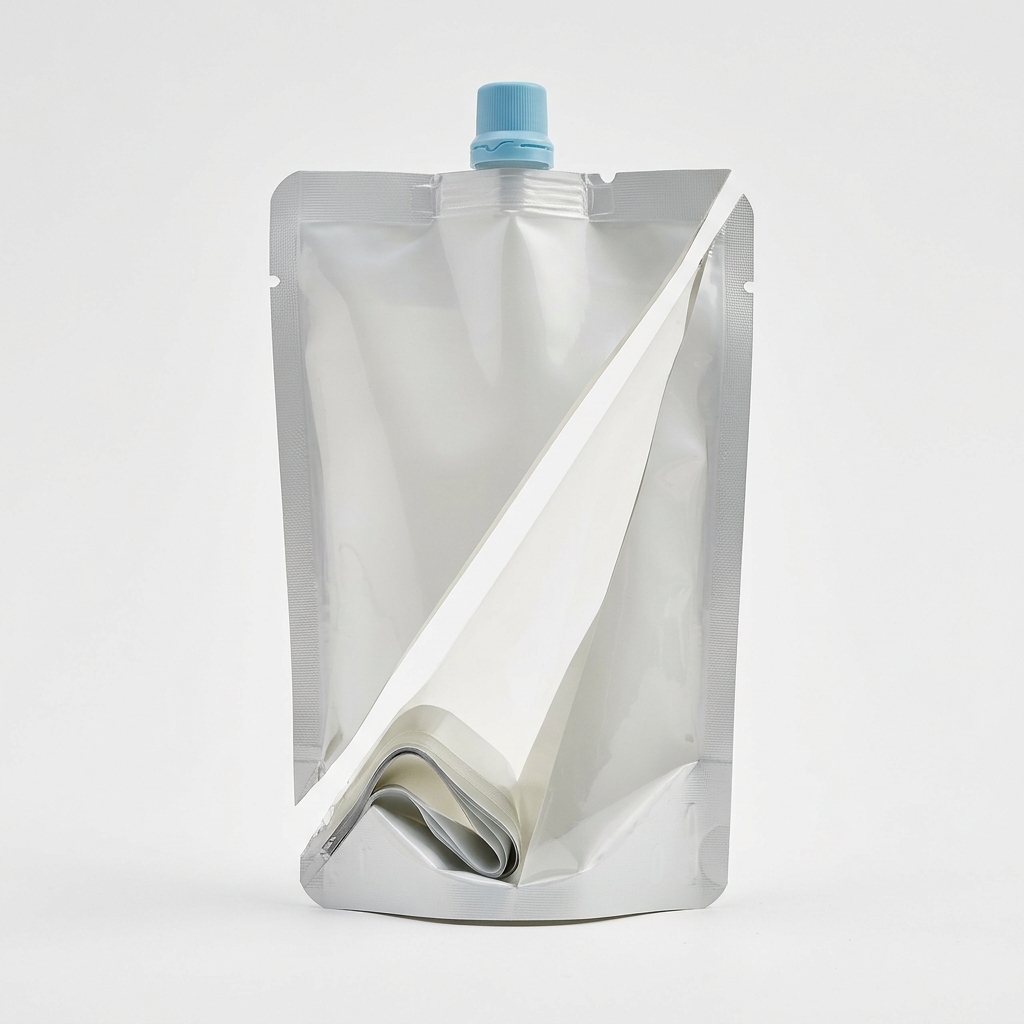
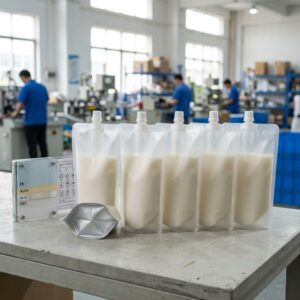
Double-bottom pouches are flexible packages designed with an additional base layer, folded base panel, or reinforced bottom area to provide more support at the bottom of the pouch. The term is not a universal technical standard: its exact construction can vary between suppliers and may describe a double-layer base, a bottom gusset arrangement, or another reinforced-base design. Brands should therefore request a drawing and sample rather than selecting the format by name alone.
For liquid products, the purpose of double-bottom bag packaging is usually to manage the load created when the pouch is full, improve handling, and support the desired pack shape. A stable bottom pouch may be useful where a brand wants a pouch to stand more reliably during display, filling, or consumer use. However, a reinforced base does not automatically make a pouch self-standing, leak-proof under every condition, or suitable for every liquid.
A pouch is a flexible pack made from one or more polymer films joined together by lamination. Barrier means the resistance of the material structure to transmission of substances such as oxygen, water vapour, aroma, or light. Fitment means the functional component attached to a pouch, such as a spout, cap, valve, or connector. These elements must be chosen as one packaging system with the product and filling method.
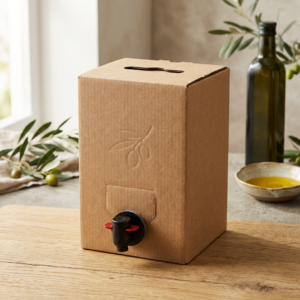
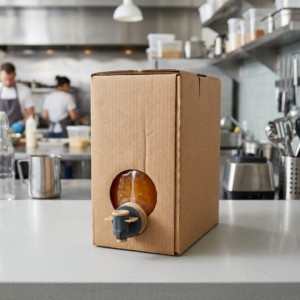
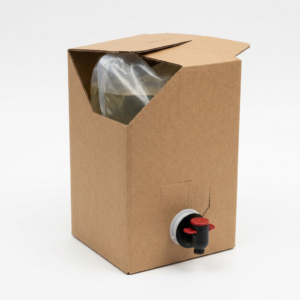
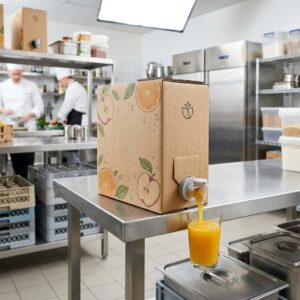
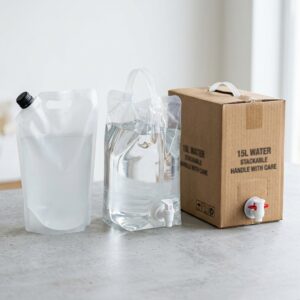
Double-bottom pouches are most relevant when base stability is a practical requirement, not merely a visual preference. For some high-volume liquids, a bag-in-box system may be a more appropriate route because its outer carton supports the filled inner bag during storage and dispensing. Buyers evaluating that option can review this bag-in-box versus plastic bottles comparison for liquid products.
When Should Brands Use Double-Bottom Pouches?
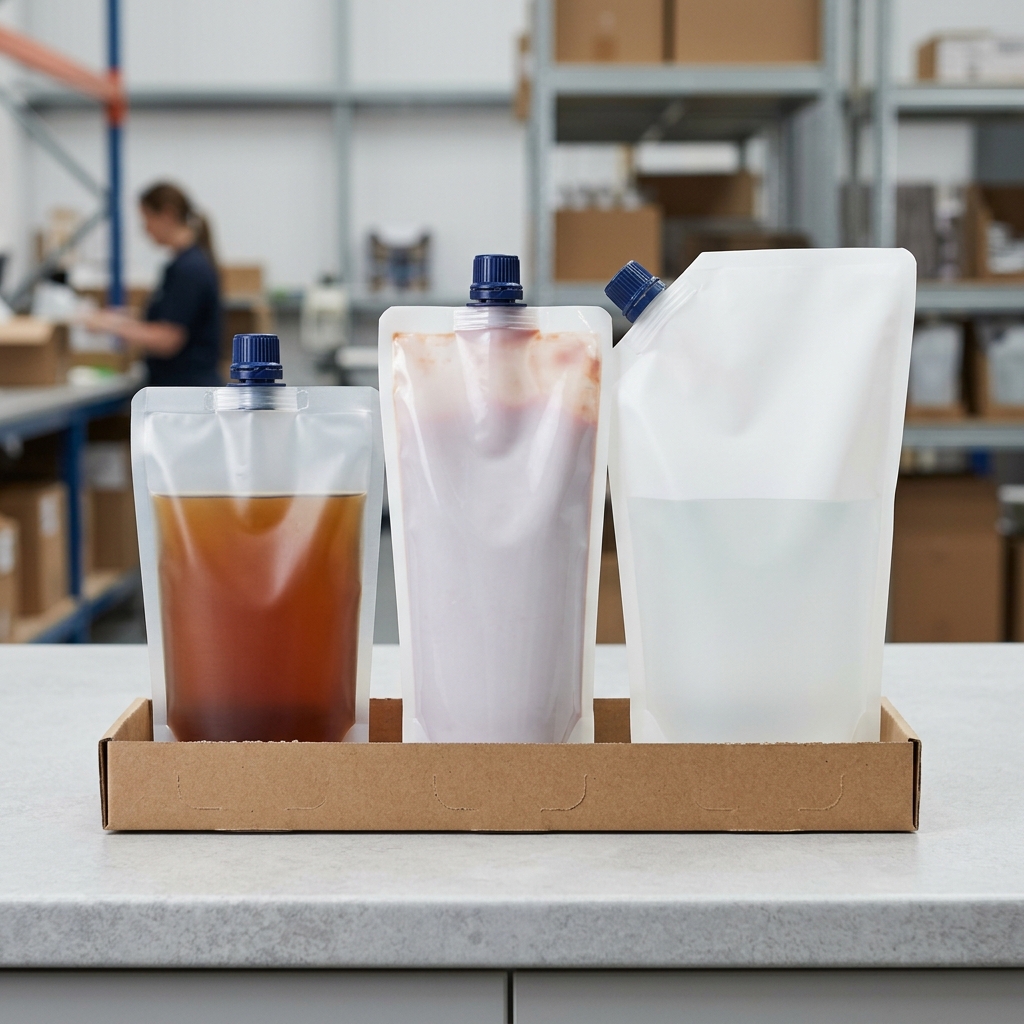
Brands should consider double-bottom pouches when the product, sales channel, and operating process benefit from added support at the base. They can be a practical option for controlled portions, refill packs, promotional packs, and selected retail formats where a supported pouch shape improves usability or presentation.
Applications that may benefit
- Portioned beverages and concentrates: A pouch packaging for beverages project may use a reinforced base where the filled pack must remain orderly in a tray or be easier to handle after opening. Product sensitivity to oxygen and light still determines the required barrier structure.
- Sauces, syrups, dressings, and other viscous foods: A heavier or slower-flowing product can place different stress on the lower seal area. The pouch profile, seal design, and dispensing opening should be assessed with the actual viscosity and filling temperature.
- Household liquid refills: Cleaning liquids may be candidates where reduced rigid-pack use is a commercial objective. Chemical compatibility between the formula, film, sealant layer, cap, and any adhesive must be checked before approval.
- Powders, granules, and dry mixes: A stable base may help shelf handling, but the material priority may shift toward moisture control and puncture resistance rather than liquid sealing.
The format is less suitable when the product requires strong external support throughout distribution, when the pouch must repeatedly dispense a substantial volume without tipping, or when the filling line cannot handle the chosen shape consistently. In these cases, a rigid container or bag-in-box configuration may be more suitable. For liquids dispensed through a tap or connector, see the guide to bag-in-box valves and fitments for liquid products for relevant compatibility and user-interface considerations.
Materials, Barriers and Base Design
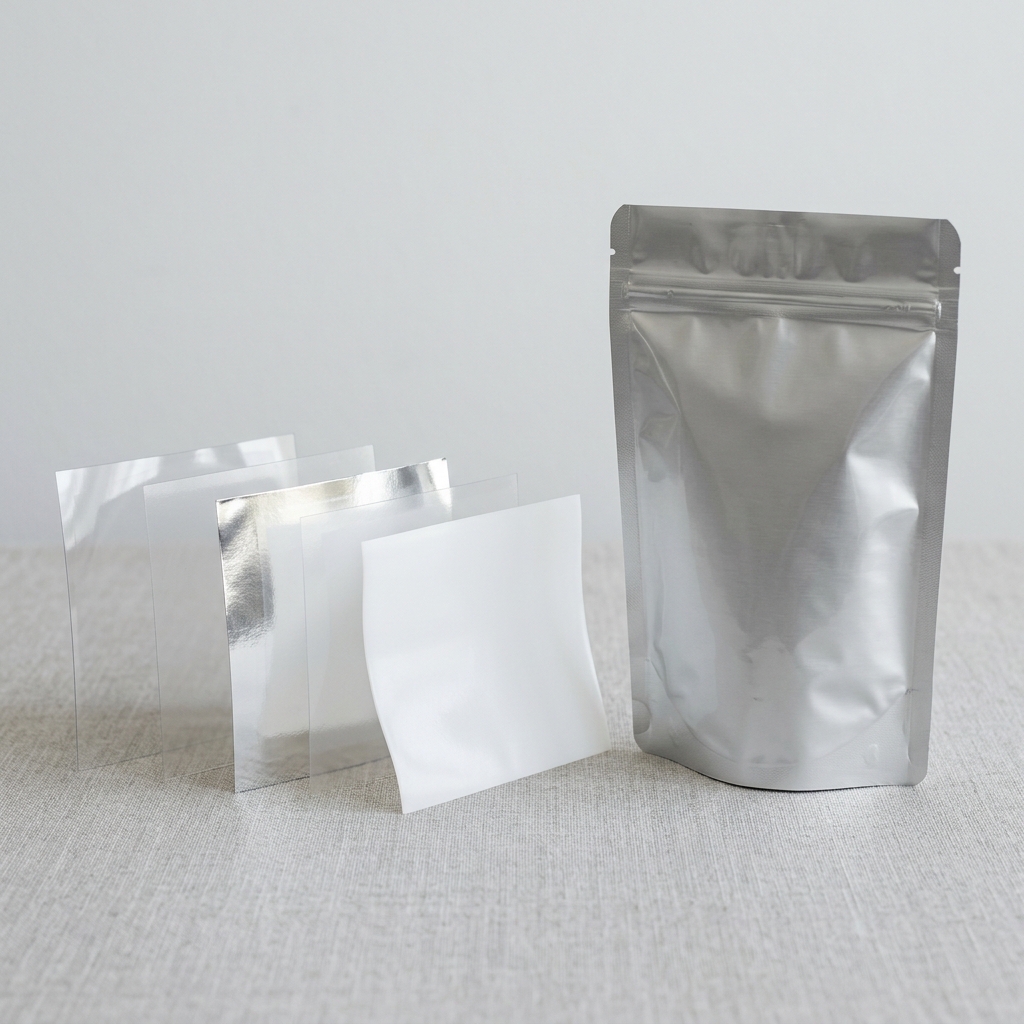
A double-bottom construction is only one part of a functional pouch. The film structure must protect the product, run on the filling equipment, and form dependable seals. Typical laminated pouch structures combine an outer printable layer, one or more functional barrier layers, and an inner sealant layer. The exact combination depends on the product and intended distribution environment.
For a stand-up liquid pouch, assess the following requirements before requesting materials:
- Oxygen, aroma, and light sensitivity: Juices, coffee products, wine, oils, and flavour-sensitive concentrates may need barrier protection selected for their expected shelf-life target and process.
- Water-vapour control: This is especially relevant to powders, hygroscopic ingredients, and products whose concentration can change through moisture exchange.
- Mechanical strength: Drop, compression, flex-cracking, puncture, and base-seal stresses can arise during filling, carton packing, warehousing, and transport.
- Product compatibility: Acidity, alcohol content, oils, surfactants, fragrances, and active ingredients can affect the appropriate film, sealant, fitment, and adhesive selection.
- Temperature exposure: Filling, cooling, warehousing, and transport temperatures may influence seal performance and pack shape.
Do not assume that a thicker film is automatically the better answer. A thicker gauge may affect stiffness and handling, but barrier, seal integrity, migration compliance, folding behaviour, and line performance are separate design questions. For beverage-specific material considerations, consult how to choose bag-in-box packaging materials for beverages; the same product-protection questions are useful when briefing a pouch supplier.
Final material selection should be confirmed with the packaging supplier and the filling process using representative product, pack dimensions, fitment, and distribution conditions.
Double-Bottom Pouches Compared With Other Formats
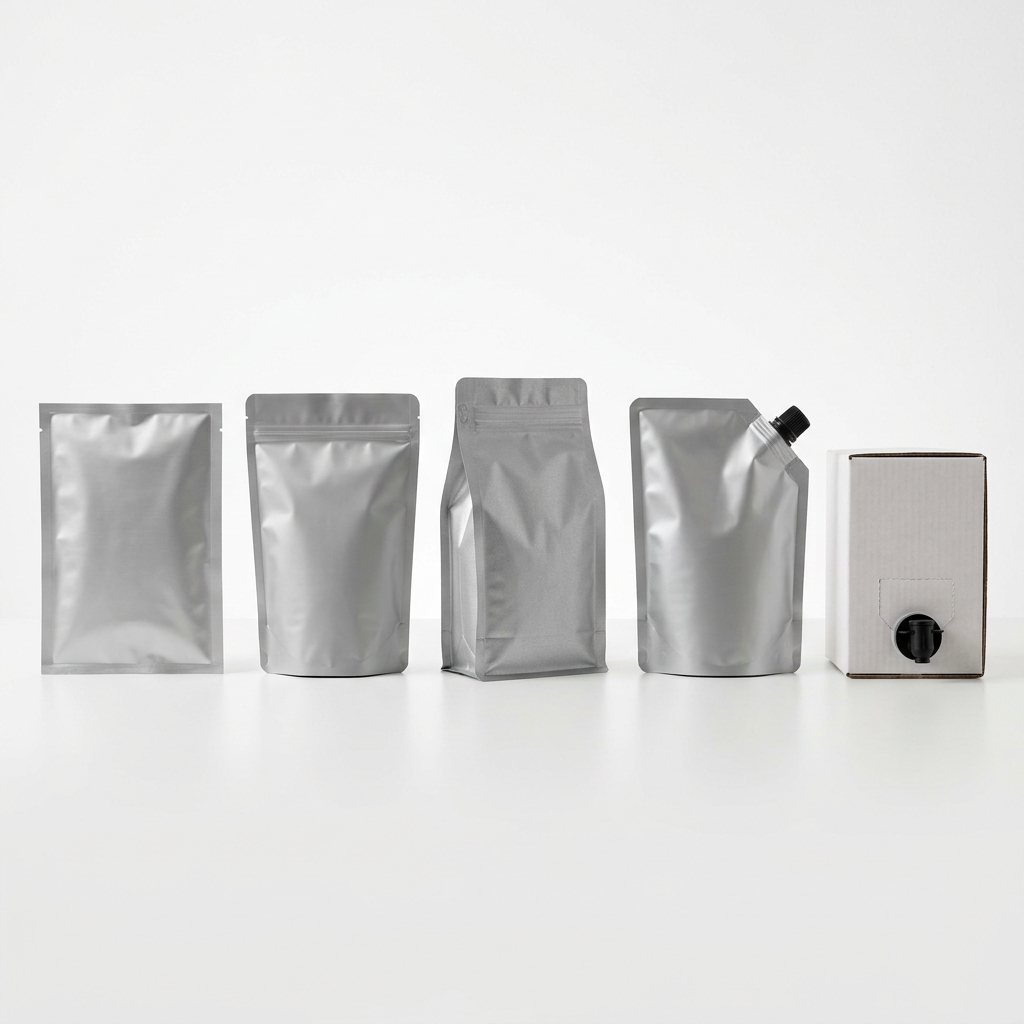
Choosing a pack format starts with the product journey: filling, packing, shipment, display, opening, dispensing, and disposal. The table below is a screening tool, not a substitute for pack testing.
| Format | Base support | Typical fit for liquid products | Key technical question |
|---|---|---|---|
| Double-bottom pouch | Can provide added base reinforcement or shape support; the exact effect depends on the design. | Selected portions, refills, concentrates, sauces, and retail pouches where pouch form matters. | Does the base construction remain stable through filling, transport, and use? |
| Standard flat pouch | Limited inherent standing support. | Single-use portions, samples, and products packed in an outer carton or tray. | Is a low-profile format more important than upright presentation? |
| Gusseted stand-up pouch | Designed around a bottom gusset that can create a standing footprint when filled. | Retail food, dry goods, and selected liquids with suitable seals and closures. | Will the gusset geometry and fill level produce consistent shelf stability? |
| Spouted pouch | Varies by body and base design. | Pourable foods, concentrates, personal-care products, and refills. | Are spout position, cap torque, pour control, and pouch support appropriate? |
| Bag-in-box | Outer carton provides structural support. | Foodservice, bulk retail, and multi-serve beverages or liquids. | Does the bag, tap, and carton work with the dispensing and logistics model? |
For a product table during early selection, buyers can use the following application guide.
| Product type | Potential pouch approach | Specification priorities |
|---|---|---|
| Still beverage or syrup | Double-bottom or spouted pouch where capacity and use case support it. | Barrier needs, fill method, pour control, fitment sealing, stacking. |
| Cold brew or coffee concentrate | Pouch or bag-in-box depending on serving size and channel. | Oxygen protection, aroma retention, filling hygiene, dispensing route. |
| Viscous sauce or dressing | Reinforced-base or spouted pouch after line validation. | Viscosity, headspace, seal contamination control, opening size. |
| Household cleaner refill | Custom liquid pouch with a controlled pour or connector if compatible. | Formula compatibility, child-safety requirements where applicable, leak resistance, label information. |
| Large multi-serve liquid | Often evaluate bag-in-box alongside pouch options. | Dispensing, outer support, storage orientation, end-user handling. |
Filling, Storage and Distribution Validation
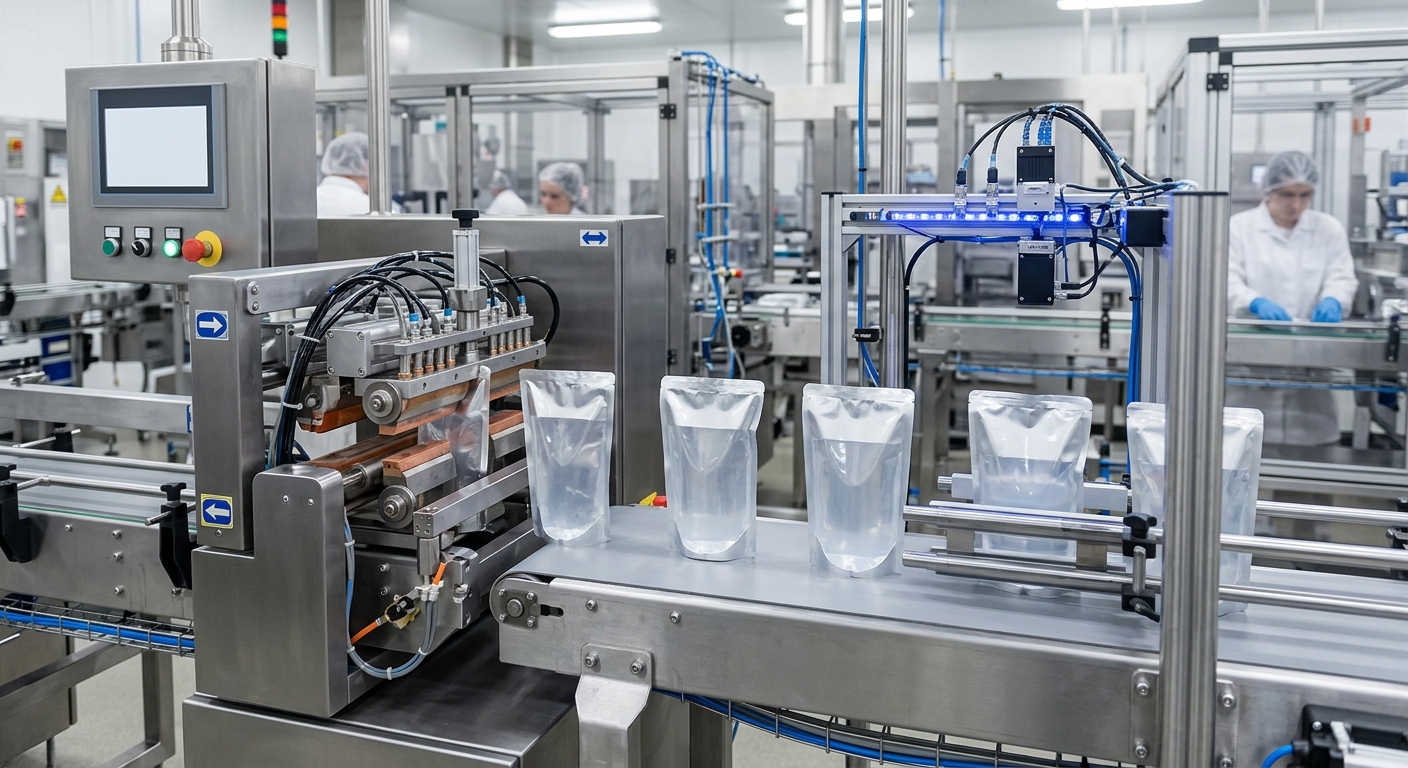
Even a well-designed double-bottom pouch can underperform if the filling process is not matched to the pack. The filling line must locate the pouch correctly, manage the opening or fitment, control product flow, avoid contaminating the seal area, and deliver repeatable sealing or capping. These requirements become more critical with hot products, foaming liquids, high-viscosity products, or pouches with asymmetrical fitments.
Before commercial approval, align the supplier, brand, and contract packer on a validation plan that reflects actual use. It should consider:
- filled-pack weight and dimensional tolerances;
- seal and fitment integrity after filling;
- base geometry after cooling or settling;
- carton configuration, pallet loading, and warehouse orientation;
- expected distribution hazards, including compression and vibration;
- opening, pouring, resealing, or dispensing behaviour for the intended user; and
- product quality checks over the planned storage conditions.
Process type is particularly important for beverage and food applications. Aseptic filling is a controlled process designed to fill commercially sterile product into sterilized packaging under controlled conditions. Hot filling fills product at an elevated temperature to support the intended preservation process. Neither approach should be selected from packaging appearance alone. Read aseptic versus hot-fill bag-in-box guidance to understand the processing questions that should also inform custom liquid pouches.
Technical caveat: laboratory film data or empty-pouch checks do not fully represent a filled pack. Product-contact testing, trial fills, and distribution simulation should be agreed with the packaging supplier and filling partner before launch.
What Buyers Should Specify to a Flexible Pouch Supplier
A clear technical brief reduces the risk of comparing unlike quotations or receiving samples that cannot run on the intended line. When requesting double-bottom pouches from a flexible pouch supplier, provide the following information as early as possible:
- Product description: State ingredients or formulation characteristics relevant to packaging, including acidity, oil, alcohol, surfactants, fragrance, and viscosity where applicable.
- Pack capacity and fill weight: Include the target volume, acceptable tolerance, headspace requirement, and preferred pouch dimensions if known.
- Base construction request: Describe the expected function—upright display, reinforced lower area, tray handling, or another objective—and request a dimensioned pouch drawing.
- Filling details: Specify filling method, temperature range, line type, throughput expectations, sealing or capping method, and whether the pouch is supplied open, pre-spouted, or otherwise configured.
- Closure or dispensing needs: Identify whether the pack requires a tear notch, spout, cap, valve, connector, or no fitment. Fitment design must match both the liquid and the end-user dispensing method.
- Barrier and storage target: Explain product sensitivities, desired storage conditions, sales market, and expected distribution route. Do not request a generic high-barrier structure without defining what must be protected.
- Artwork and compliance information: Share print files, colour expectations, language requirements, market-specific labelling needs, and applicable food-contact or product regulations for the destination market.
- Validation expectations: Agree on samples, line trials, product-compatibility assessment, pack testing, and approval criteria.
For a broader supplier brief, review this custom packaging manufacturer specification guide for B2B buyers and adapt the same disciplined approach to pouch projects. A structured packaging procurement checklist for brands and contract packers can also help align commercial, technical, and operational stakeholders.
Conclusion: Select the Base Design for the Real Product Journey
Double-bottom pouches are worth considering when a flexible package needs additional base support, controlled handling, or a particular retail presentation. They are not a universal replacement for standard pouches, rigid bottles, or bag-in-box systems. The right choice depends on the liquid or dry product, target capacity, barrier requirement, fitment, filling conditions, distribution environment, and user experience.
Because “double bottom” can mean different constructions, buyers should define the required function and approve a drawing, representative samples, and filled-pack trials. Final material selection and base design should be confirmed with the packaging supplier and filling process before commercial production.
FAQ
What is a double-bottom pouch?
A double-bottom pouch is a flexible pouch with an additional base layer, folded bottom panel, or reinforced lower construction. The term is used differently across the packaging market, so buyers should ask the supplier for a technical drawing that shows the exact base geometry, layers, seals, and dimensions.
Can double-bottom pouches stand upright?
They may provide improved base support, but they do not automatically stand upright. Upright performance depends on the base geometry, pouch width and height, product density, fill level, headspace, material stiffness, fitment location, and storage surface. Confirm this through filled-pack samples and line trials.
Are double-bottom pouches suitable for beverages?
They can be suitable for selected beverage applications, including portions, concentrates, and refill-oriented formats, provided the barrier, seals, fitment, and filling process are appropriate. For oxygen- or light-sensitive beverages, material selection should be based on the product’s protection requirements and planned storage conditions.
What fitment should a liquid pouch use?
The appropriate fitment depends on liquid viscosity, filling method, desired pouring or dispensing experience, pack capacity, and compatibility with the product. Options can include spouts, caps, valves, and connectors. The fitment should be evaluated together with the pouch material and filling equipment rather than selected independently.
How should brands validate custom liquid pouches?
Validation should use representative product and include trial filling, seal and fitment checks, pack appearance after settling or cooling, carton and pallet configuration, transport-related stresses, user opening and dispensing, and product-quality review under intended storage conditions. Agree on approval criteria with the packaging supplier and filling partner.
Discuss Your Double-Bottom Pouch Requirement
Share your product, liquid type, bag capacity, material and barrier needs, fitting or valve requirements, printing requirements, quantity, and destination market with HUACANG Packaging to discuss a practical custom pouch specification.