目录
- What Is Bag-in-Box Packaging?
- Main Components of a Bag-in-Box System
- How Bag-in-Box Packaging Works
- Materials and Barrier Selection
- Common Bag-in-Box Applications
- Filling, Storage, and Handling Considerations
- What B2B Buyers Should Specify
- Choosing the Right Bag-in-Box Format
Bag-in-box packaging is a liquid packaging system that combines a flexible inner bag, dispensing fitment, and protective outer carton. This guide explains how BIB packaging works and what B2B buyers should evaluate before specifying a format.
What Is Bag-in-Box Packaging?
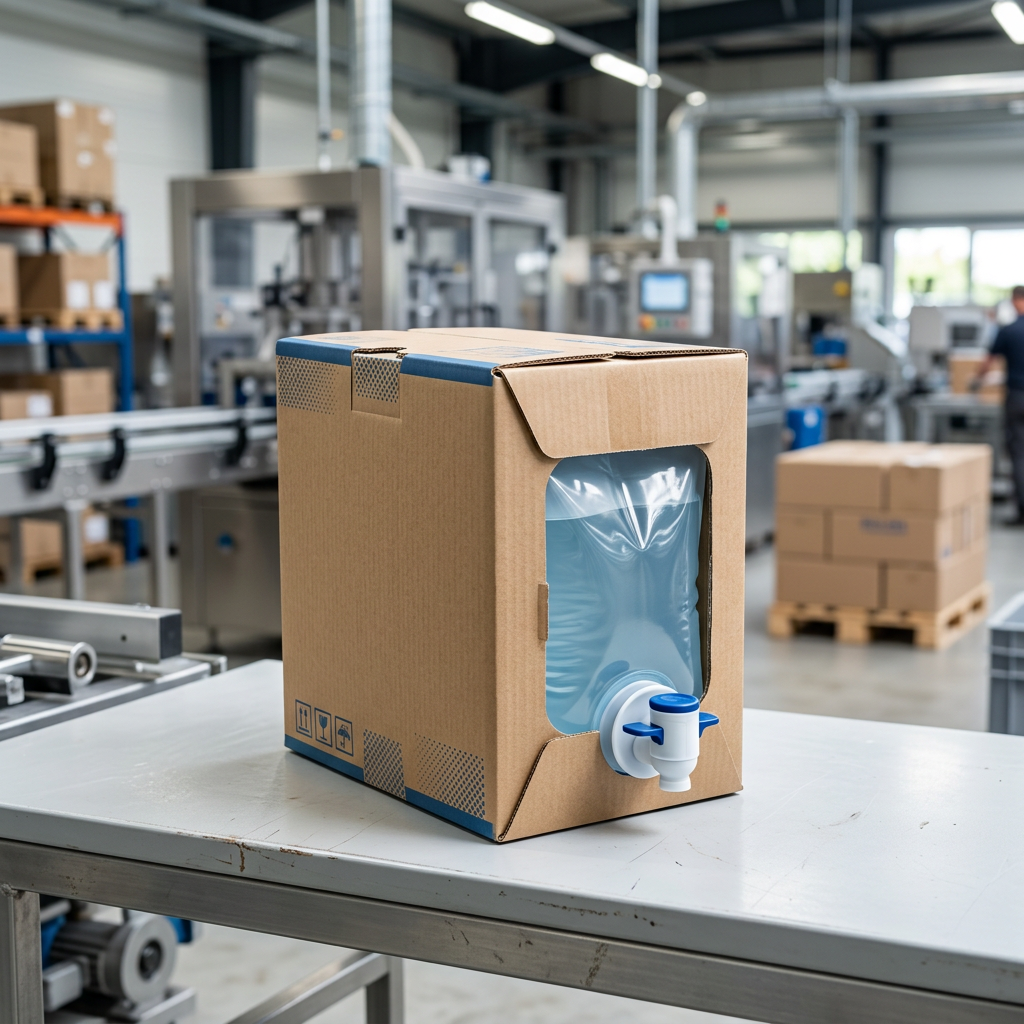
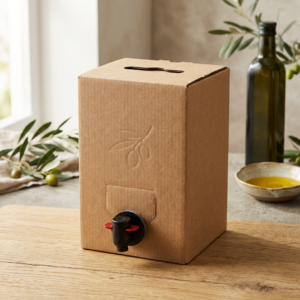
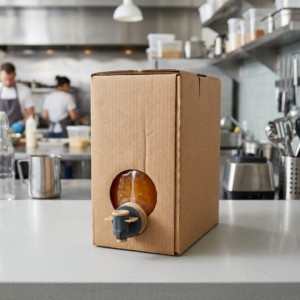
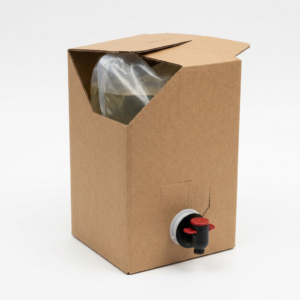
Bag-in-box packaging is a packaging format for liquids and semi-liquids that places a flexible inner bag inside a rigid or semi-rigid outer box. The inner bag holds the product, while a fitment, tap, valve, or other dispensing closure allows the contents to be filled and dispensed. The outer carton protects the bag during transport, storage, and retail or foodservice handling.
In B2B use, bag-in-box is commonly selected when a product needs efficient bulk handling, controlled dispensing, and a compact shipping format. It can be used for beverages, food ingredients, sauces, syrups, edible oils, concentrates, cleaning liquids, and selected industrial fluids, provided the bag structure and fitment are compatible with the product and filling process.
The term barrier refers to a packaging material’s ability to reduce the transfer of oxygen, moisture, aroma, light, or other substances between the packaged product and its surroundings. Barrier needs vary substantially by product. A short-life cleaning formulation may need a different structure from an oxygen-sensitive beverage or an aromatic food ingredient.
Bag-in-box is a system rather than a single material. A successful specification requires the bag film, seals, fitment, carton, filling equipment, product chemistry, and distribution conditions to work together.
Main Components of a Bag-in-Box System
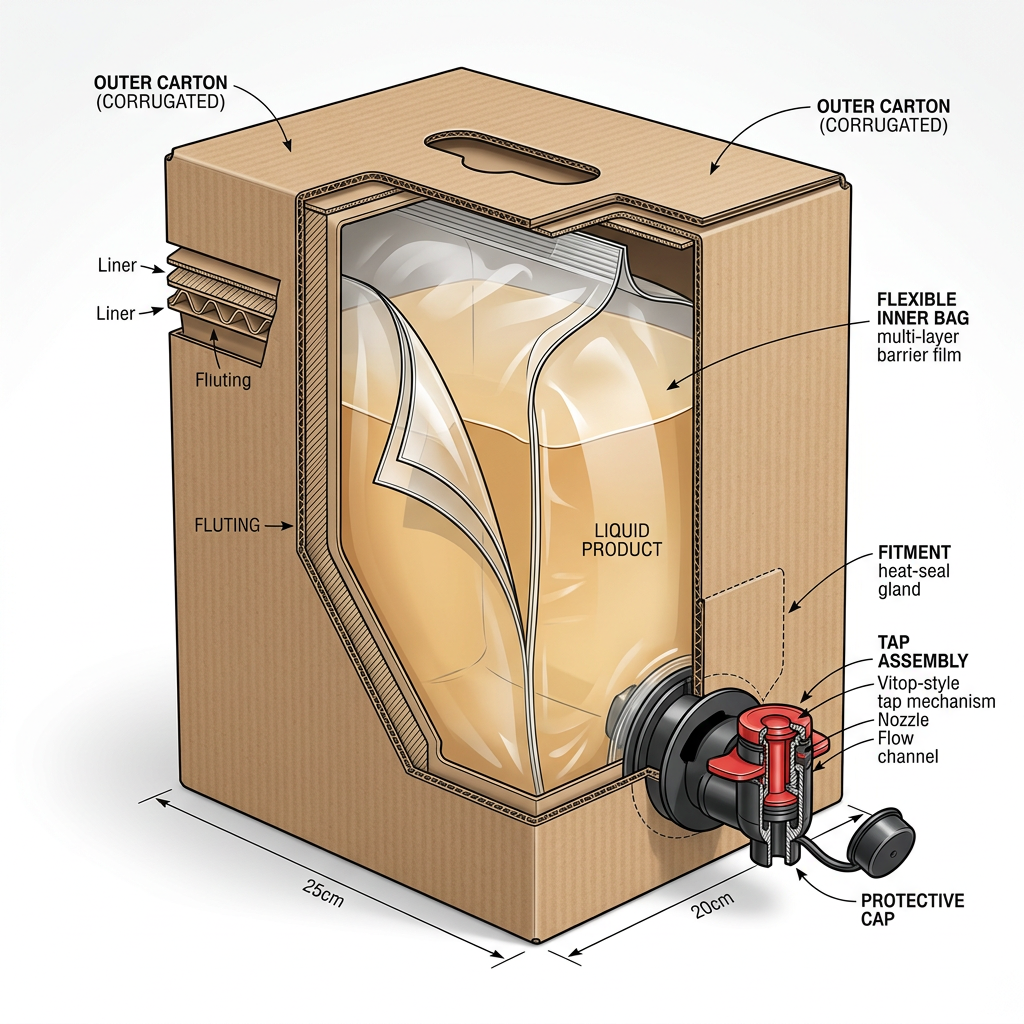
A bag-in-box pack has several interdependent parts. Changing one component can affect filling performance, product protection, dispensing convenience, and shipping durability.
Flexible inner bag
The bag is typically made from one or more layers of flexible film. A monolayer uses one primary material layer, while a laminated structure combines layers to provide functions such as sealability, strength, print support, or barrier protection. The bag may be formed as a pillow bag, side-gusseted bag, or another construction suited to the carton and filling line.
Fitment and dispensing closure
A fitment is the plastic component sealed into or attached to the bag to create a controlled filling and dispensing connection. Depending on the application, it may use a screw cap, tap, gland, connector, valve, or specialized coupler. The closure must match the intended user experience and any filling-machine interface.
Outer carton
The corrugated carton provides stackability, physical protection, handling surfaces, and space for branding or required product information. Carton dimensions should support the filled bag shape and prevent excessive movement. The carton also needs to suit the distribution route, storage environment, and loading pattern.
For example, a 5 gallon bag-in-box for soda syrup packaging illustrates how bag capacity, a dispensing connection, and a supporting carton are considered together for a specific foodservice application.
How Bag-in-Box Packaging Works
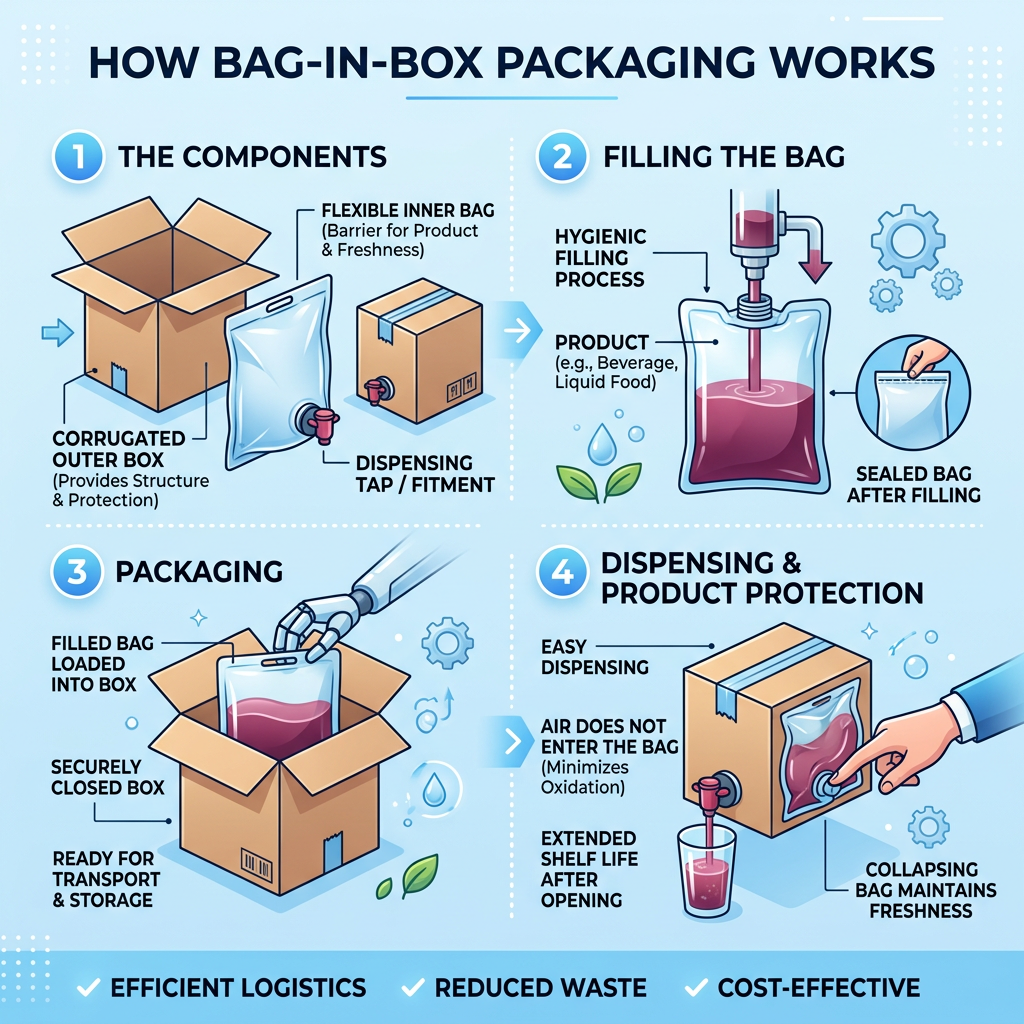
Bag-in-box packaging works by containing the product inside the sealed flexible bag while the box supports the filled pack externally. During filling, product enters through the selected fitment or an open filling area that is subsequently sealed. The bag is then placed into the carton, or the system may be assembled in a sequence designed around the filling operation.
During dispensing, the bag progressively collapses as product leaves the pack. This is different from a rigid container that may need air to enter as liquid is poured out. For products sensitive to air exposure after opening, a collapsing bag can be useful because the package does not necessarily require the same level of air replacement inside the product chamber. However, actual opened-life performance depends on the product, hygienic use conditions, closure design, and dispensing method.
At the end of use, the carton and bag are separated according to local waste-management practices. Buyers should not assume that every component is accepted in every recycling stream; material composition, local infrastructure, inks, adhesives, and product residues can all affect disposal options.
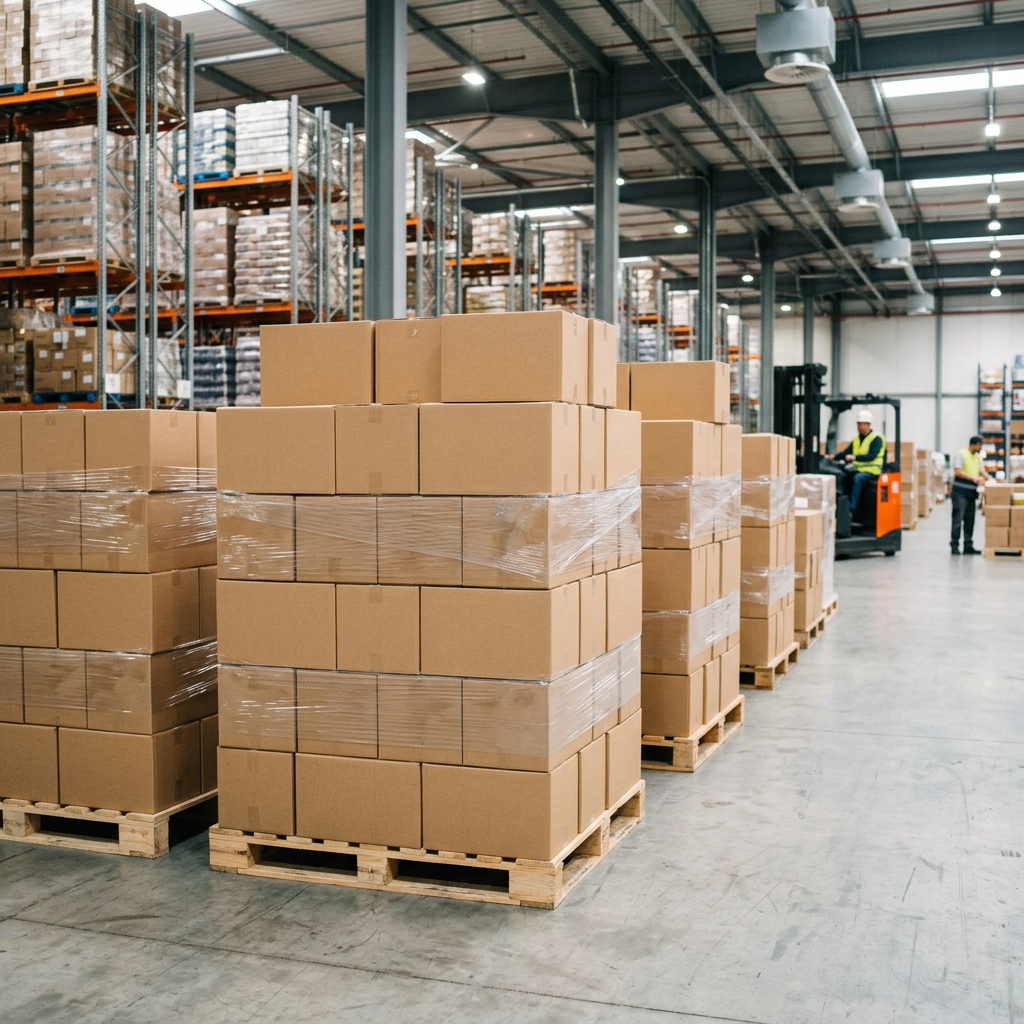
From a logistics perspective, the rectangular carton can support efficient pallet loading. Final pallet configuration should be validated against filled weight, carton compression needs, warehouse humidity, route vibration, and customer handling practices.
Materials and Barrier Selection for Bag-in-Box Packaging
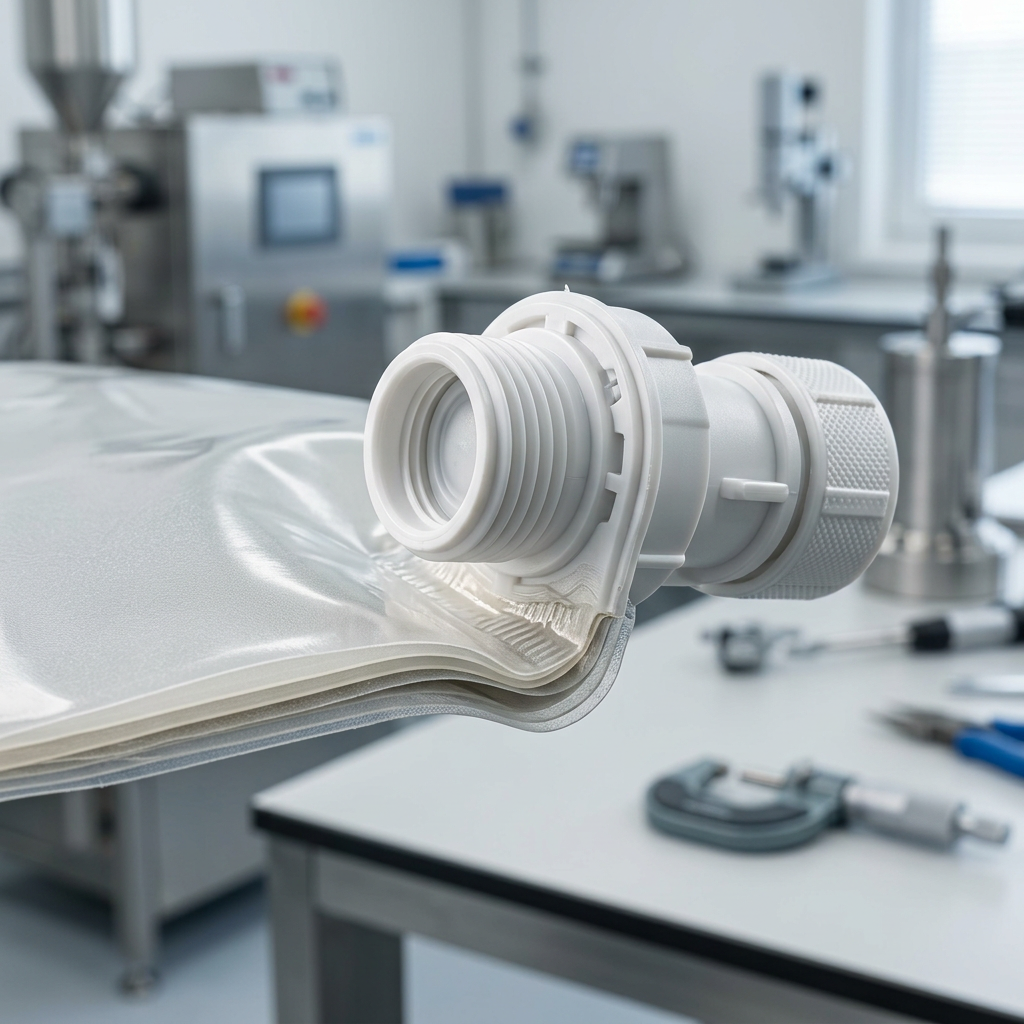
Material selection begins with the packaged liquid, not with a preferred film name. The supplier should understand the formula, pH range where relevant, oil or solvent content, aroma profile, fill temperature, target shelf-life objective, and storage conditions. These inputs help determine an appropriate flexible structure and sealing approach.
Common bag film structures can include polyethylene-based sealant layers and additional layers chosen for mechanical strength or barrier properties. Some applications may require higher protection against oxygen or aroma transfer; others may prioritize flexibility, puncture resistance, or compatibility with a particular filling process. The correct structure should be confirmed through product-specific evaluation rather than assumed from a similar-looking pack.
Light exposure also deserves attention. A carton may provide meaningful light shielding, but protection depends on carton construction, graphics coverage, openings, warehouse conditions, and how the package is displayed. If the product is light-sensitive, discuss this requirement early.
Fitment resin and gasket or valve design also matter. A chemically aggressive liquid, high-fat formulation, or elevated-temperature fill can interact differently with closure components than a neutral, ambient-filled beverage. Compatibility testing with actual product and representative process conditions is a practical step before commercial approval.
For broader supplier research, this overview of bag-in-box manufacturers can help procurement teams frame questions about equipment, material options, and application support.
Common Bag-in-Box Applications
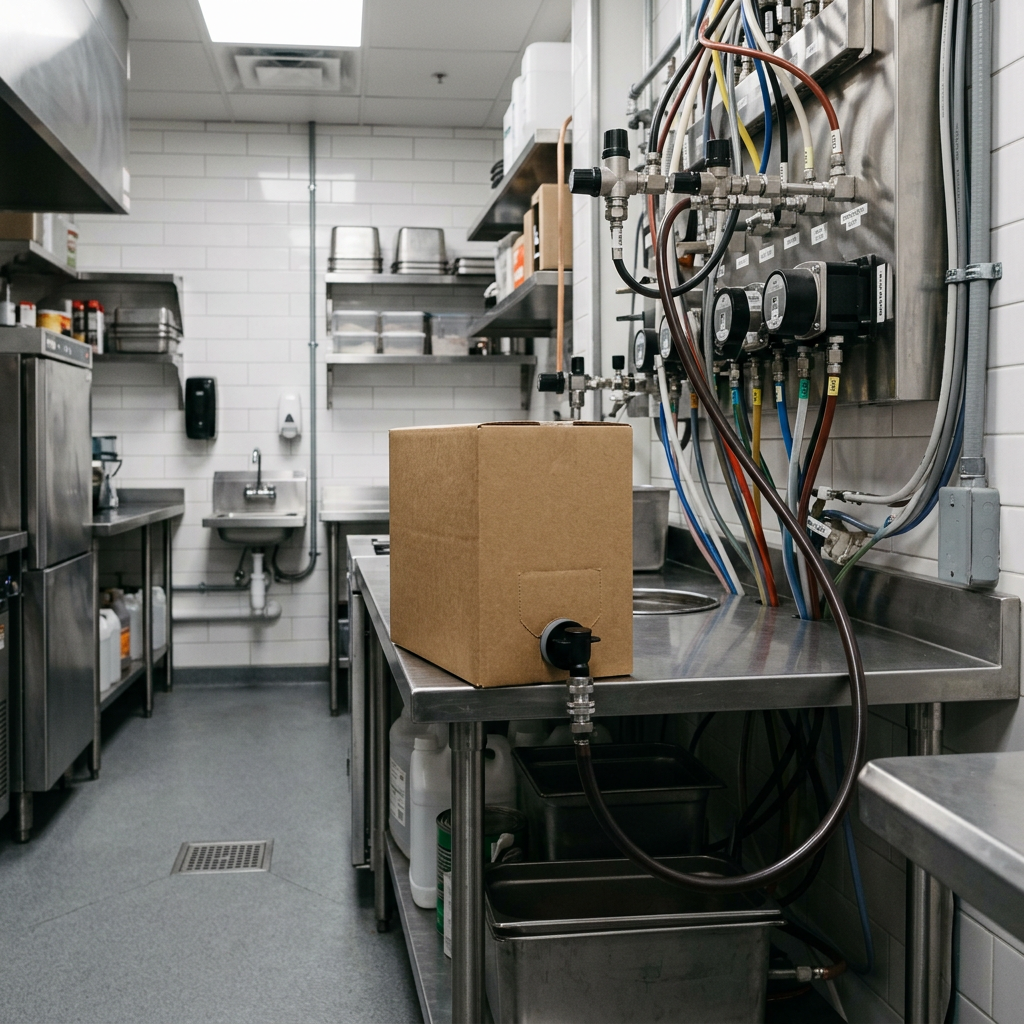
Bag-in-box can serve many liquid categories, but each category has different technical priorities.
Beverages and concentrates
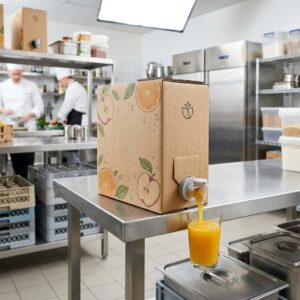
Syrups, juice concentrates, beverage bases, and similar products often require a fitment compatible with foodservice dispensing equipment. Product viscosity, carbonation-related handling requirements, hygiene controls, and connection geometry should be reviewed with the equipment provider and packaging supplier. Buyers sourcing syrup formats may review a bag-in-box solution for soda syrup as an application reference.
Food ingredients
Sauces, condiments, edible oils, dairy-adjacent ingredients, and liquid food components may need attention to oxygen exposure, flavor retention, grease resistance, dispensing cleanliness, and fill temperature. Viscous products may require a larger outlet or a closure designed for controlled flow.
Cleaning and chemical liquids
Detergents, cleaners, and selected chemical formulations can benefit from bulk dispensing, but chemical compatibility is critical. Confirm the bag film, seals, fitment, cap, label adhesive, and carton suitability for the specific formulation. Never rely solely on a general material description for aggressive, fragranced, solvent-containing, or highly alkaline or acidic products.
Industrial fluids
Some lubricants, additives, and process liquids may be packed in bag-in-box systems where controlled dispensing and warehouse handling are important. Evaluate leak prevention, viscosity at storage temperature, contamination control, and user connection requirements.
Filling, Storage, and Handling Considerations
A bag-in-box specification should be developed alongside the filling process. Important questions include whether filling is ambient, warm, hot, or aseptic; whether the product is gravity-fed, pumped, or pressure-filled; how the fitment is connected; and how seals are verified. Filling-line dimensions and equipment interfaces can determine the feasible bag shape, fitment position, and closure design.
Seal quality is especially important because flexible packaging depends on consistent sealed areas around the bag perimeter and fitment. Process validation commonly considers sealing conditions, product contamination near seal areas, bag handling, and leak testing methods. The supplier and filler should agree on realistic quality checkpoints before a commercial run.
For storage, consider temperature variation, warehouse humidity, sunlight exposure, stack height, transit vibration, and the time between filling and end use. Cartons can lose strength in humid environments, while cold conditions can alter the flow behavior of viscous products. The filled pack should be assessed in its actual secondary packaging and shipping configuration.
Printing requirements should also be established early. Carton artwork, lot coding areas, legal product information, handling symbols, and destination-market language requirements may affect the carton layout. If pre-printed bags are required, confirm ink and lamination suitability for the intended environment and product contact design.
Bag-in-Box Procurement Checklist for B2B Buyers
Clear technical information helps a packaging supplier recommend a more suitable bag-in-box packaging format. A procurement brief should include:
- Product name and liquid type, including relevant formulation characteristics.
- Required bag capacity and expected annual or order quantity.
- Filling method, fill temperature, line equipment, and target pack configuration.
- Desired fitment, tap, valve, cap, or equipment connection requirements.
- Target storage conditions, distribution route, and destination market.
- Carton size, pallet preference, branding, print colors, and coding requirements.
- Any internal testing, regulatory, food-contact, or chemical-compatibility requirements applicable to the market.
It is useful to provide samples of the current package, drawings of the filling connection, and product safety or technical information where appropriate. A supplier can then identify issues such as unsuitable fitment geometry, inadequate headspace, carton mismatch, or film compatibility risks before tooling, artwork, or production decisions are finalized.
When comparing suppliers, assess more than the quoted package format. Review communication on technical questions, sample evaluation methods, printing capabilities, quality-control documentation available for the project, export packing expectations, and willingness to align with your filling operation. Material selection and final pack design should always be confirmed with the packaging supplier and the filling process.
Choosing the Right Bag-in-Box Packaging Format
Bag-in-box packaging combines a flexible liquid bag, a dispensing fitment, and an outer carton into one handling and dispensing system. Its value for B2B buyers comes from matching the system to the product: the liquid’s chemistry and sensitivity, the filling conditions, the desired dispensing method, and the realities of storage and distribution.
The most reliable approach is to define the application in detail, select materials and fittings based on that application, and validate the finished pack under representative filling and logistics conditions. A bag that performs well for one liquid or market should not be assumed to be suitable for another without review.