Table of Contents
- What Is Bag-in-Box Packaging for Coffee?
- Cold Brew and Coffee Concentrate Applications
- Material and Oxygen Barrier Considerations
- Fitments, Valves and Dispensing Requirements
- Filling and Sealing Considerations
- Storage, Transport and Handling
- How to Specify a Coffee Bag-in-Box Project
- Choosing a Bag-in-Box Packaging Supplier
Bag-in-Box packaging for coffee can help roasters, beverage brands and foodservice suppliers package cold brew and coffee concentrate efficiently. This guide covers bag construction, oxygen protection, fitments, filling, storage and supplier selection.
What Is Bag-in-Box Packaging for Coffee?
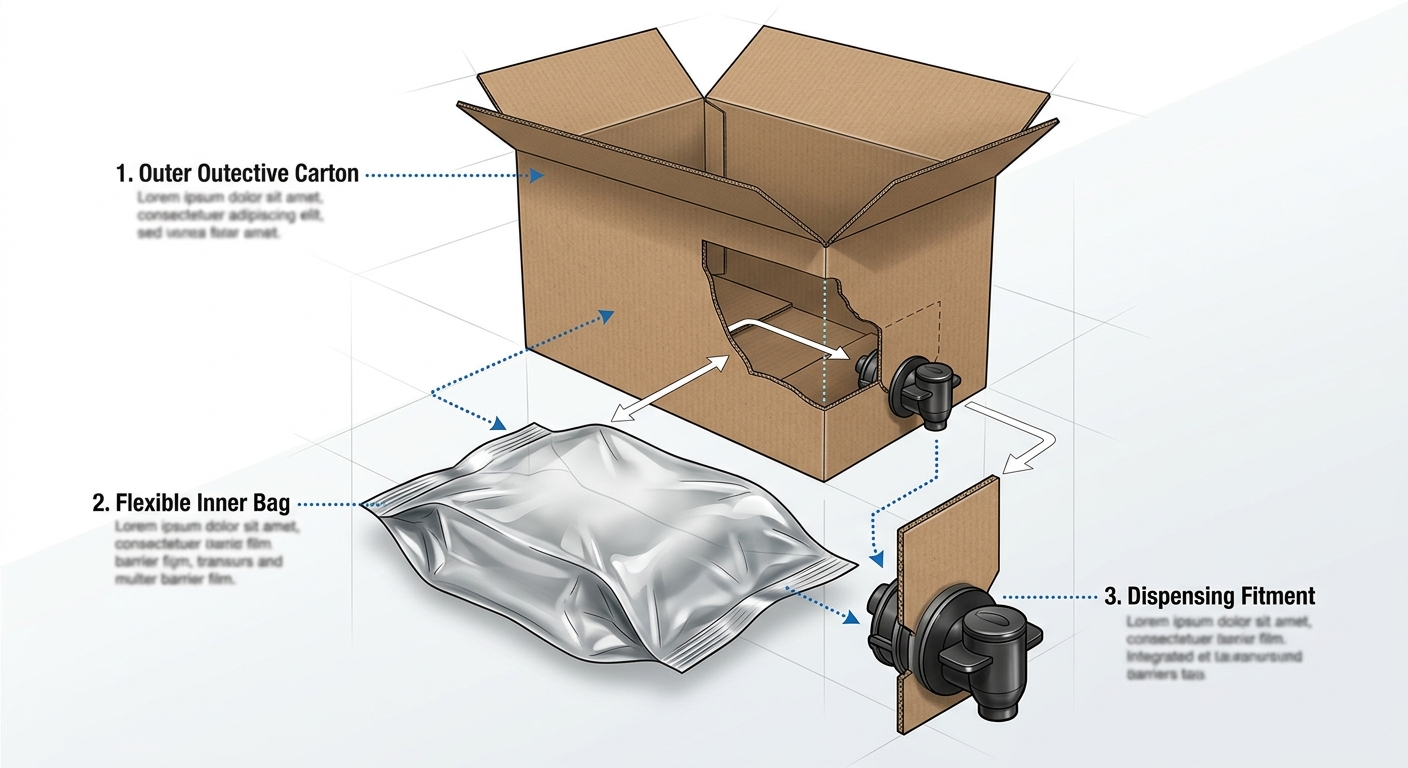
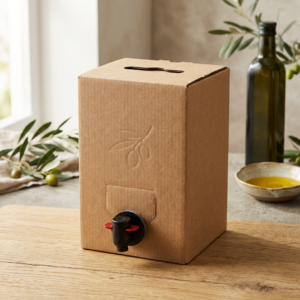
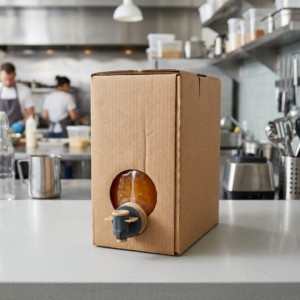
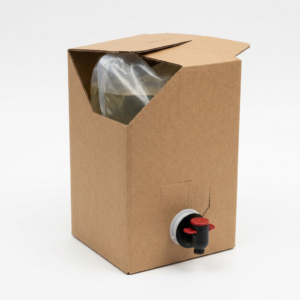
Bag-in-Box packaging for coffee is a liquid packaging system that places a flexible inner bag inside a protective outer carton. The bag holds the cold brew or coffee concentrate, while a fitment, valve or tap provides controlled dispensing. The carton supports stacking, handling and printed branding.
Unlike a rigid bottle, the flexible bag can collapse as liquid is dispensed. This can reduce the amount of air drawn into the package during use, but the actual protection depends on the selected film structure, closure system, filling method and dispensing equipment. Buyers should therefore evaluate the complete package rather than choosing a bag based only on capacity.
For a concise introduction to the components and operating principles, see this complete guide to Bag-in-Box packaging.
Cold Brew and Coffee Concentrate Applications
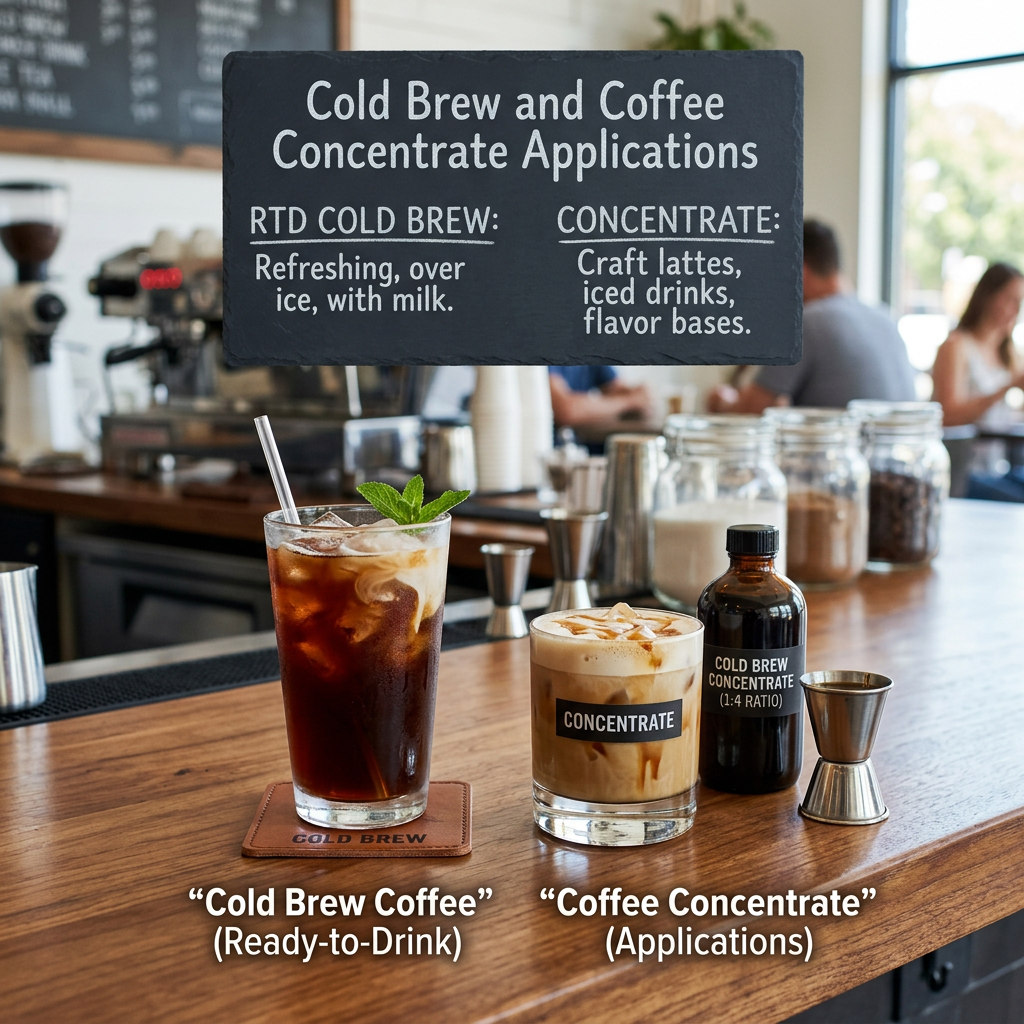
Cold brew is coffee extracted with cold or room-temperature water, while coffee concentrate is a stronger liquid coffee base intended to be diluted, blended or used in foodservice recipes. Both products can be packaged in Bag-in-Box formats, but their specifications may differ according to acidity, solids content, viscosity, serving method and expected time between filling and final use.
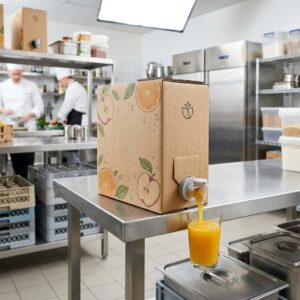
For ready-to-serve cold brew, the package should support clean dispensing in cafés, offices, restaurants or self-service beverage stations. A practical specification may include a bag capacity that matches daily usage, a compatible valve or connector and an outer carton sized for the operator’s storage and dispensing area.
For coffee concentrate, the buyer may prioritize larger formats, accurate portion control and compatibility with a dilution or beverage dispensing system. Concentrate can also be used in desserts, sauces and ready-to-mix beverages, so the fitment and discharge characteristics should be tested with the intended equipment.
- Foodservice: prioritize reliable connections, easy handling and a format that limits unnecessary opening and resealing.
- Retail or direct delivery: prioritize carton presentation, transport protection, consumer instructions and a closure suitable for the intended user.
- Industrial or ingredient supply: confirm fill volume, pallet configuration, product viscosity and the receiving plant’s unloading process.
Material and Oxygen Barrier Considerations
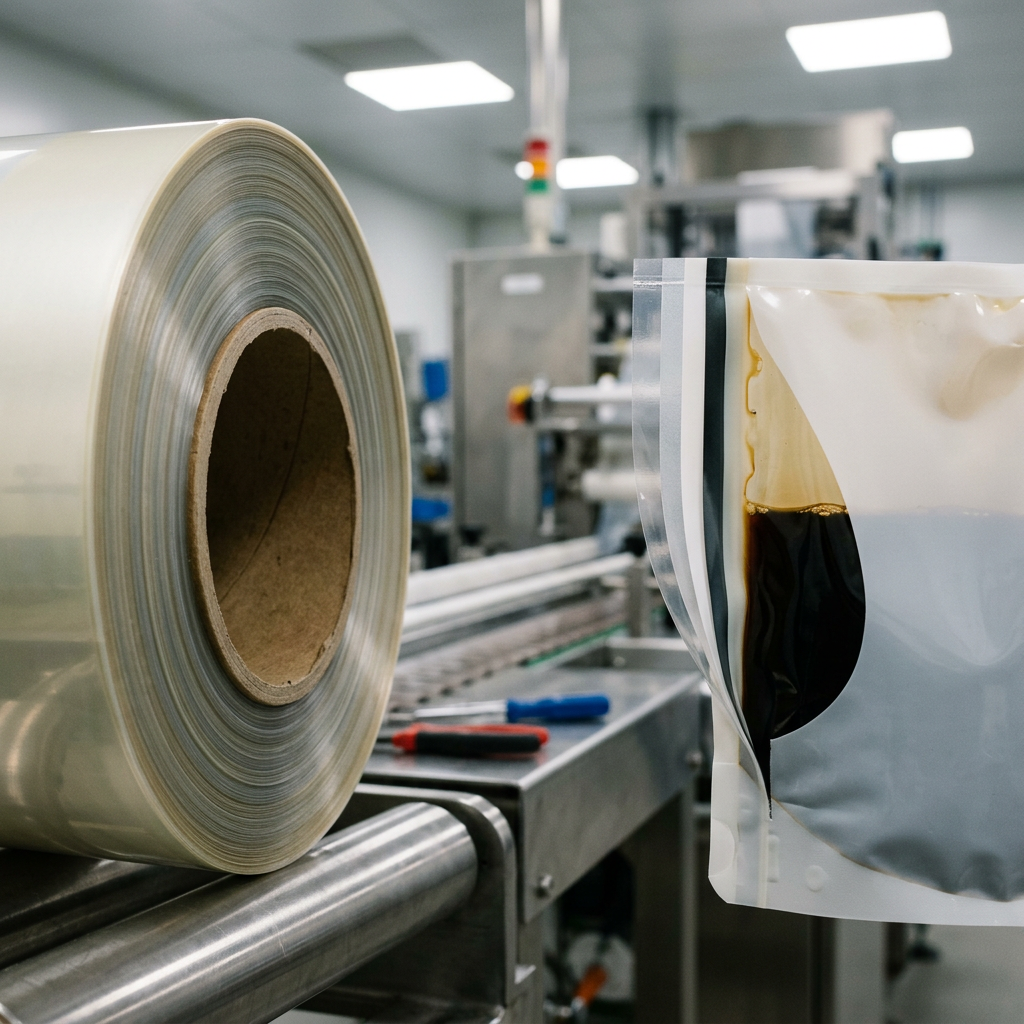
The film structure is the multilayer combination of plastic and, when required, barrier materials used to form the bag. Its purpose is to balance product protection, seal integrity, flexibility, filling performance and cost. Coffee buyers should not select a film only by its outer appearance or total thickness.
Oxygen exposure can contribute to flavor and aroma changes in coffee beverages. The required oxygen barrier depends on the product recipe, dissolved oxygen, pasteurization or other treatment, storage temperature, distribution duration and desired shelf life. A supplier may recommend a standard polyethylene-based structure for some applications or a higher-barrier laminate for more demanding protection requirements. The correct choice must be confirmed through product and package testing.
Consider the following when requesting a quotation or technical review:
- coffee type, roast profile, acidity, solids content and any added dairy, sugar or flavoring;
- target fill volume and headspace requirements;
- expected shelf life, storage temperature and distribution conditions;
- required resistance to puncture, flex cracking and seal failure;
- food-contact and market-specific compliance documentation requested by the buyer.
Barrier performance is not determined by film alone. Seals, fitments, filling conditions, carton handling and storage all influence the package’s practical performance.
Fitments, Valves and Dispensing Requirements
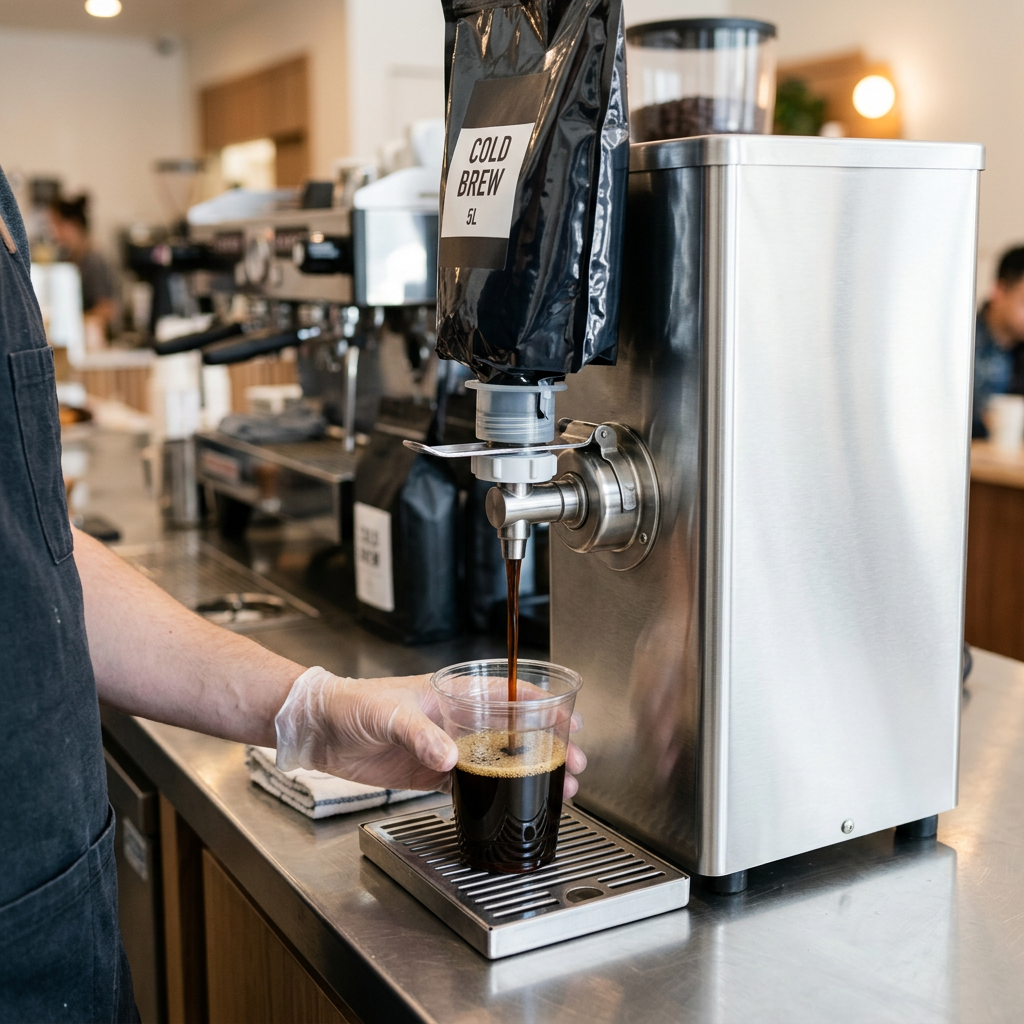
A fitment is the connection welded or sealed to the flexible bag. It may accept a valve, tap, cap, connector or tube. The dispensing assembly controls how the coffee is connected to the serving equipment and how the package is opened, so it should be specified together with the bag rather than as an afterthought.
For cold brew and concentrate, review the full dispensing path from the bag outlet to the receiving container or machine. Important questions include:
- Will the product be poured manually, connected to a pump or attached to a beverage dispenser?
- What connector type and outlet size does the filling or dispensing equipment require?
- Does the product contain particles, oils or a viscosity level that affects flow?
- How often will the package be opened, and is resealing required?
- Can operators connect and disconnect the package without spills or excessive product waste?
Fitment location also matters. Top, side and bottom positions can affect carton design, shelf placement and the ability to dispense near the end of the package. The supplier and filling-equipment provider should confirm dimensions, weld area, closure compatibility and functional testing before production.
Filling and Sealing Considerations
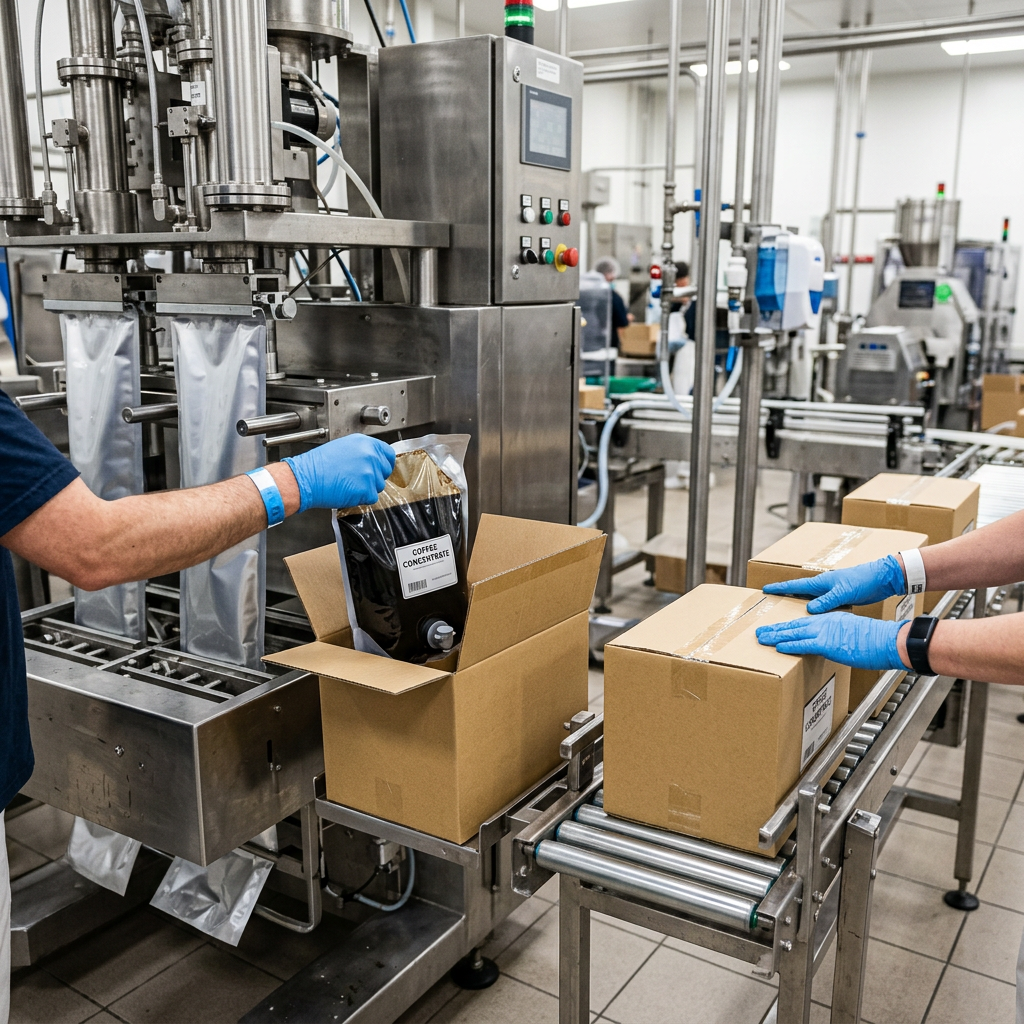
Bag-in-Box packaging for coffee must be matched to the filling process used by the roaster, co-packer or beverage manufacturer. Before ordering, identify whether the product is filled cold, hot or after another treatment step. The process can affect film selection, fitment materials, seal design, filling speed and the package’s required resistance to temperature and pressure.
Ask the packaging supplier and filler to confirm the following details:
- filling temperature and any cooling or holding step before filling;
- target net volume, acceptable fill tolerance and headspace;
- product viscosity and whether filtration is used;
- equipment compatibility with the bag mouth, fitment and closure;
- seal inspection, leak testing and handling procedures after filling;
- carton insertion method and whether the filled bag is moved manually or automatically.
Do not assume that a bag designed for one coffee process is suitable for another. Production trials should evaluate sealing, leakage, fitment connection, carton fit and dispensing behavior using the actual coffee formula and equipment. Final material and construction selection should be confirmed with both the packaging supplier and the filling-process team.
Storage, Transport and Handling
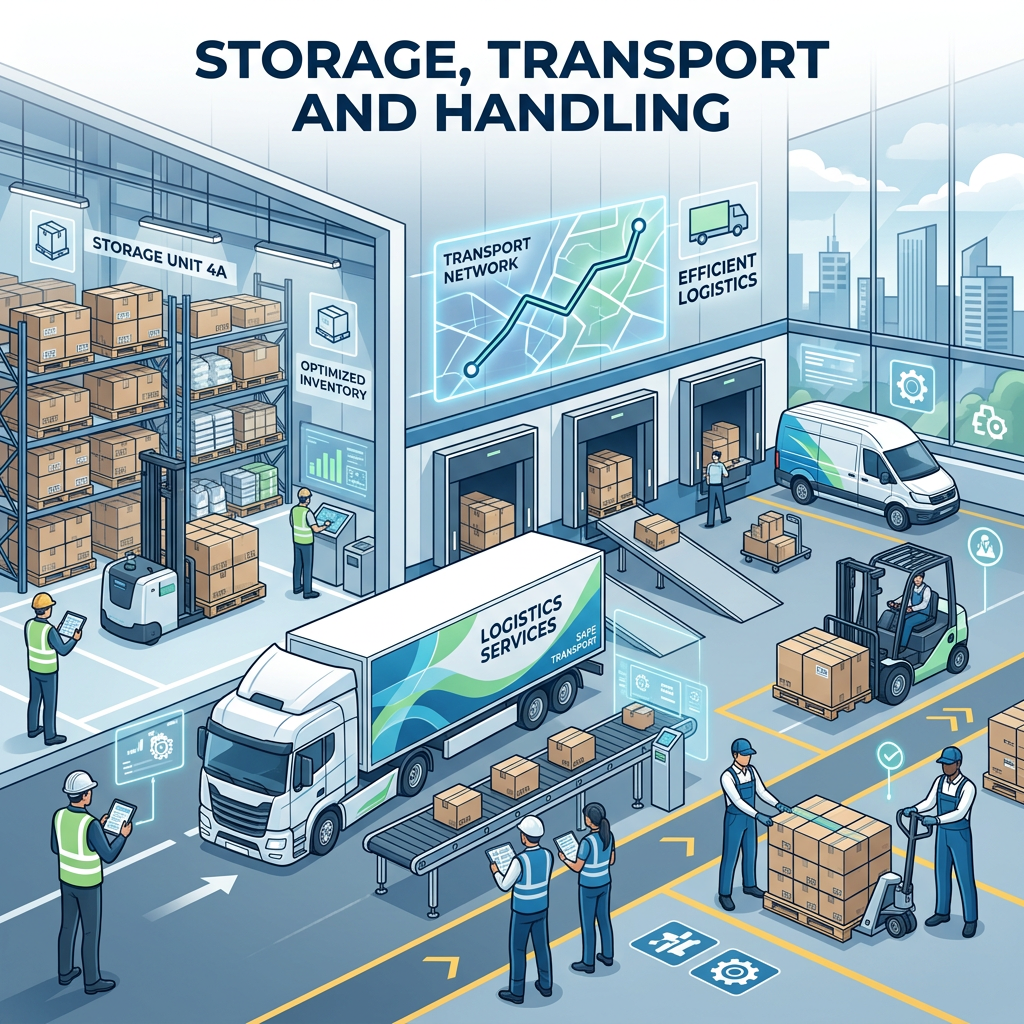
Packaging performance continues after filling. Coffee brands should define the expected storage and distribution environment before approving the bag and carton. Temperature, sunlight, humidity, stacking pressure, vibration and handling practices can influence the condition of both the flexible bag and the outer carton.
For stored cold brew or concentrate, follow the product manufacturer’s validated storage instructions. Packaging selection cannot replace appropriate refrigeration, sanitation or shelf-life validation. If the product is distributed through multiple climates, discuss temperature ranges and transit conditions with the supplier and test representative filled packages.
During warehouse and transport planning, review:
- carton dimensions, pallet pattern and maximum stacking height;
- protection against sharp edges, compression and puncture;
- carton moisture exposure in chilled or humid environments;
- orientation requirements for fitments and dispensing outlets;
- first-in, first-out handling and the date or lot information needed for traceability.
Use filled-package trials to confirm that the carton protects the bag during normal handling. Storage and transport requirements should be included in the packaging specification, not left only to the logistics provider.
How to Specify a Coffee Bag-in-Box Project
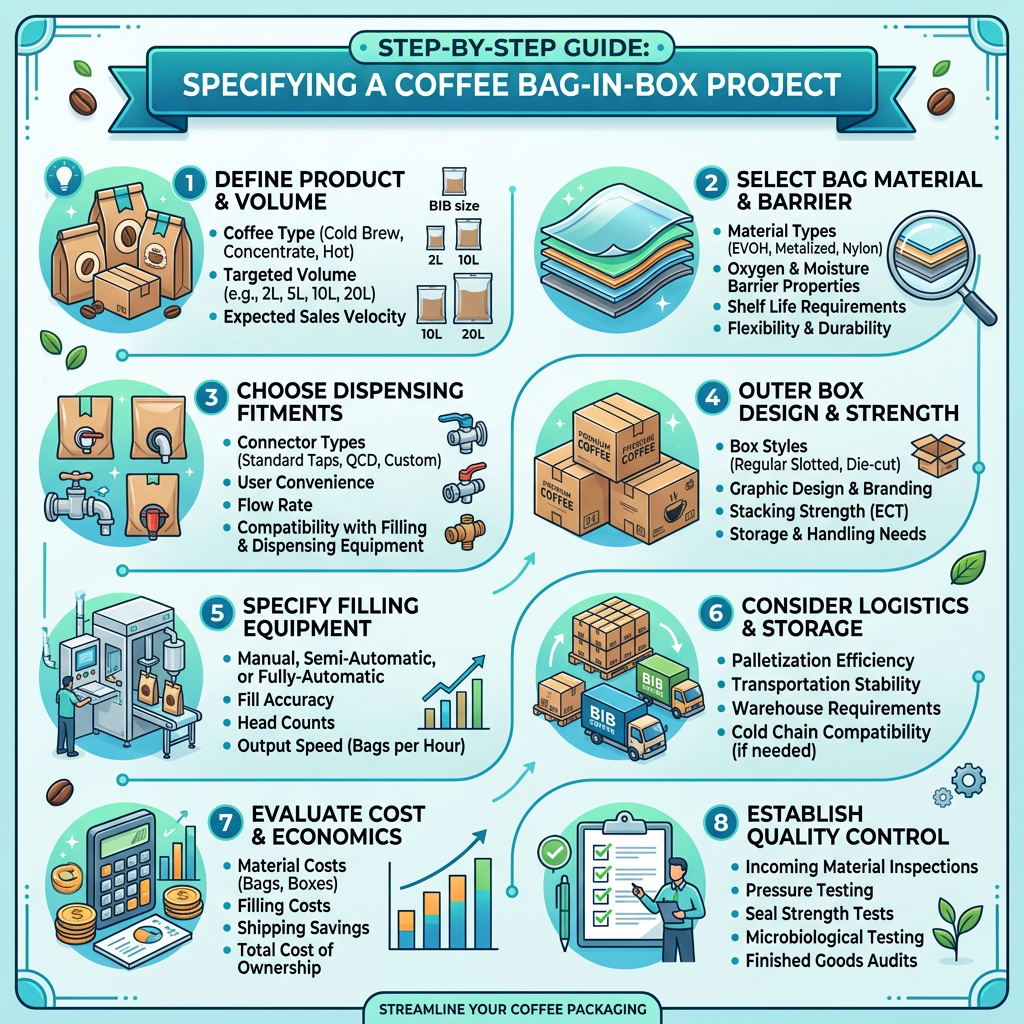
A clear technical brief helps packaging suppliers recommend a suitable construction and reduces avoidable revisions. Include the product, package use case and filling details before discussing artwork or commercial terms.
- Product profile: describe cold brew or concentrate, ingredients, viscosity, acidity, particles and processing method.
- Capacity: state the target net volume and whether the format is intended for retail, foodservice, industrial or export distribution.
- Protection: define the expected shelf life, storage temperature, oxygen sensitivity and distribution environment.
- Dispensing: provide the valve, tap, connector, outlet and fitment-location requirements.
- Filling: share filling temperature, equipment type, sealing method, inspection process and trial requirements.
- Carton and printing: confirm dimensions, branding areas, handling marks and the destination market’s labeling needs.
- Validation: agree on samples, filled-package testing, approval criteria and the documents required for purchasing.
Buyers should also confirm whether the proposed package works with their warehouse and customer workflow. A technically suitable bag can still be inconvenient if operators cannot connect it, store it or empty it efficiently.
Choosing a Bag-in-Box Packaging Supplier
For a B2B coffee packaging project, supplier evaluation should cover technical communication, manufacturing capability, quality controls, artwork coordination and export support. Ask how the supplier reviews the product formula, filling process, fitment requirements and destination market before recommending a structure.
HUACANG Packaging Manufacturing Co., Ltd. is based in Guangzhou, China and was established in 1998. Its 15,000 square meter facility uses advanced 9-color printing and laminating lines for flexible packaging production. Buyers should still request application-specific samples and confirm all technical, regulatory and commercial details for their own coffee product.
It can also be useful to review broader supplier-selection considerations in this resource on Bag-in-Box manufacturers. The most suitable supplier is the one that can clearly connect material selection, fitment design, filling performance, carton requirements and destination-market needs.