Table of Contents
- Start With the Complete Packaging Requirement
- Define the Liquid and Compatibility Requirements
- Select the Film Structure and Barrier Level
- Choose the Fitment, Valve and Filling Format
- Confirm Capacity, Dimensions and Carton Integration
- Plan Printing and Brand Presentation
- Review Storage, Transport and Destination Market Needs
- Prepare a Clear RFQ for the Manufacturer
Choosing a custom Bag-in-Box packaging manufacturer requires more than selecting bag capacity. B2B buyers should define the liquid, barrier needs, fitment, filling process, printing, storage conditions, destination market and procurement requirements before requesting a quotation.
Start With the Complete Packaging Requirement
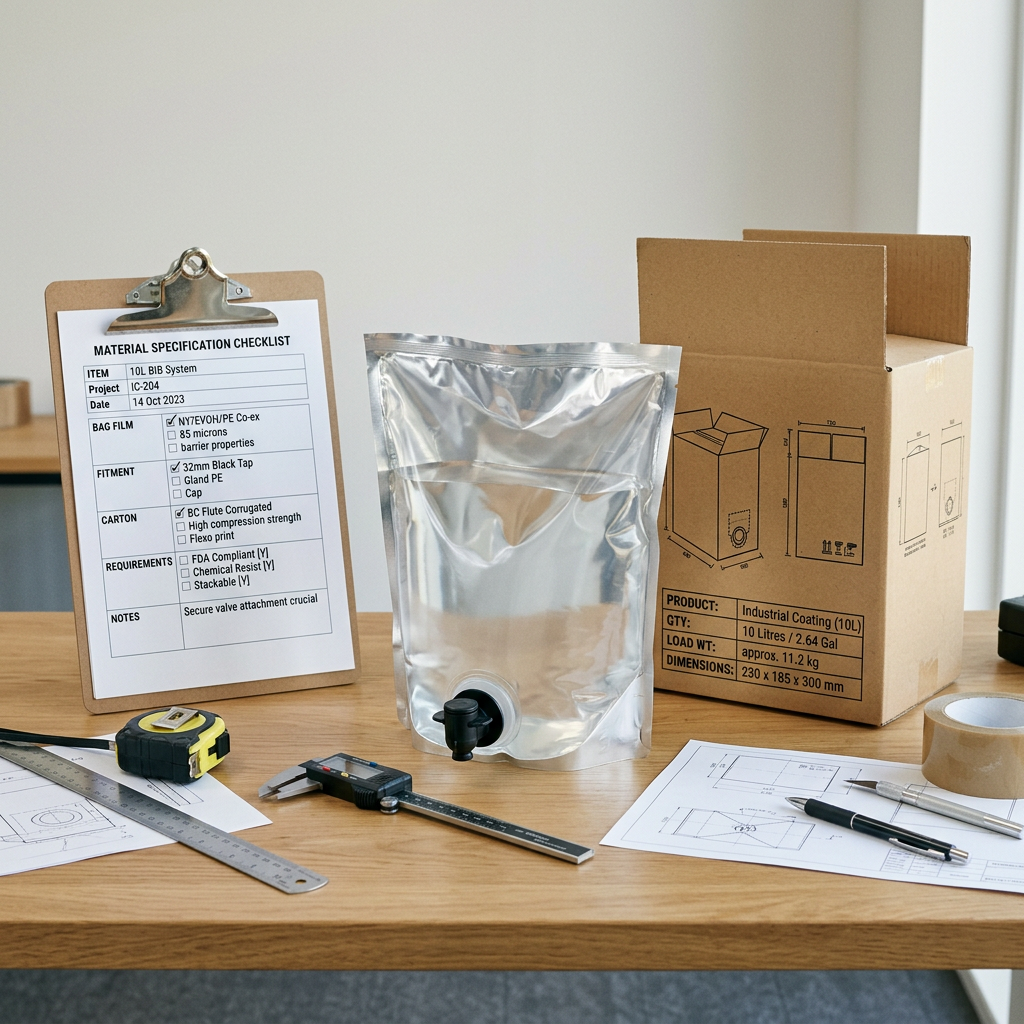
A custom Bag-in-Box packaging manufacturer should receive more than a requested bag size. The most useful specification describes the liquid, filling method, target capacity, dispensing application, storage conditions, destination market and branding requirements. This information allows the manufacturer to assess the packaging system as a whole rather than quote an unsuitable bag, film or fitment.
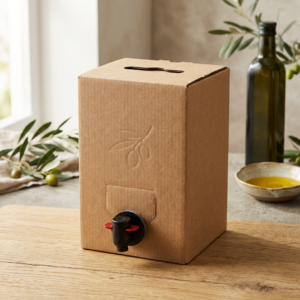
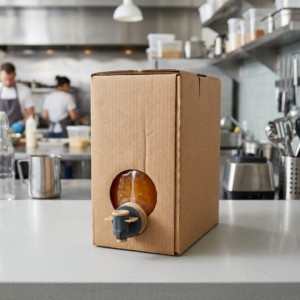
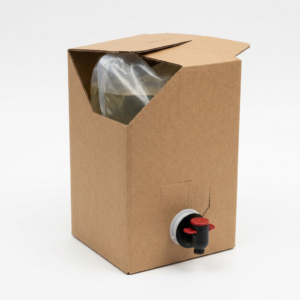
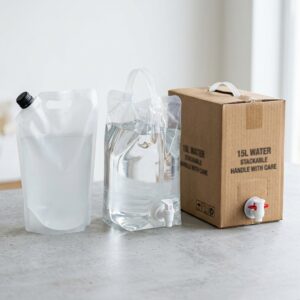
Bag-in-Box packaging is a liquid packaging system that combines a flexible inner bag, a dispensing fitment and an outer protective carton. The bag holds the product, the fitment provides filling or dispensing access, and the carton supports handling, stacking and brand presentation. Buyers unfamiliar with the format can review this guide to how Bag-in-Box packaging works before preparing a technical brief.
Begin with a one-page project summary containing:
- Product name, liquid type and key formulation characteristics
- Nominal fill volume and acceptable fill tolerance
- Intended filling line or filling method
- Dispensing method and required fitment position
- Expected shelf, warehouse and transport conditions
- Outer carton dimensions or pallet constraints, if already defined
- Printing requirements, artwork status and destination market
- Estimated order pattern and whether different sizes or variants are needed
A clear brief reduces avoidable revisions and gives the supplier a practical basis for discussing material selection, fitment compatibility and production planning.
Define the Liquid and Compatibility Requirements
Material selection starts with the product, not the packaging appearance. Tell the manufacturer whether the contents are water-based, acidic, oily, alcoholic, viscous, particulate, oxygen-sensitive or sensitive to light. Also disclose preservatives, flavor oils, solvents, enzymes, salts and other components that may affect the packaging materials.
Product compatibility means the packaging materials can remain suitable in contact with the liquid for the intended storage period and conditions. A supplier may need product details, a formulation summary or a sample to evaluate possible interaction between the liquid, inner film and fitment components. Compatibility should not be assumed because two products have similar colors or viscosities.
Buyers should specify:
- pH range, alcohol content, oil content or other relevant chemical characteristics
- Viscosity and whether the product contains particles or fibers
- Hot-fill, ambient-fill, aseptic or other filling conditions
- Target shelf life and whether the product is opened and reclosed during use
- Light, oxygen, moisture or aroma sensitivity
- Cleaning, sterilization or handling requirements for the filling line
For beverages, sauces, concentrates, edible oils, liquid foods, cleaning products and industrial liquids, the suitable structure may differ even when the bag capacities are identical. Final compatibility and shelf-life validation should be confirmed with the packaging supplier and the filling-process team using the actual product and intended conditions.
Select the Film Structure and Barrier Level
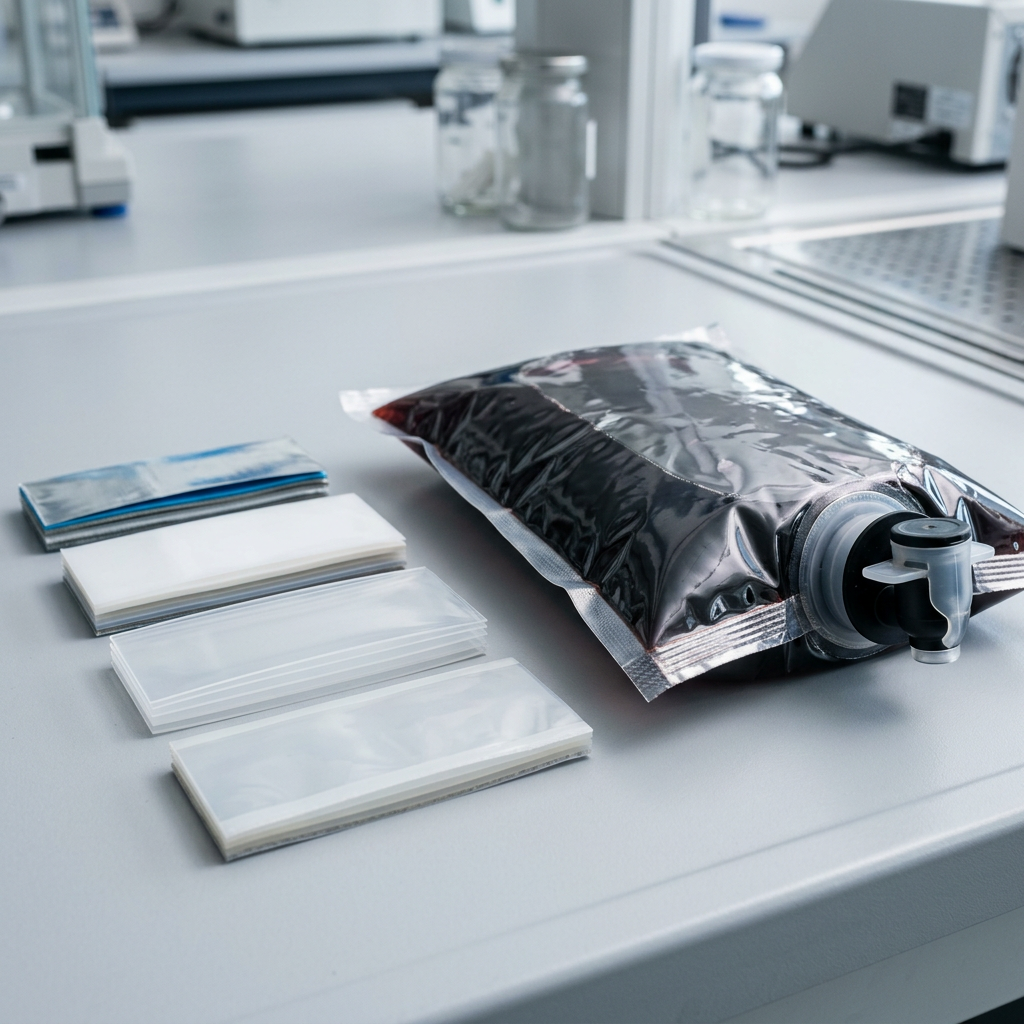
The film structure is the layered combination of plastic films, adhesives and, where required, barrier materials used to form the bag. A barrier is a material layer or structure that limits the passage of oxygen, moisture, light or aroma. The right structure balances product protection, flexibility, sealing performance, filling-line requirements and cost considerations.
Ask the manufacturer to explain which properties are required for your application rather than requesting the thickest or most complex film by default. Important questions include:
- What oxygen and moisture protection is needed for the target shelf life?
- Does the product require light protection or aroma retention?
- Will the bag be exposed to hot filling, freezing, warehouse heat or repeated handling?
- What seal strength and drop-resistance expectations apply?
- Is the bag intended for direct dispensing, secondary transfer or use inside equipment?
- Are there destination-market restrictions affecting the material choice?
Film performance also depends on manufacturing quality, sealing parameters, filling equipment and handling after filling. A barrier structure that is suitable in one process may not be the best choice in another. Request technical documentation for the proposed structure and confirm the final selection through trials or validation with the supplier and filling operation.
Do not evaluate material only by nominal thickness. The relevant specification may include layer construction, sealant behavior, puncture resistance, flex-crack resistance, coefficient of friction and fitment-sealing performance. The manufacturer should connect each property to a real product or process requirement.
Choose the Fitment, Valve and Filling Format
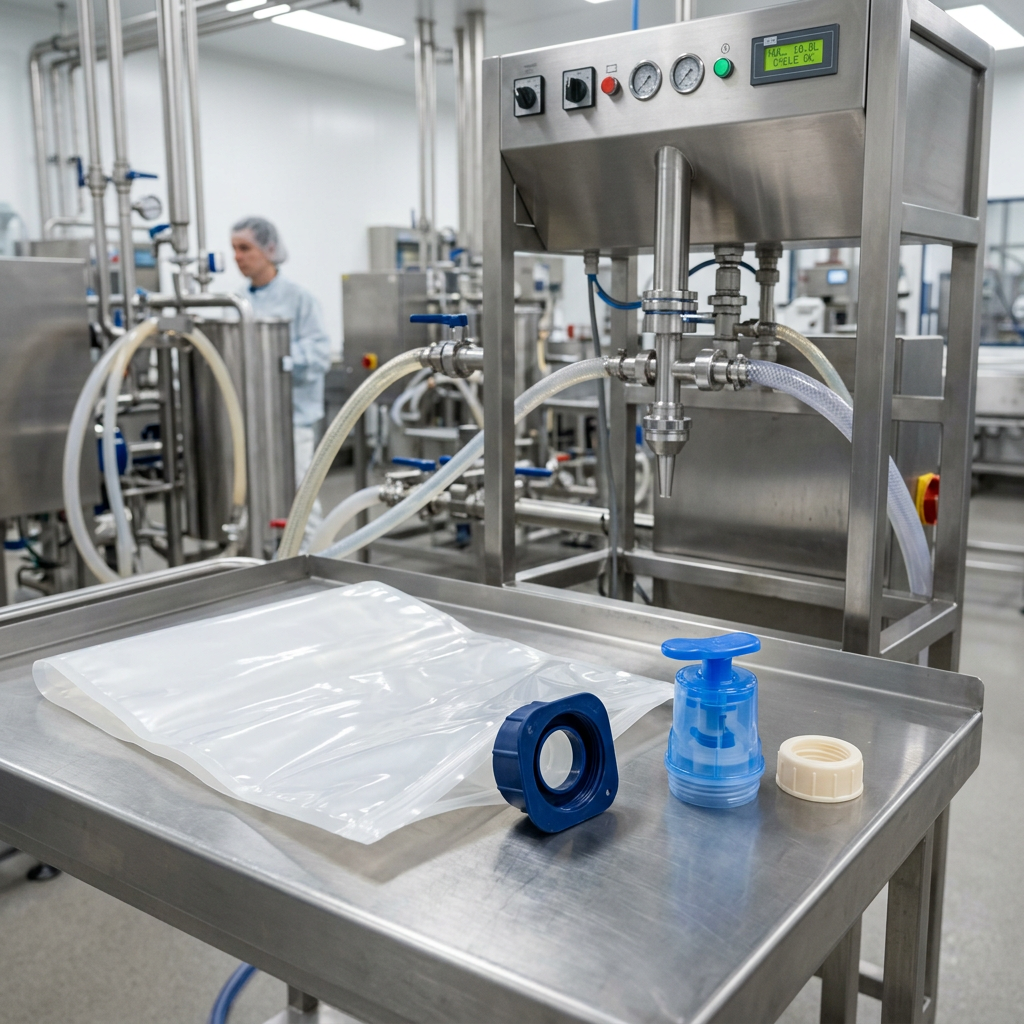
A fitment is the molded or attached component that connects the bag to filling or dispensing equipment. A valve controls the release of liquid during dispensing. These components affect line compatibility, consumer handling, product evacuation and the risk of leakage, so they should be specified at the same time as the bag.
Provide the supplier with the filling equipment model or interface details where possible. Confirm the fitment neck, opening, cap or closure, flange design, location and orientation. For dispensing applications, explain whether the user needs a tap, valve, connector or another outlet and whether the product must be dispensed in a controlled stream.
Important fitment questions include:
- Is the bag filled through the same opening used for dispensing?
- What connection type does the filling line require?
- What is the required fitment position relative to the carton?
- Will the product contain particles that could affect the outlet?
- Does the package need resealing after partial use?
- What leakage, torque or opening checks are used on the filling line?
Fitment selection should be validated with filled samples. A component that appears dimensionally suitable may still cause problems if the filling head, sealing tools, carton opening or dispensing hardware is not aligned. Confirm the bag, fitment and equipment as one system before approving mass production.
Confirm Capacity, Dimensions and Carton Integration
Nominal capacity is only one part of the dimensional specification. The manufacturer also needs the target filled volume, bag dimensions, fitment location, headspace requirements and relationship between the bag and outer carton. Headspace is the unfilled space left inside a package; the required amount depends on the liquid, filling method and handling conditions.
When an existing carton is being used, provide its internal dimensions, opening position and tolerance. The filled bag must fit without excessive compression, while the fitment must remain accessible and correctly aligned. If the carton is still under development, coordinate the bag and carton drawings instead of designing each component independently.
Also consider how the package will be moved and stacked. Share pallet dimensions, maximum stack height, warehouse constraints and transport orientation if these are known. A packaging supplier can then discuss practical tolerances and sample requirements. These details are especially important when a buyer plans to use multiple bag capacities within one carton family.
Approve dimensions using production-intent samples where possible. Small changes in bag gussets, seals or fitment placement can affect filling speed, carton fit and dispensing performance.
Plan Printing and Brand Presentation
Custom printing should be planned after the packaging architecture is understood, but before the final artwork is released. Ask the manufacturer which bag panels are printable, how the artwork should be positioned and what files are required for prepress review. The outer carton may carry most of the consumer-facing information, while the bag may need functional marks, identification or supporting graphics.
Clarify the number of colors, print reference standards, white ink requirements, varnish or finish preferences, registration expectations and artwork version-control process. Confirm whether the design must accommodate seals, gussets, folds, fitments and carton openings. A design that looks correct on a flat proof may shift visually when the bag is formed or placed inside the carton.
HUACANG Packaging Manufacturing Co., Ltd. is based in Guangzhou, China, and was established in 1998. Its 15,000-square-meter facility uses advanced 9-color printing and laminating lines. Buyers should still request application-specific artwork guidance and a proof or sample approval process rather than assuming that a printing capability alone determines the final result.
For supplier evaluation, review the manufacturer’s experience with similar bag formats, artwork communication, color approval and change control. This is often as important as the number of available print colors.
Review Storage, Transport and Destination Market Needs
Packaging requirements continue after filling. Tell the manufacturer how the product will be stored, transported and sold. Relevant conditions may include warehouse temperature, freezing exposure, sunlight, humidity, vibration, pallet stacking, long-distance shipping and the expected time before use.
Destination-market requirements should also be included early. These may affect labeling, language, recycling information, material restrictions, food-contact requirements or importer documentation. Requirements vary by product and market, so buyers should provide the applicable regulatory brief rather than rely on a general packaging assumption.
Discuss the complete distribution route:
- Where filling takes place and how filled cartons leave the facility
- Whether the product moves through cold-chain, ambient or variable conditions
- How cartons are palletized, wrapped and handled
- Whether the end user stores the opened bag for repeated dispensing
- Which quality records, declarations or technical documents are required for import and sale
The packaging supplier can recommend a suitable direction, but final market compliance and product-packaging validation remain the buyer’s responsibility together with the relevant technical, regulatory and filling teams.
Prepare a Clear RFQ for the Manufacturer
A strong request for quotation, or RFQ, helps a custom Bag-in-Box packaging manufacturer respond with relevant options. An RFQ is a commercial and technical request that defines what the buyer wants supplied and how the offer should be evaluated. It should separate confirmed requirements from items that are still open for recommendation.
Include the following information:
- Liquid description and compatibility information
- Bag capacity, target fill volume and dimensional constraints
- Required film performance or the conditions the structure must withstand
- Fitment, valve, cap, outlet and filling-interface requirements
- Carton dimensions, pallet expectations and shipping conditions
- Artwork files, print colors, proofing process and language versions
- Target market and any applicable documentation or compliance brief
- Sample, testing and approval expectations
- Expected order frequency, packaging variants and destination port or country
Ask the supplier to identify assumptions, alternatives and information still needed. This makes quotations easier to compare and prevents a low initial price from hiding later changes to film, fitment, printing or carton integration. A useful supplier relationship is consultative: the manufacturer should explain the reason for each recommendation and the buyer should provide enough process information to test it properly.
When comparing potential suppliers, review technical communication, sample support, production controls and relevant manufacturing experience alongside commercial terms. HUACANG Packaging serves global B2B customers from its Guangzhou manufacturing base. Buyers can also use the company’s Bag-in-Box packaging overview as a starting point when aligning internal teams around the format.
In conclusion, the best specification covers the entire packaging system: liquid, film, barrier, fitment, filling, dimensions, carton, printing, storage, market and procurement. Confirm the final material structure, fitment and filling conditions with the packaging supplier and the actual filling process before approving production.