Table of Contents
- Why Bag-in-Box Packaging Is Used for Wine
- How to Choose the Bag Structure
- How to Choose the Oxygen Barrier
- How to Choose Taps and Fitments
- Filling, Handling and Storage Considerations
- Wine Bag-in-Box Procurement Checklist
- Conclusion
Bag-in-Box packaging for wine can protect product quality while simplifying dispensing, transport and storage, but the bag, tap, barrier and filling process must be selected as one system. This guide explains the main technical and procurement decisions for wine producers, importers and private-label buyers.
Why Bag-in-Box Packaging Is Used for Wine
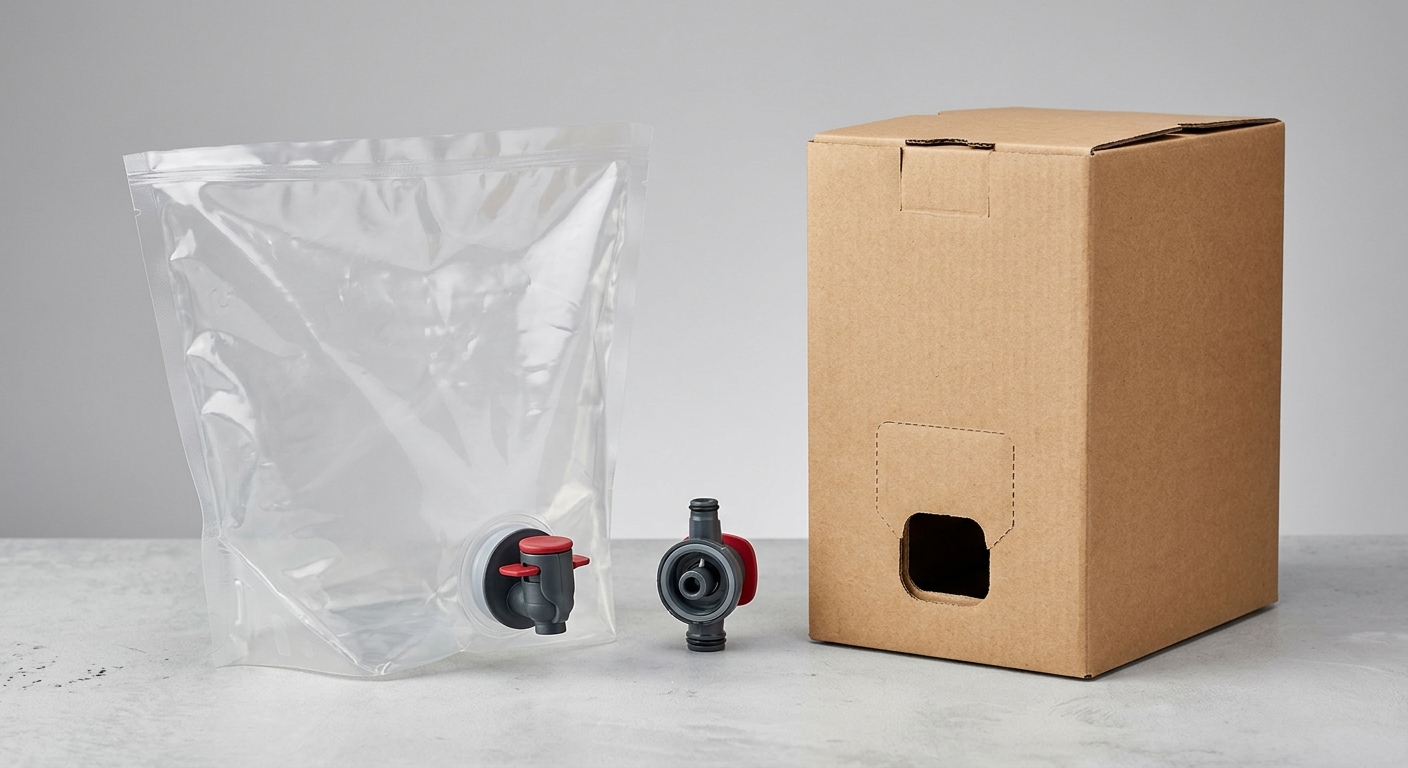
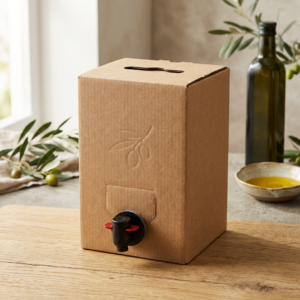
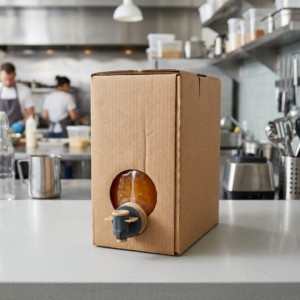
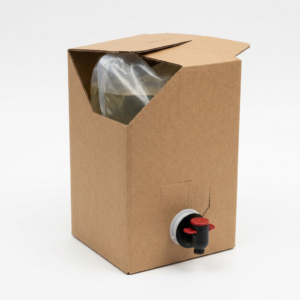
Bag-in-Box packaging for wine is a liquid packaging system made from a flexible inner bag, a dispensing fitment or tap, and an outer protective carton. The bag holds the wine, the tap controls dispensing, and the carton provides structure for transport, stacking and retail presentation. For wine producers and B2B buyers, the system can be useful when the intended format requires efficient handling, controlled dispensing and protection from light.
Unlike a rigid bottle, a flexible bag can collapse as wine is dispensed. This reduces the amount of air entering the package during normal use, although the actual protection depends on the bag construction, tap design, filling method and storage conditions. The carton also helps shield the inner bag from handling damage and direct light.
Bag-in-box wine packaging is not automatically suitable for every wine style or market. Product sensitivity, expected shelf life, package capacity, filling equipment, distribution conditions and local packaging requirements should be reviewed before a specification is approved. A packaging supplier and the filling team should confirm the final material selection through product and process testing.
For buyers who need a basic explanation of the system, this complete guide to bag-in-box packaging provides useful background on the bag, fitment and carton relationship.
How to Choose the Bag Structure
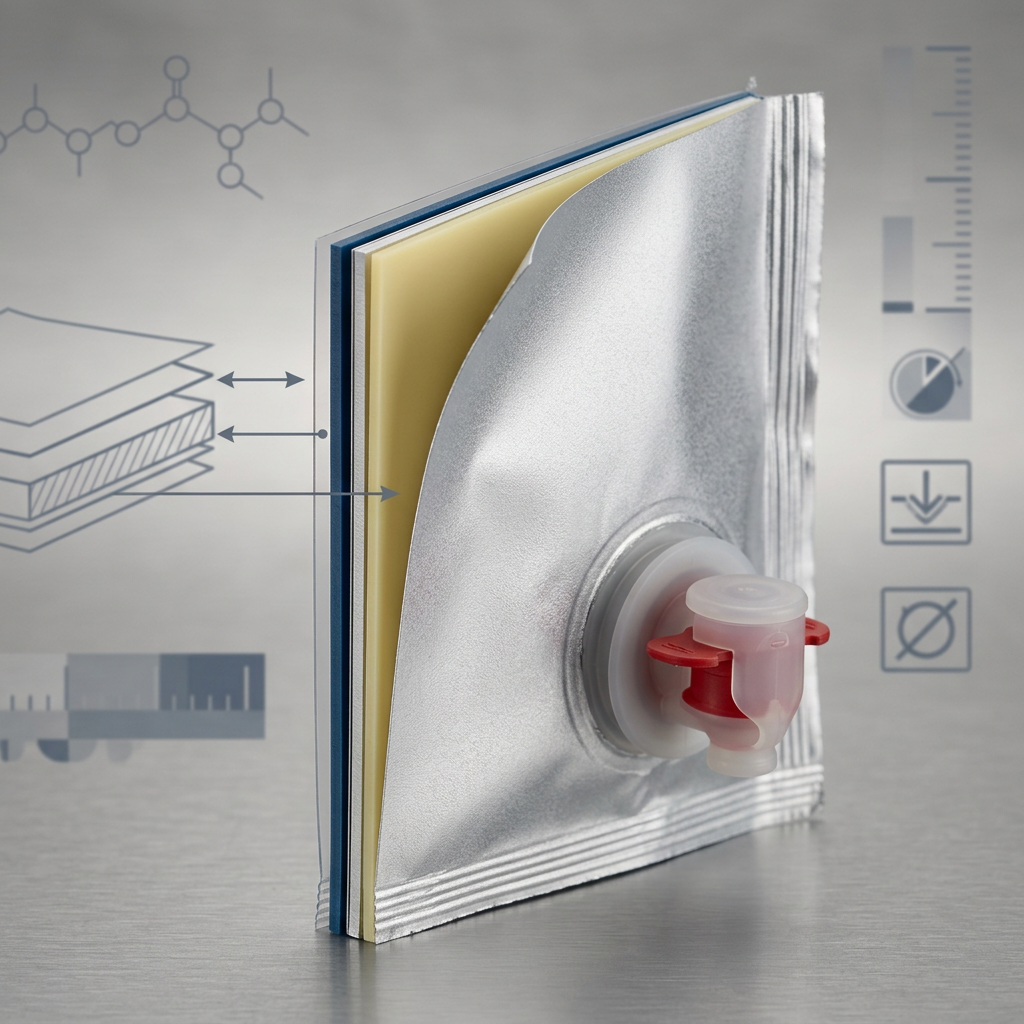
The inner bag is a multilayer flexible film structure. Each layer may contribute a different function, such as product contact, sealing, mechanical strength, print or barrier protection. A wine buyer should evaluate the complete structure rather than selecting a film by thickness alone.
Product-contact and sealing layers
The innermost layer touches the wine and must be suitable for the product, filling temperature and intended storage conditions. It should also form consistent seals around the bag perimeter and fitment area. Wine chemistry, alcohol content, acidity and any additives can affect material compatibility, so the supplier should review the product specification before recommending a film.
Strength and handling layers
Outer layers help the bag withstand filling, carton insertion, transport vibration and normal handling. Bag dimensions should match the carton so the filled package is supported without excessive stretching, folding or pressure around the tap. A strong structure does not eliminate the need for careful palletization and handling; sharp edges, compression and rough movement can still damage a flexible package.
Bag capacity and format
Choose the nominal capacity according to the sales channel, consumption pattern, carton dimensions and filling line. Smaller formats may suit portioned or hospitality applications, while larger formats can support food-service, events or other high-volume use. The final capacity should account for filling tolerances, headspace requirements and the operating instructions of the filling equipment.
When requesting samples, ask for the proposed layer structure, nominal thickness, bag dimensions, seal configuration and fitment location. These details allow the filling team to check machine compatibility before a purchase order is placed.
How to Choose the Oxygen Barrier
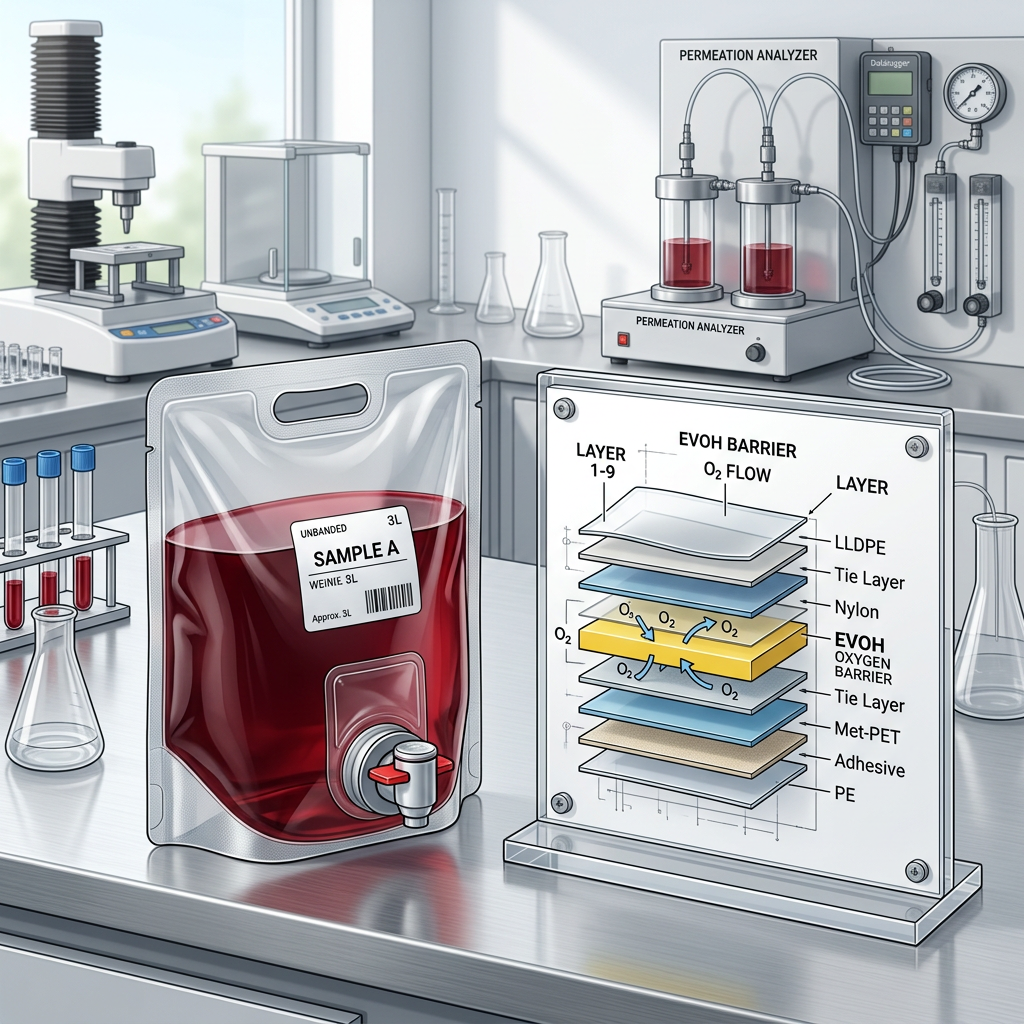
An oxygen barrier is a layer or material arrangement that slows the movement of oxygen through the package. Oxygen management matters for wine because unwanted oxygen exposure can affect aroma, color and overall sensory stability. The required barrier level should be based on the wine style, expected shelf life, filling conditions, distribution route and storage environment rather than on a generic “high barrier” label.
Barrier performance is influenced by the entire package. The film, seals, fitment interface and tap closure all matter. A film with a suitable barrier may not deliver the intended result if the fitment is poorly sealed, the tap is damaged, or the filled bag contains excessive air. Carton protection can help reduce light exposure, but it does not replace oxygen control.
Ask the supplier to identify the barrier layer and provide the relevant technical information for the proposed structure. If oxygen transmission or shelf-life targets are important, agree on the test method, test conditions and acceptance criteria before production. Results from one material cannot be transferred directly to another structure or test environment.
Wine that is intended for relatively quick consumption may have different packaging needs from wine expected to remain in distribution or on a shelf for an extended period. Temperature fluctuations, warehouse heat, sunlight, transport duration and the opening pattern after dispensing should also be considered. Final barrier selection should be validated with the wine producer, packaging supplier and filling process.
Buyers comparing packaging formats can also review this overview of bag-in-box manufacturers when developing a supplier shortlist, while confirming each supplier’s actual film and fitment capabilities directly.
How to Choose Taps and Fitments
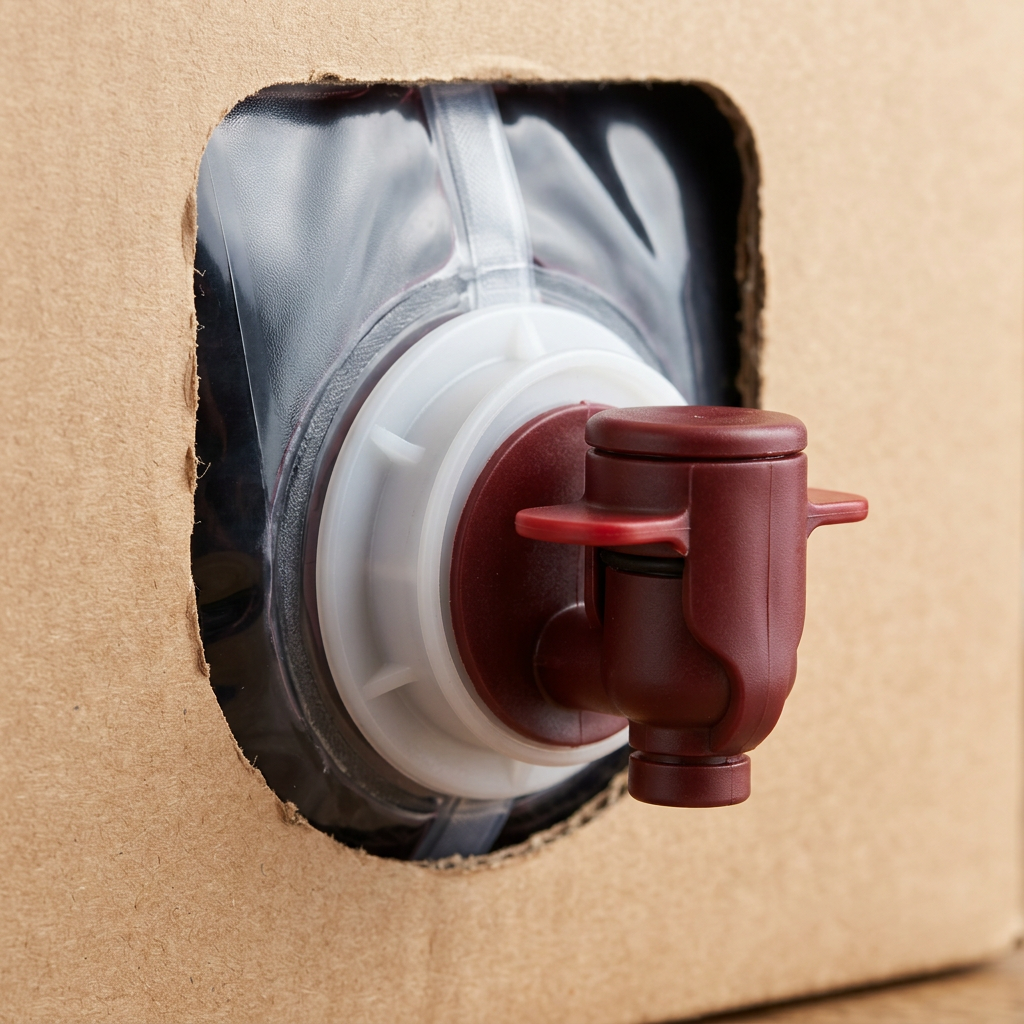
A fitment is the connector sealed into the bag, while a tap is the dispensing component attached to or integrated with that connector. In practical purchasing discussions, these terms are sometimes used interchangeably, but the fitment and tap must be evaluated as a matched system.
Start with the intended dispensing environment. Retail consumers may need a simple, intuitive tap that opens cleanly and reduces drips. Hospitality, food-service or event users may need a different outlet design, flow behavior or connection arrangement. The tap should be compatible with the carton opening and easy to access without forcing the bag against the carton edge.
Important questions include:
- What tap type and fitment dimensions are compatible with the filling line?
- Does the tap provide a secure closure during transport and storage?
- Can the operator open it without damaging the bag?
- Is the outlet design appropriate for the expected dispensing speed?
- Does the carton hold the tap in the correct position?
- Are closure, leakage and torque or activation checks defined?
Tap selection also affects the user experience and package yield. A tap that leaks, drips or is difficult to operate can create product loss and complaints even when the film is suitable. Request fitment drawings, sample taps and filling-line trials. The supplier and filler should confirm sealing conditions, tap insertion or attachment requirements, and carton compatibility before mass production.
Filling, Handling and Storage Considerations
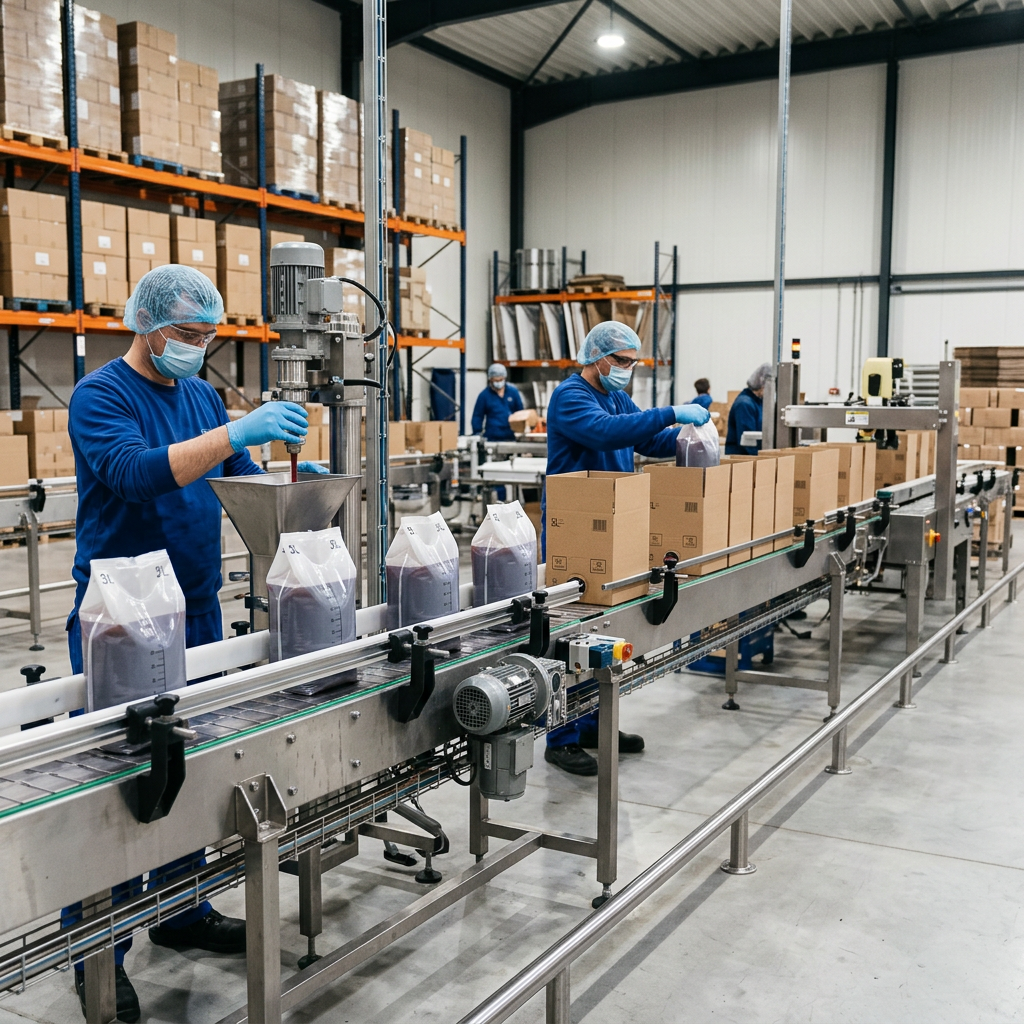
Good bag-in-box wine performance begins at the filling line. The packaging specification should be reviewed alongside the filler’s equipment, sanitation controls and operating procedure. A bag that works in one filling system may require different dimensions, fitment positioning or sealing settings in another.
Filling process
Confirm the filling temperature range, product flow, target fill volume, headspace control and method used to reduce unnecessary air exposure. The operator should inspect seals and the fitment area, verify that the tap is correctly positioned, and check filled bags for visible leaks or damage. Any product-contact or sanitation requirements should be agreed before trials.
Carton insertion and transport
Insert the filled bag without folding it sharply around the fitment or trapping the film under the carton flaps. The carton opening should support the tap while avoiding concentrated pressure. Pallets should be configured to prevent crushing, sliding and excessive load on the lower cartons. Handling instructions should cover loading, unloading and movement through the warehouse.
Storage and use
Store finished packages according to the wine producer’s product requirements and the packaging supplier’s technical guidance. Avoid conditions that could expose the package to excessive heat, freezing, direct sunlight, moisture or rough handling. After opening, the consumer or operator should follow the tap and storage instructions supplied for the specific product. The time a package remains in use after opening should be considered separately from unopened-package shelf life.
Before launch, conduct a trial that follows the intended filling, carton packing, transport simulation and storage conditions as closely as practical. Review wine quality, leakage, tap operation, carton condition and package appearance before approving the commercial specification.
Wine Bag-in-Box Procurement Checklist
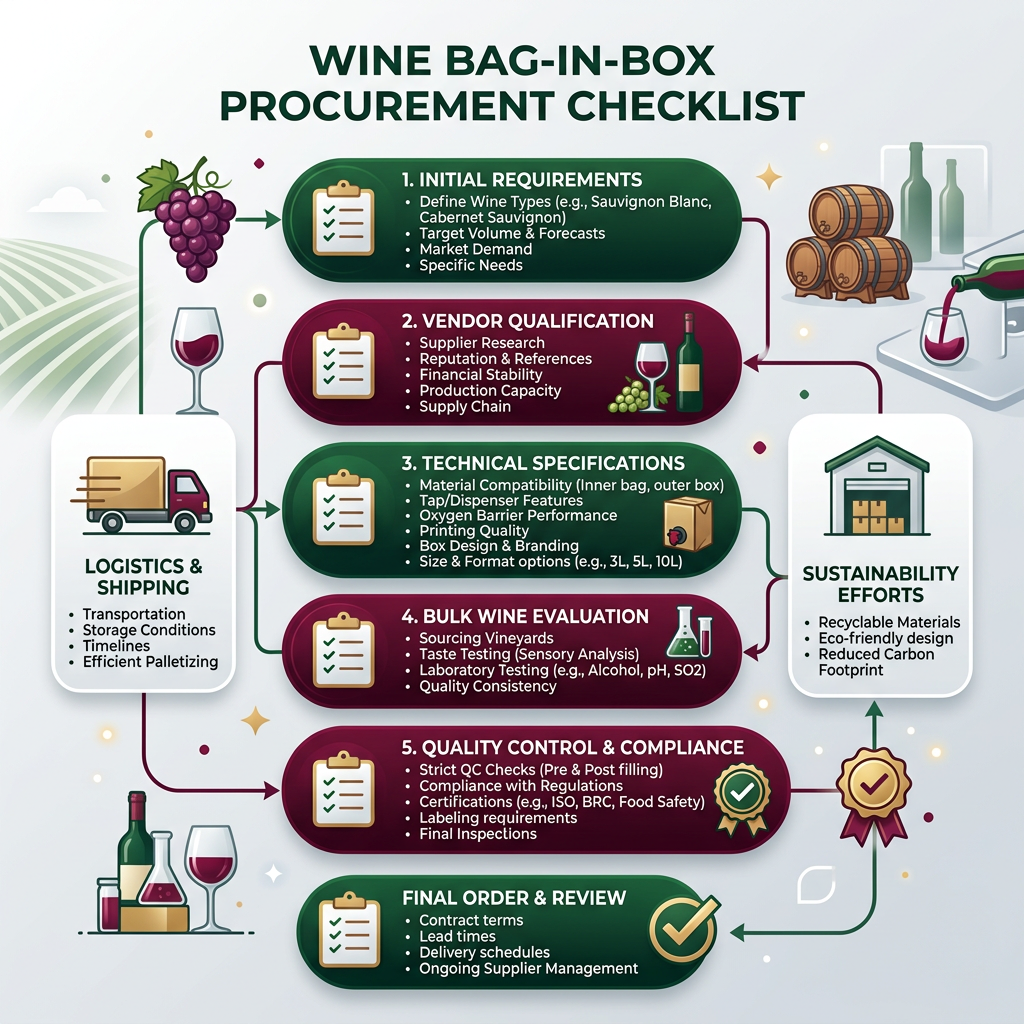
A clear technical brief helps suppliers recommend a practical bag-in-box wine specification. Include the following information in the request for quotation or sample review:
- Wine details: wine type, alcohol content, acidity or other relevant product characteristics, and any additives or processing conditions.
- Package format: target capacity, carton dimensions, preferred bag shape and dispensing orientation.
- Shelf-life objective: expected unopened storage period, post-opening use pattern and distribution conditions.
- Barrier requirement: oxygen and light protection priorities, together with any agreed test methods or acceptance criteria.
- Filling information: filling temperature, equipment type, fitment position, sealing method and trial requirements.
- Tap requirements: user group, dispensing speed, closure style, outlet design and carton access.
- Printing and identification: artwork, print colors, barcode or traceability needs, carton coordination and destination-market labeling.
- Commercial scope: planned quantity, sampling needs, delivery destination, packaging regulations and documentation requirements.
Ask for a technical data sheet, material description, dimensional drawings and sample evaluation plan. Also clarify how changes to film structure, fitment, tap, artwork or carton dimensions will be controlled. The lowest unit cost is not necessarily the lowest total cost if leakage, filling-line downtime, rejected cartons or wine-quality issues occur.
Choose a supplier that can discuss the complete package rather than only the film. HUACANG Packaging Manufacturing Co., Ltd. is a Guangzhou-based flexible packaging manufacturer established in 1998, with a 15,000 square meter facility and 9-color printing and laminating lines. Buyers should still confirm the exact wine bag structure, fitment, tap, testing scope and production terms for their project.
For a broader view of how package components work together, buyers can revisit the bag-in-box packaging guide and use its terminology when preparing a supplier discussion.
Conclusion
Choosing bag-in-box packaging for wine requires more than selecting a bag size. The wine, film structure, oxygen barrier, fitment, tap, carton, filling line and storage conditions must work together. Start with the product and shelf-life objective, then validate the proposed package through samples and filling trials. Final material and tap selection should always be confirmed with the packaging supplier and the filling process before commercial production.
Discuss Your Wine Bag-in-Box Specification
Share your wine type, bag capacity, fitting or valve needs, printing requirements, quantity and destination market with HUACANG Packaging so the packaging structure can be reviewed with your filling process.