Table of Contents
- Aseptic vs Hot-Fill Bag-in-Box: The Direct Answer
- How Aseptic and Hot-Fill Systems Work
- Comparison for B2B Buyers
- Match the System to Your Product
- Material and Barrier Considerations
- Filling, Storage, and Procurement
- A Practical Selection Process
A practical B2B comparison of aseptic and hot-fill bag-in-box systems, including processing requirements, material selection, product suitability, and supplier briefing points.
Aseptic vs Hot-Fill Bag-in-Box: The Direct Answer
Aseptic vs hot-fill bag-in-box comes down primarily to the product’s preservation process and the capability of the filling line. Aseptic bag-in-box is used when a commercially sterile product is filled into a sterilized package within a controlled aseptic environment. Hot-fill bag-in-box is used when a product is filled at an elevated temperature so that heat helps control microorganisms in the product and package headspace.
Neither system is automatically better. Aseptic processing is often considered for shelf-stable liquids where product quality benefits from a carefully controlled heat treatment and sterile filling. Hot fill can be a practical route for products that tolerate the required fill temperature and are compatible with the selected bag film, fitment, and carton. The correct choice must be confirmed by the product processor, the filling equipment provider, and the packaging supplier after product, process, and validation requirements are reviewed.
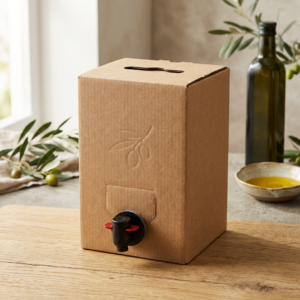
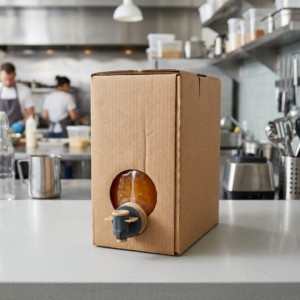
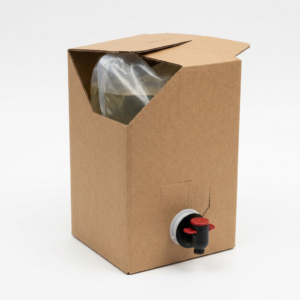
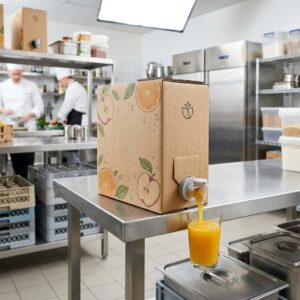
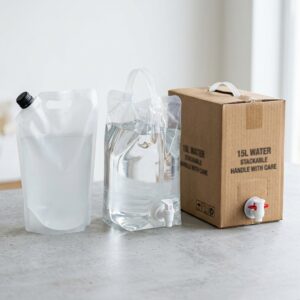
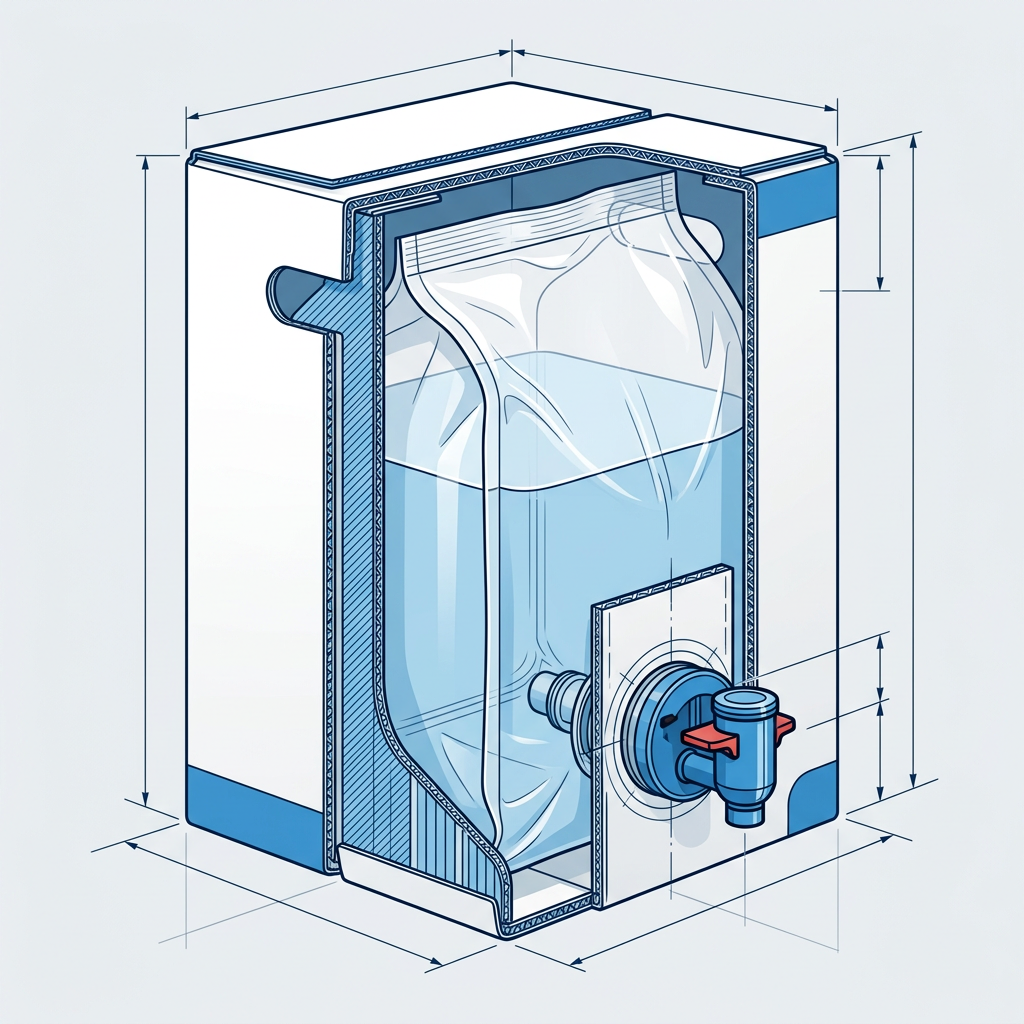
For a foundation on the format itself, see HUACANG’s guide to what bag-in-box packaging is. A bag-in-box system combines a flexible inner bag, a dispensing fitment, and an outer corrugated carton; each component affects filling, transport, dispensing, and product protection.
How Aseptic and Hot-Fill Bag-in-Box Systems Work
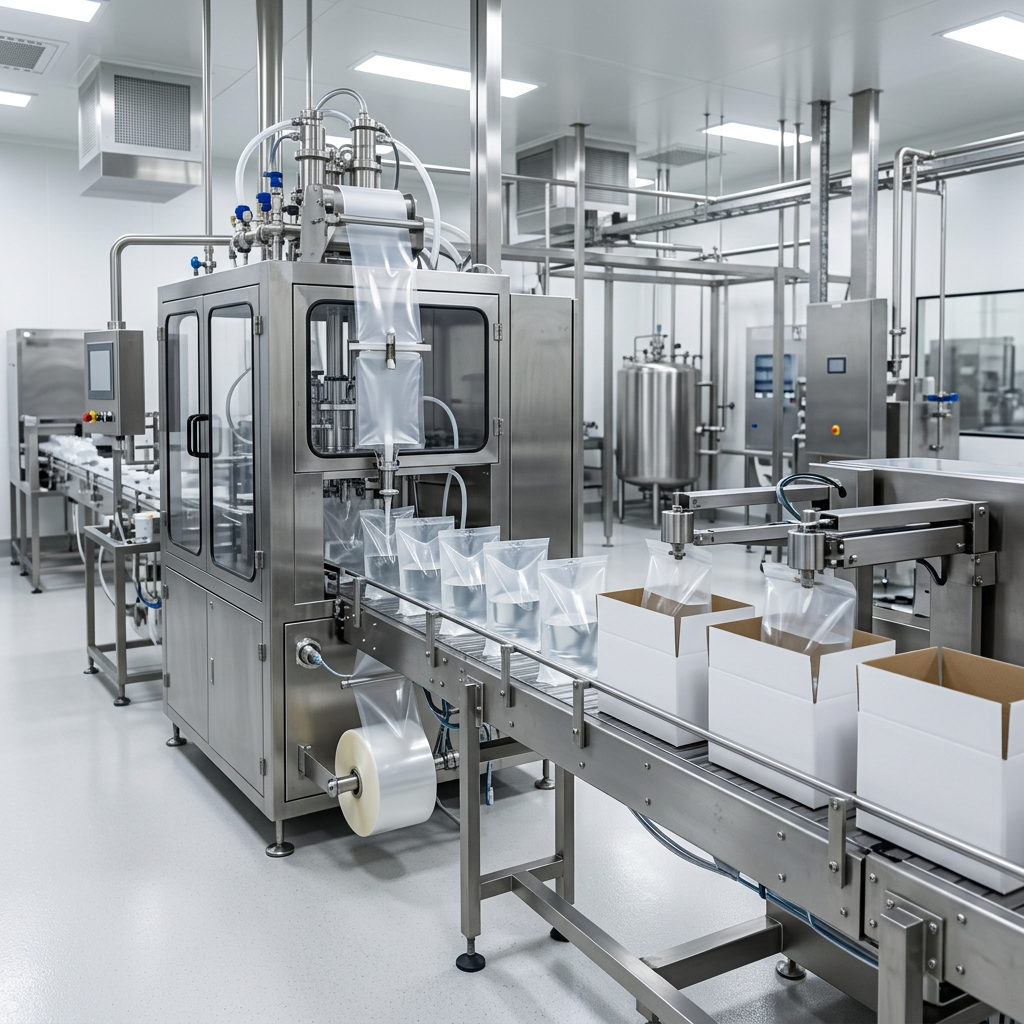
Aseptic processing means treating the product and package so they can be brought together under conditions designed to prevent recontamination. “Commercially sterile” refers to a condition achieved through a validated process that makes the product stable under its intended storage conditions; it does not mean the package is free from every microorganism in an absolute sense. In an aseptic bag-in-box operation, product treatment, bag or fitment sterilization, the filling zone, and closure handling must work together as one validated system.
Hot fill means filling a product at a specified elevated temperature, then closing the package according to the process design. The fill temperature, hold time, closure approach, and cooling profile depend on the product and process. Heat exposure can affect flavor, color, viscosity, and sensitive ingredients, so a hot-fill route should be evaluated against the product’s quality objectives rather than selected only for packaging convenience.
In both cases, the bag must tolerate the relevant handling conditions. The fitment is not merely a dispensing part: its geometry, resin, seal area, cap or valve design, and interface with filling equipment can affect hygienic performance and line reliability. The outer carton protects the bag during distribution but is not the primary microbial barrier.
Aseptic vs Hot-Fill Bag-in-Box Comparison for B2B Buyers
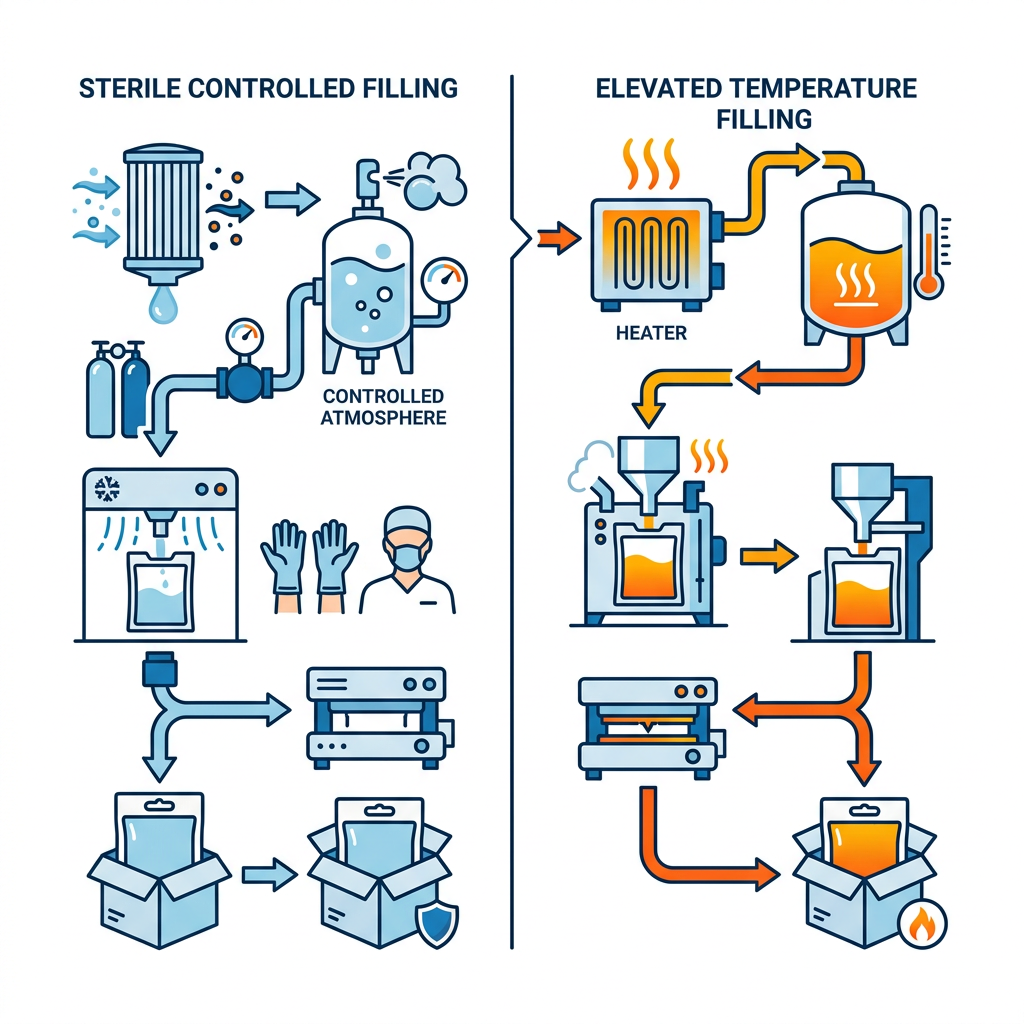
| Selection factor | Aseptic bag-in-box | Hot-fill bag-in-box |
|---|---|---|
| Core preservation approach | Product and package are handled through a controlled sterile filling process. | Elevated product temperature is part of the preservation process. |
| Filling environment | Requires aseptic equipment, controls, and process validation. | Requires a line designed for the selected fill temperature and closure sequence. |
| Bag and fitment priority | Sterilization compatibility and dependable sterile presentation are central. | Heat resistance, seal integrity, and cooling-related stress resistance are central. |
| Product-quality focus | Evaluate heat treatment, oxygen exposure, and target storage conditions. | Evaluate the effect of fill heat and subsequent cooling on product attributes. |
| Typical buyer question | Can the full product-package-line system be aseptically validated? | Can this product be hot filled without damaging quality or package performance? |
| Key caveat | Aseptic claims require system-level validation, not a bag-only decision. | Hot-fill suitability cannot be inferred from film thickness or appearance alone. |
This table is a screening tool, not a process specification. Food safety requirements, product formulation, applicable regulations, and the filler manufacturer’s operating parameters take precedence. Buyers should avoid asking only whether a bag is “aseptic” or “hot-fill safe”; instead, provide the actual sterilization method, filling temperature range, product chemistry, fitment format, and intended storage conditions.
Match the System to Your Product
Start with the product, not with the bag style. Product acidity, water activity, particulates, viscosity, fat or oil content, oxygen sensitivity, aroma sensitivity, and preservative strategy can all influence the suitable process. The intended storage temperature and distribution route are equally important.
Products commonly evaluated for aseptic filling
Juices, dairy alternatives, milk-based products, liquid nutrition, concentrates, sauces, and selected foodservice ingredients may be evaluated for aseptic packaging when the processor uses an aseptic process. This does not mean every formulation in these categories is suitable. For example, particulate size, sedimentation, and viscosity may limit filling-valve choices or require specialized process controls.
Products commonly evaluated for hot filling
Acidified beverages, fruit preparations, sauces, syrups, and some liquid food ingredients may be considered for hot fill where their validated process calls for it. Heat-sensitive flavors, colors, proteins, cultures, or functional ingredients may make hot fill less appropriate even when the package can tolerate the temperature.
For wine, edible oils, water-based chemicals, cleaners, or industrial liquids, the decision may not map directly to either food-processing model. Chemical compatibility, permeation, transport classification, and local regulatory duties can become the dominant selection factors. Discuss the exact liquid and end-use conditions before specifying a film structure.
Material and Barrier Considerations
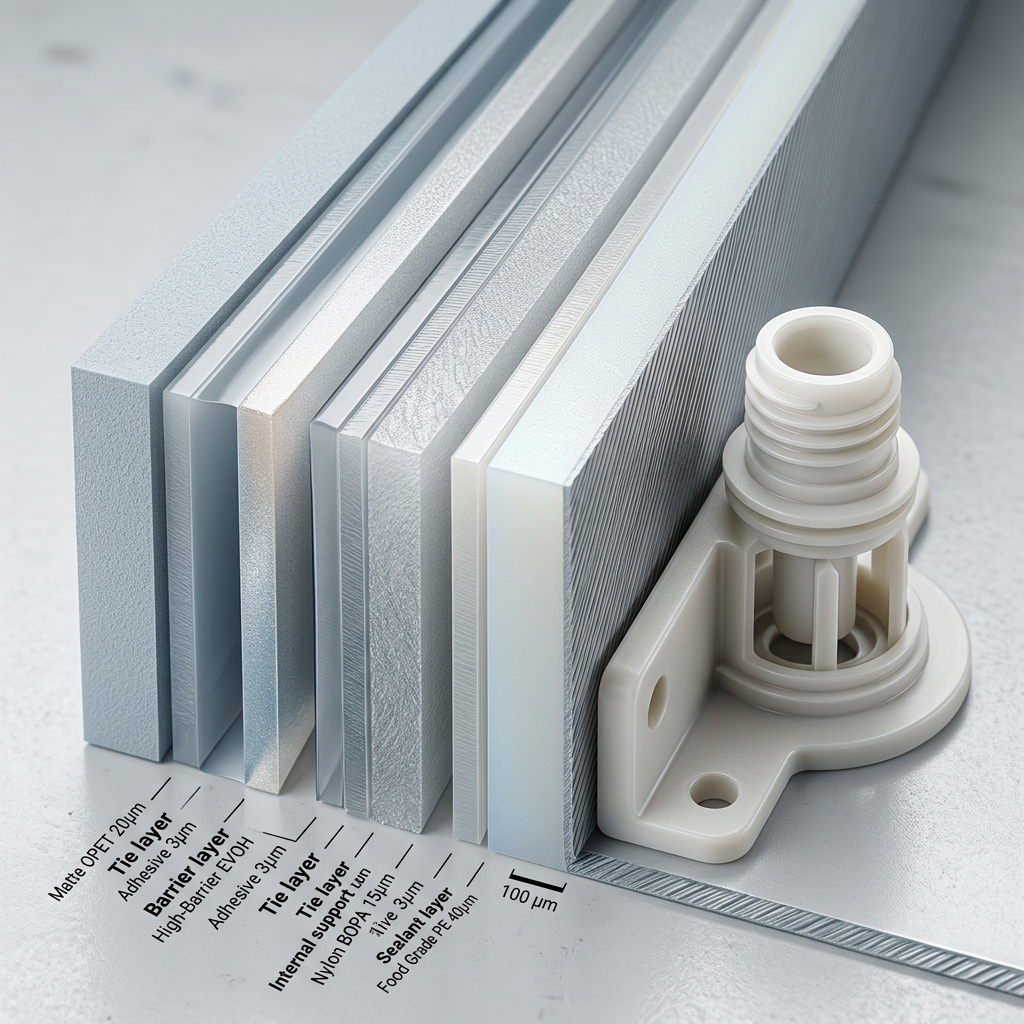
Barrier is a packaging material’s ability to slow the passage of gases, moisture, light, or aromas. For bag-in-box, the film structure is usually a multilayer laminate or coextruded construction chosen to balance barrier, toughness, sealability, flex-crack resistance, and compatibility with the filling process.
Oxygen-sensitive products may need a structure designed to reduce oxygen transfer. Aroma-sensitive products may require attention to both aroma retention and the risk of outside odor pickup. Light-sensitive products can require an opaque or metallized layer, but material choices should be assessed alongside recyclability objectives, local collection systems, and the customer’s packaging policy. A higher-barrier structure is not automatically the correct structure if the actual shelf-life target and distribution conditions do not require it.
For hot-fill applications, assess the sealant layer, laminate bond performance, fitment resin, and any cap or valve components at the planned thermal conditions. For aseptic applications, assess the compatibility of all package components with the intended sterilization and filling method. Also consider flexing during packing and transit: a laboratory barrier value does not alone predict performance after real-world handling.
HUACANG’s overview of bag-in-box components and operation can help procurement teams distinguish the roles of the inner bag, fitment, and carton when preparing a specification.
Filling, Storage, and Procurement Considerations

Before requesting quotations, align the packaging brief with the filling line. State whether the operation is aseptic, hot fill, ambient fill, or another process; identify the equipment brand or filler interface where available; and describe the requested fitment, bag volume, carton configuration, and dispensing use. A bag that runs reliably on one machine may require different dimensions, seals, or fitment details on another.
Storage and logistics should be part of the brief. Identify anticipated warehouse temperatures, shipping lanes, stacking requirements, handling frequency, and whether the filled product will be chilled, frozen, or stored at ambient conditions. Carton grade and bag strength should be matched to the distribution environment, while the final filled pack should be tested in conditions representative of the actual supply chain.
For printed cartons or bags, provide artwork requirements, color expectations, language and label obligations, and destination-market requirements early. HUACANG Packaging is a Guangzhou-based flexible packaging manufacturer established in 1998, with a 15,000 square meter facility and 9-color printing and laminating lines. For buyers comparing sourcing options, the company’s bag-in-box manufacturer comparison guide offers additional context on evaluating suppliers.
Request samples and agree on a validation plan before commercial launch. Depending on the application, this may include seal checks, transit simulation, fitment function, filling trials, product compatibility assessment, and shelf-life testing performed by the responsible product owner and process team.
A Practical Selection Process
Use a structured decision process to reduce late-stage changes:
- Define the liquid: formulation, pH where relevant, viscosity, particulates, sensitivity to oxygen or heat, and target shelf life.
- Confirm the preservation process: aseptic, hot fill, or another validated method selected by the processor.
- Map the filling interface: bag dimensions, fitment type, filling head, closure method, and cleaning or sterilization conditions.
- Specify the distribution environment: storage temperatures, transport duration, stacking, and dispensing method.
- Develop the material and carton specification with the packaging supplier, then validate the filled package on the actual line.
The most effective procurement discussions treat the bag, fitment, carton, product, and filler as an integrated system. Final material selection should always be confirmed with the packaging supplier and the filling process, particularly for aseptic or elevated-temperature applications.
Conclusion: choose aseptic bag-in-box when the product and production system are designed for validated sterile filling; choose hot-fill bag-in-box when a validated elevated-temperature process suits the product and the packaging components. In both cases, specify the full operating context rather than selecting packaging from a generic label.
FAQ
Can the same bag-in-box film be used for aseptic and hot-fill products?
Not necessarily. A film may need different heat, seal, sterilization, barrier, or fitment compatibility characteristics for each process. Confirm the complete bag and fitment specification with the packaging supplier and validate it on the intended filling line.
Is aseptic bag-in-box always better for shelf life?
No. Shelf life depends on the product formulation, preservation process, package barrier, seal integrity, storage conditions, and distribution environment. Aseptic filling is a system-level process, not a shelf-life guarantee from the bag alone.
What information should I send a bag-in-box supplier?
Provide the liquid type, formulation considerations, target capacity, filling method and temperature, filling equipment details, fitment or valve needs, storage and transport conditions, print requirements, quantity, and destination market.
Does the outer carton make a bag-in-box aseptic?
No. The carton mainly provides mechanical protection and handling support. Aseptic performance depends on the product treatment, inner bag and fitment, sterilization method, controlled filling environment, and validated process.
Discuss Your Bag-in-Box Requirement
Share your product, liquid type, bag capacity, material needs, fitting or valve requirements, printing, quantity, and destination market with HUACANG Packaging to review a suitable bag-in-box specification.