Table of Contents
- Bag-in-Box vs Plastic Bottles: Quick Answer
- What Each Packaging Format Means
- B2B Comparison Table
- Materials and Barrier Protection
- Filling, Dispensing and End-Use
- Storage, Transport and Handling
- How to Choose the Right Format
- Procurement Questions for Suppliers
- Conclusion
A practical B2B comparison of bag-in-box and plastic bottle packaging for liquid products, covering material structure, filling, storage, dispensing and supplier selection.
Bag-in-Box vs Plastic Bottles: Quick Answer

Bag-in-Box vs plastic bottles is primarily a choice between efficient bulk dispensing and durable individual packs. Bag-in-box is often suitable for liquids supplied in larger volumes where controlled dispensing, compact empty-pack storage and an outer shipping carton are useful. Plastic bottles are often suitable for retail-facing products, smaller unit sizes, repeated handling and applications that need a rigid, self-supporting container.
Neither format is automatically the better choice. The appropriate pack depends on the liquid’s sensitivity to oxygen, light and moisture; viscosity; fill temperature; required shelf-life validation; dispensing method; distribution route; and the end user’s handling expectations. For example, a foodservice concentrate, edible oil, cleaning chemical or industrial liquid may suit either format, but the material structure and closure must be selected for that specific product and process.
In practical B2B purchasing, compare the complete system rather than the empty container alone: product-contact materials, barrier layers, fitment or cap, secondary packaging, filling equipment, pallet configuration and the destination market’s applicable requirements. For a basic system overview, see this guide to bag-in-box packaging.
What Each Packaging Format Means
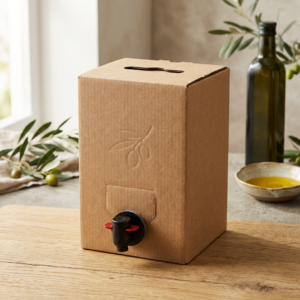
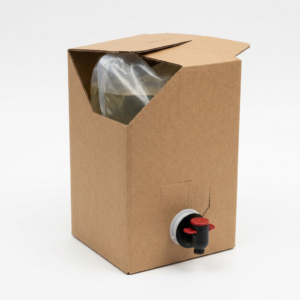
Bag-in-box (BIB) is a liquid packaging system made of a flexible inner bag, a dispensing fitment or valve, and a protective outer carton. The bag holds the liquid; the carton supports stacking, handling and product presentation. A fitment is the molded component sealed into the bag that enables filling, dispensing or connection to compatible equipment.
Plastic bottle packaging uses a rigid or semi-rigid molded container, commonly paired with a cap, closure, pump, trigger or other dispensing component. The bottle itself provides its shape and much of its handling strength. A label, sleeve, carton or tray may be added depending on the product and supply chain.
Both terms cover multiple designs. A bag can be a single-web or laminated structure, while a bottle can use different polymers, shapes, wall thicknesses and closures. Therefore, saying that one format has better protection than another without reviewing the actual materials is not technically reliable. Barrier protection means the package’s ability to limit transmission of gases, vapors or light that could affect the product.
B2B Comparison Table: Bag-in-Box and Plastic Bottles
| Decision factor | Bag-in-box | Plastic bottles |
|---|---|---|
| Typical pack role | Bulk, foodservice, institutional or controlled dispensing applications | Individual units, retail shelves, portable use or frequent direct handling |
| Container form | Flexible bag protected by a carton | Rigid or semi-rigid self-supporting container |
| Dispensing | Usually uses a fitment, tap, valve or equipment connection | Usually uses a cap, spout, pump, trigger or pour closure |
| Empty-pack storage | Flexible bags can be supplied compactly before filling; cartons require separate storage | Finished empty bottles retain their shape and occupy more volume before filling |
| Barrier design | Can use multilayer flexible structures selected for the product | Depends on bottle resin, wall design and any barrier treatment or layer |
| Secondary protection | Outer carton provides handling and stacking support | May require cases, trays, dividers or shrink bundling for distribution |
| Product visibility | Usually limited because the product is enclosed by bag and carton | Can be clear, translucent or opaque, depending on bottle material and design |
| Best evaluated with | Filling compatibility, fitment performance and carton logistics | Closure integrity, bottle rigidity and case-packing performance |
This table is a planning tool, not a substitute for compatibility testing. Final material selection should be confirmed with the packaging supplier and the filling process using the actual liquid, intended storage conditions and distribution method.
Materials and Barrier Protection for Liquid Products

Material selection begins with the liquid rather than the package appearance. Assess whether the product contains water, oil, alcohol, acids, alkalis, fragrances, surfactants, solvents or suspended solids. These characteristics can affect seal performance, stress cracking, flavor or odor transfer, and the suitability of contact layers. Product temperature at filling and during transport also matters.
For bag-in-box, a flexible bag may use one or more film layers. Each layer can serve a different function, such as product contact, sealing, strength or barrier. The fitment and its seal area are equally important because the bag is only as reliable as its interfaces. For plastic bottles, the resin, bottle geometry, wall thickness and closure system influence rigidity, permeability and handling behavior.
Oxygen-sensitive products may need a structure designed to manage oxygen exposure. Light-sensitive products may need an opaque component, protective carton or other light-management approach. However, packaging cannot be specified from a product category alone. Two sauces, detergents or oils can have materially different formulation and shelf-life requirements.
Ask the supplier to review the liquid’s safety and technical information where appropriate, including pH, alcohol or solvent content, viscosity, fill temperature and storage target. Then validate the proposed package under representative conditions. This is especially important for aggressive chemical products, hot-filled products and liquids with aroma-sensitive ingredients.
Filling, Dispensing and End-Use Requirements

The filling line can determine whether bag-in-box or bottles are operationally practical. A BIB line needs to handle the bag, fitment and chosen fill-and-seal method consistently. A bottle line needs bottle feeding, filling, capping and often labeling or sleeving. If a buyer is changing formats, review equipment compatibility, cleaning procedures, fill accuracy controls and quality checks before approving a package.
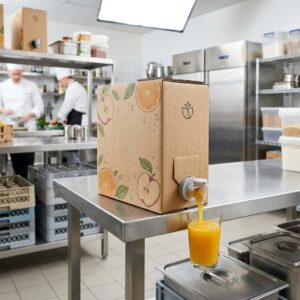
Bag-in-box is frequently considered where the user dispenses the product gradually from a larger pack. A suitable valve or tap can help manage the pour, while a connector may be appropriate when the liquid is used with dispensing equipment. The selected fitment should match the product viscosity and the intended use. A thin beverage-like liquid, a viscous sauce and a cleaning concentrate can require different flow-control considerations.
Plastic bottles can be more intuitive when users carry, open, reseal and use one unit directly. The cap or dispensing closure should be evaluated for torque, leakage resistance, opening convenience and whether the user requires a measured dose, spray, stream or free pour. For either format, test the complete filled package, not only an empty sample.
Do not assume that a format designed for ambient filling is suitable for hot filling, aseptic processing or other specialized operations. The pack, fitment or closure, process parameters and validation plan must be aligned with the filling operation.
Storage, Transport and Handling Considerations

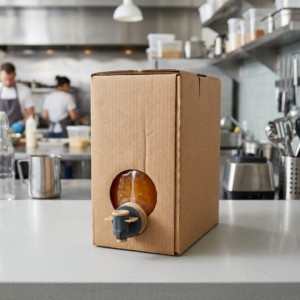
Bag-in-box separates liquid containment from shipping support. The flexible bag conforms as product is filled, and the outer carton provides a regular shape for handling and stacking. This arrangement can be useful where larger liquid packs move through warehouses, foodservice operations or institutional supply chains. Carton grade, case dimensions and pallet pattern should be reviewed for the actual distribution route.
Plastic bottles provide a rigid package before and after filling, which can suit shelf presentation and individual handling. Their shape may support brand differentiation and consumer convenience, but it also affects case packing, pallet stability and empty-bottle storage. Bottles with unusual shapes should be checked carefully for scuffing, compression and stability in transit.
For both formats, assess warehouse temperature, potential freezing or overheating, route duration, stacking load, vibration and the likelihood of drops or punctures. The outer carton for BIB and the transport case for bottles are both part of the protective system. A good primary package can still fail in a weak secondary-pack or pallet design.
Where global distribution is planned, buyers should also define destination-market labeling, language, traceability and applicable packaging or product-contact obligations early in the project. The package supplier can provide technical input, but the product owner remains responsible for confirming market-specific compliance requirements.
How to Choose the Right Format by Application
Choose bag-in-box when the application centers on larger-volume liquid supply, controlled dispensing and a carton-supported pack. Typical evaluation cases include foodservice ingredients, beverage bases, edible oils, liquid egg products, cleaning concentrates, lubricants and selected industrial liquids. Suitability still depends on the specific formulation and filling process.
Choose plastic bottles when the product is intended as a smaller individual unit, needs a rigid format for direct handling, or benefits from a particular bottle shape and closure experience. Common evaluation cases include retail beverages, personal-care liquids, household products, sauces, oils and chemical products. Again, product compatibility determines whether a given resin and closure are appropriate.
A hybrid portfolio can also be practical. A business may use bottles for retail unit sales and bag-in-box for professional, refill or foodservice channels. In that case, aligning product formula, labeling information and brand presentation across formats can simplify channel management while allowing different dispensing needs.
For additional context on suppliers and market options, review the bag-in-box manufacturer comparison guide. Use external lists as a starting point, then assess each supplier’s experience with your liquid, fitment needs, print requirements and quality documentation.
Procurement Questions to Ask Before Ordering
Give prospective packaging suppliers a clear technical brief. At minimum, identify the liquid type, fill volume, viscosity, pH or relevant chemical characteristics, fill temperature, target storage conditions, dispensing method, artwork requirements, estimated purchasing quantity and destination market. If the product has existing packaging, share its structure and the problems you want to solve.
For bag-in-box, ask about bag capacity, proposed film structure, fitment or valve type, carton specification, filling-line compatibility and sample-testing approach. For bottles, ask about resin, neck finish, closure type, bottle weight or rigidity requirements, labeling method and transport case design. In either case, ask how artwork approval, material changes and quality checks are managed.
Before commercial release, use samples and pilot filling to check seal integrity, leakage, dispensing, handling and appearance under conditions that resemble real production and distribution. The result should inform the final specification, not merely confirm an early concept. Final material selection should always be confirmed with the packaging supplier and the filling process.
HUACANG Packaging Manufacturing Co., Ltd. has operated from Guangzhou, China since 1998 and manufactures flexible packaging for B2B buyers. Learn more about the system fundamentals in HUACANG Packaging’s bag-in-box overview before preparing a project brief.
Conclusion: Compare the Complete Packaging System
Bag-in-box and plastic bottles each have a valid role in liquid packaging. Bag-in-box can be a strong option for larger-volume, carton-supported dispensing, while plastic bottles can be a strong option for rigid, individually handled packs. The decision should be based on product compatibility, required barrier, filling conditions, end-user dispensing, storage and distribution rather than a general preference for one format.
A structured supplier review and representative filled-pack testing reduce risk before scale-up. Confirm the final material structure, fitment or closure, and secondary packaging with the packaging supplier and your filling process.
FAQ
Is bag-in-box better than plastic bottles for all liquid products?
No. Bag-in-box may suit larger-volume dispensing and carton-supported distribution, while plastic bottles may suit smaller, rigid, individually handled packs. The correct choice depends on the liquid formulation, fill process, shelf-life target, dispensing need and logistics plan.
Can bag-in-box be used for viscous liquids?
It can be considered for viscous liquids, but the bag structure, fitment or valve, fill method and desired flow rate need to be reviewed together. Test the actual product because viscosity can change with temperature and storage time.
What should B2B buyers test before changing from bottles to bag-in-box?
Test the proposed material structure with the actual liquid, plus filling compatibility, seal integrity, fitment performance, dispensing, carton handling, palletization and representative storage and transport conditions. Confirm the final specification with the packaging supplier and filling process.
Does a carton make bag-in-box suitable for every shipping route?
No. Carton specification, pallet pattern, stacking load, temperature exposure and distribution handling must be evaluated for the planned route. The bag, fitment, carton and secondary logistics design work as one system.
Discuss Your Liquid Packaging Project
Share your product, liquid type, bag or bottle capacity, material needs, fitting or valve requirements, printing, estimated quantity and destination market with HUACANG Packaging to discuss a suitable bag-in-box packaging approach.