Table of Contents
- What Bag-in-Box Packaging Means for Household Cleaners
- Start With Cleaner Compatibility
- Select the Film Structure and Barrier Layer
- Choose Fitments and Dispensing for the Use Case
- Recommendations by Household Cleaner Type
- Confirm Filling and Sealing Conditions
- Specify the Outer Carton and Storage Conditions
- Build a Practical Validation and Procurement Plan
- Common Specification Mistakes to Avoid
- Conclusion
A practical B2B guide to evaluating bag-in-box packaging for household cleaning liquids. Review chemical compatibility, barrier materials, fitment selection, filling, storage and dispensing requirements before specifying a pack.
What Bag-in-Box Packaging Means for Household Cleaners
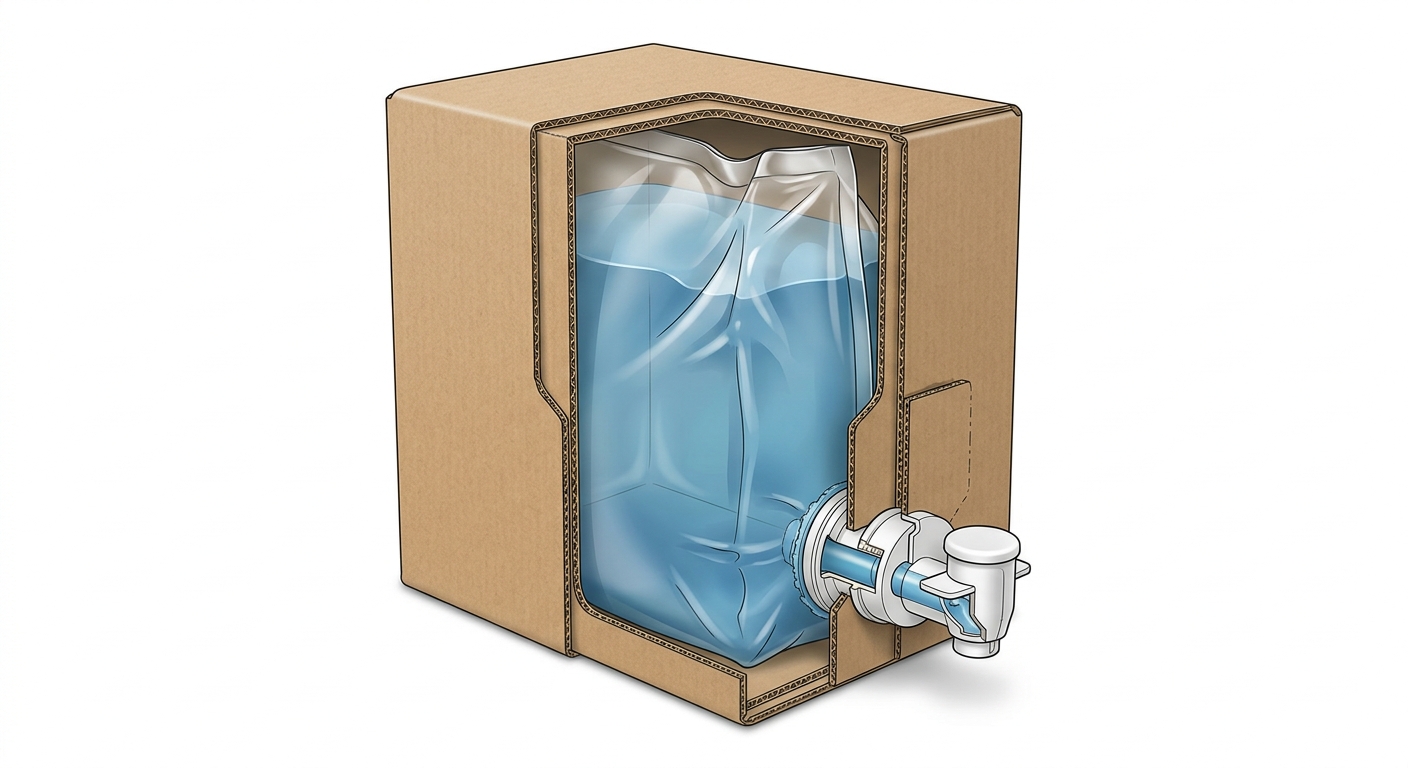
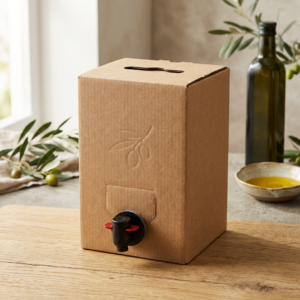
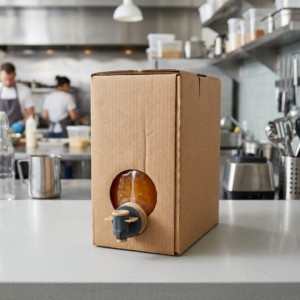
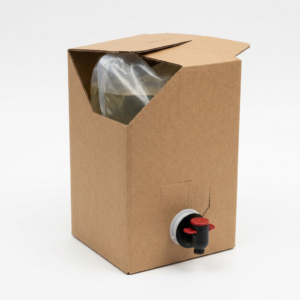
Bag-in-Box packaging for household cleaners is a liquid-packaging system in which a flexible inner bag holds the product, a fitment provides filling and dispensing access, and an outer corrugated carton protects the bag during handling and storage. For brands, contract fillers, and private-label buyers, the format can support bulk refill packs, institutional cleaners, concentrated products, and controlled dispensing formats.
Successful use depends on more than selecting a bag size. Household cleaners may contain surfactants, solvents, fragrances, acids, alkalis, oxidizing ingredients, salts, or antimicrobial components. Each can affect the bag film, seals, closure, valve, and printed carton differently. The package should therefore be designed around the exact formula, its filling process, expected storage environment, and the way the end user dispenses the liquid.
For a broader explanation of components and system design, see this complete guide to bag-in-box packaging.
Start With Cleaner Compatibility
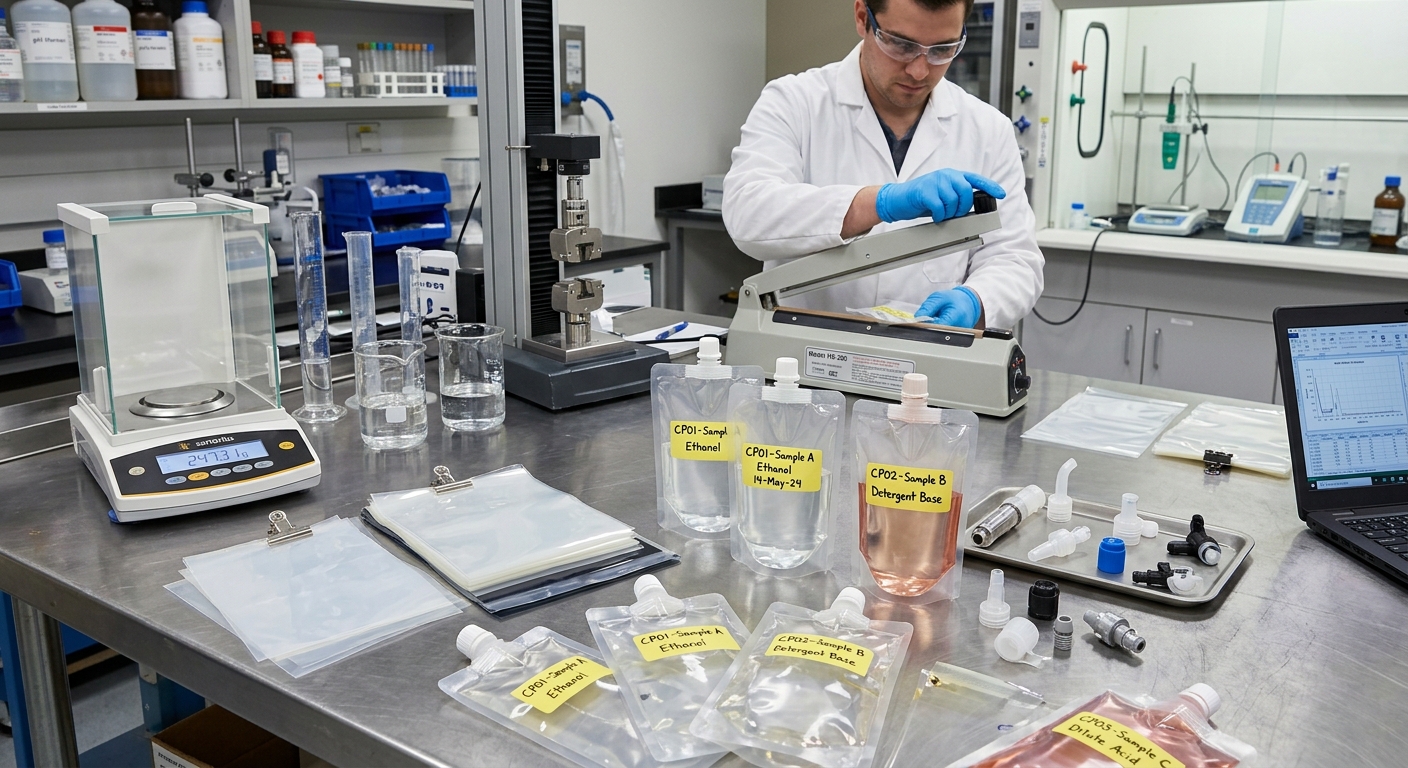
Chemical compatibility is the ability of the package materials and components to resist unacceptable changes when they contact the product. For household cleaners, compatibility evaluation should cover the inner sealant layer, barrier layers, adhesives used in laminated films, fitment resin, cap or valve components, and seal areas.
Ask the product team for a current formulation summary or safety information before requesting a packaging quotation. Relevant inputs include pH range, alcohol or glycol content, hydrocarbon or citrus-derived solvent content, surfactant system, fragrance level, active ingredients, viscosity, product density, and whether the formula is supplied as a concentrate. A small ingredient change can alter compatibility, especially where strong fragrance oils, solvents, high alkalinity, or oxidizing chemistry are present.
Compatibility is not confirmed by appearance alone. A suitable validation plan normally considers film swelling, softening, embrittlement, stress cracking, delamination, seal integrity, fitment leakage, odor transfer, and changes in dispensing performance. Testing should reflect the intended contact time and realistic storage temperatures, including potential temperature exposure during transport.
Do not assume that a film used for one cleaner will suit another. A neutral liquid hand soap, alkaline degreaser, bleach-containing cleaner, and solvent-containing glass cleaner can require very different material and component decisions.
Select the Film Structure and Barrier Layer
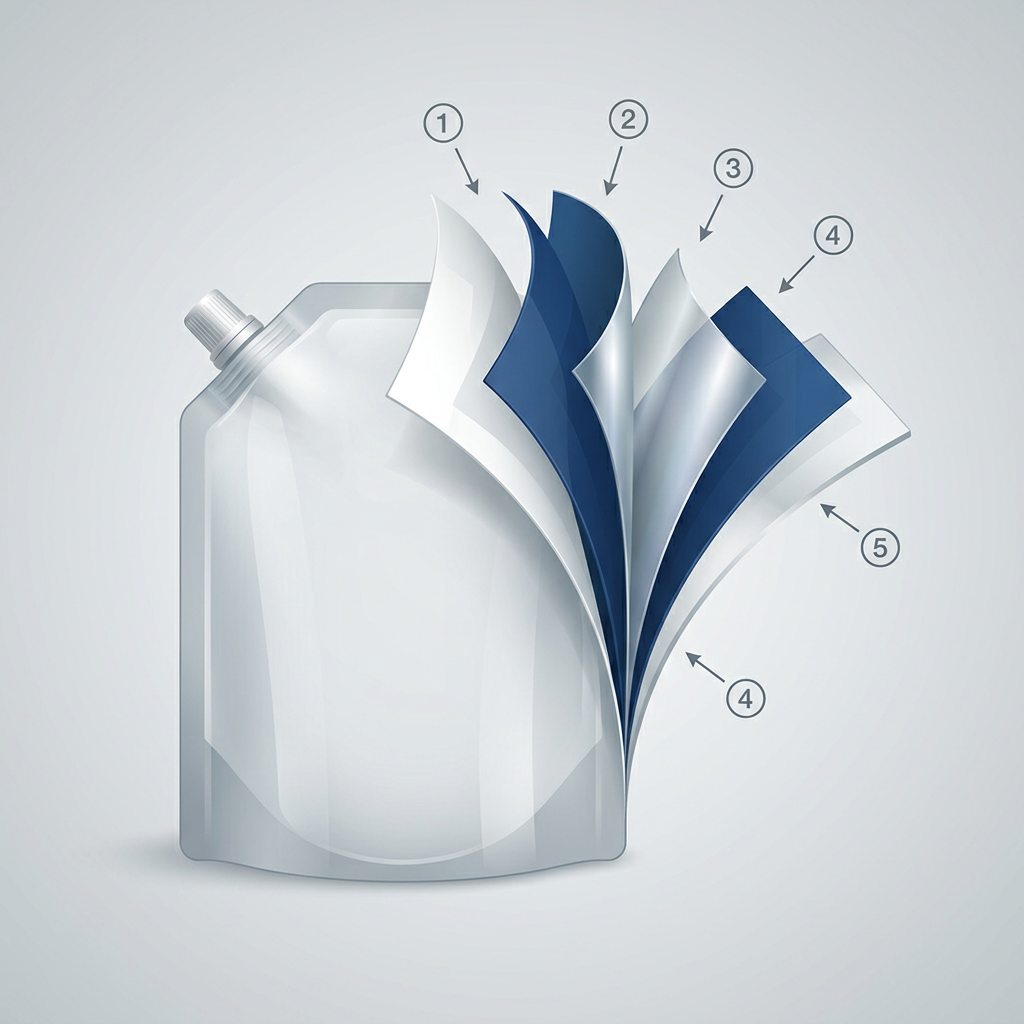
A multilayer film is a flexible packaging material made by combining two or more layers so that each layer contributes a needed property, such as sealing, toughness, puncture resistance, or barrier protection. In bag-in-box applications, the product-contact layer must be appropriate for the cleaner, while the full structure must tolerate filling, transport, carton loading, and dispensing.
Barrier refers to a material’s ability to slow the movement of gases, vapors, aromas, or other substances through the package. Barrier needs for household cleaners are product-specific. Fragranced products may need protection against scent loss or outside odor pickup. Volatile ingredients may require attention to vapor retention. Water-based, low-odor cleaning liquids may place greater emphasis on mechanical durability and seal reliability than on high barrier.
Material selection should also account for product viscosity. Low-viscosity liquids can reveal small seal or fitment weaknesses quickly. Thick detergents, gels, and concentrates may impose higher force during dispensing and can leave more residual product in the bag if the fitment and carton orientation are poorly matched. If a cleaner contains abrasive particles or suspended solids, assess whether the particles can settle, obstruct the dispensing path, or create localized wear during handling.
Film selection principles used for food liquids can provide a useful starting framework for thinking about barrier, filling, and fitment requirements, but a household cleaner must be evaluated against its own formulation. Review bag-in-box material selection considerations with that distinction in mind.
Choose Fitments and Dispensing for the Use Case
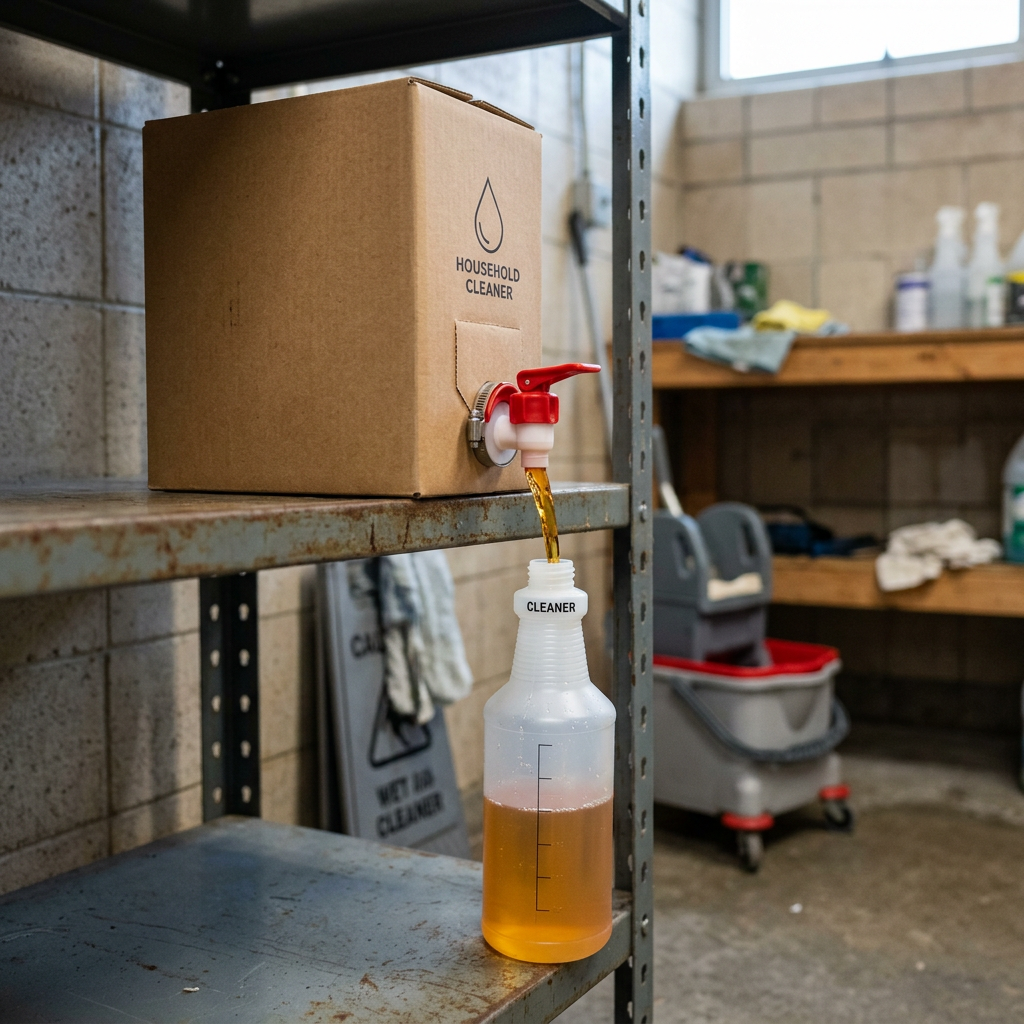
A fitment is the rigid opening attached to a flexible bag that enables filling, closing, and dispensing. The fitment is a functional part of the pack, not simply an accessory. Its opening size, location, resin, cap design, and connection to the dispenser influence fill speed, leak control, user safety, and remaining product evacuation.
For manual consumer refill packs, a screw-cap pour spout may be appropriate where controlled pouring into a reusable bottle is the goal. For janitorial and institutional settings, a tap, valve, or connector can support repeated dispensing into buckets, dosing devices, or dilution systems. Where accurate dilution is important, the bag-in-box package should be designed as part of the complete dispensing system rather than specified independently.
Consider the following questions early:
- Will the user pour, squeeze, connect, pump, or dispense from a tap?
- Is the product low viscosity, thick, foaming, or prone to stringing after pour?
- Must the closure prevent drips during repeated use?
- Will the pack be used upright, on its side, or in a dispenser cabinet?
- Does the product require a child-resistant or other specialized closure solution? Confirm applicable market requirements separately.
- Will the fitment contact concentrated product continuously during storage?
Fitment placement affects both filling and emptying. A bottom-positioned outlet can help gravity dispensing in a carton designed to sit upright, while a top fitment may better suit certain filling lines or refill applications. The correct choice must be confirmed with the bag supplier, the filler, and any dispensing-equipment provider.
Recommendations by Household Cleaner Type
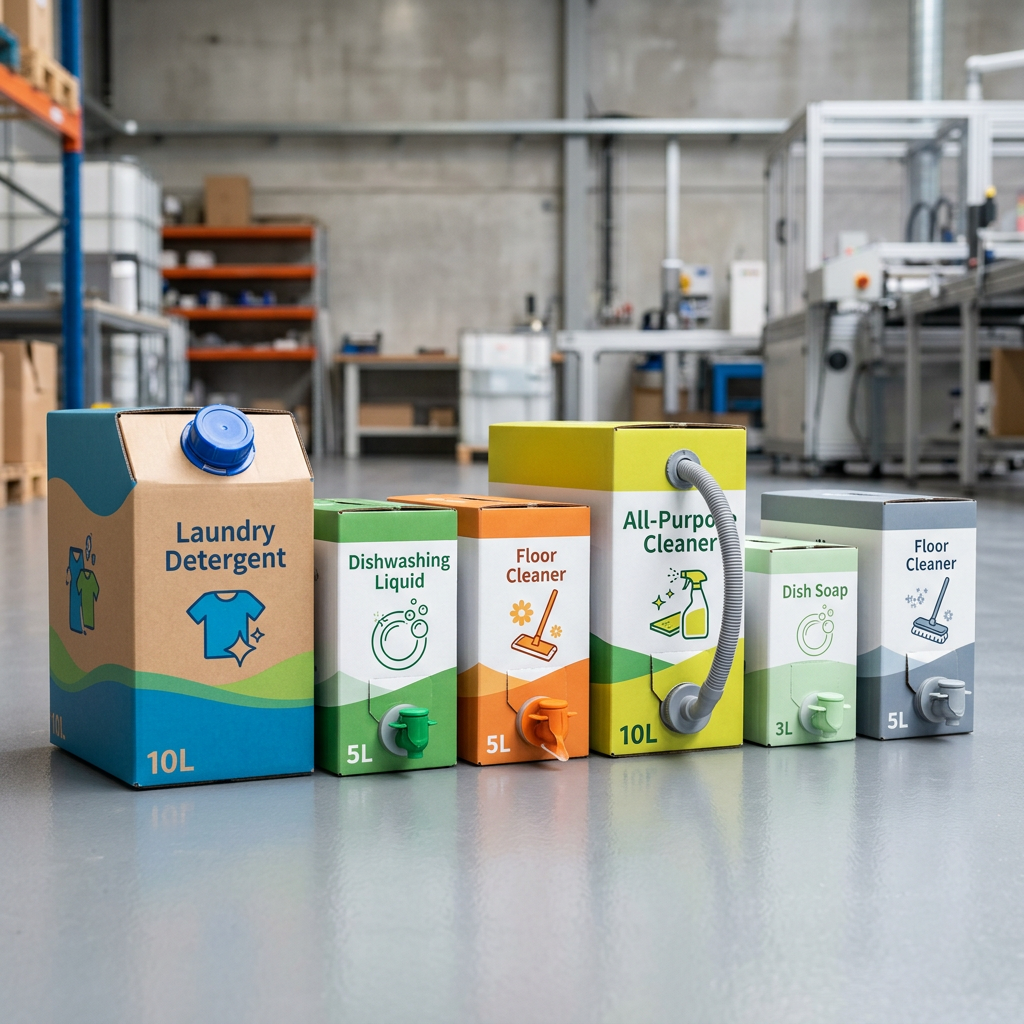
Different household cleaner categories create different packaging priorities. The points below are specification prompts, not substitutes for compatibility testing.
Liquid laundry detergent and fabric-care products
These products may be viscous and fragranced. Focus on reliable dispensing, fitment opening size, drip management, seal strength, and film compatibility with surfactants and fragrance components. Determine whether the product will be poured into a dosing cup, a refill bottle, or a connected dispenser.
Dishwashing liquids and hand soaps
Water-based surfactant systems can foam during filling and dispensing. Coordinate headspace, filling parameters, and pour behavior with the filling line. For refill use, a closure that supports controlled transfer into a smaller bottle can improve handling.
All-purpose cleaners and floor cleaners
These may range from neutral to alkaline and can be sold as ready-to-use liquids or concentrates. Confirm pH and active ingredients, then specify a fitment that matches the end-use dilution or dispensing method. For larger institutional packs, carton stability and a practical tap or connector arrangement are important.
Glass cleaners and solvent-containing products
Volatile ingredients and solvents require particular attention to film and fitment compatibility, vapor retention, and odor management. Avoid relying on a generic structure without product-contact testing.
Bleach, disinfectants, and highly alkaline or acidic cleaners
These formulations can be demanding for flexible packaging systems. The suitability of every product-contact material, including the film, seals, fitment, cap, and valve, should be assessed using the actual formula and intended conditions. Regulatory, hazard communication, transport, and child-safety obligations are market-specific and remain the responsibility of the product owner and relevant supply chain partners.
Confirm Filling and Sealing Conditions
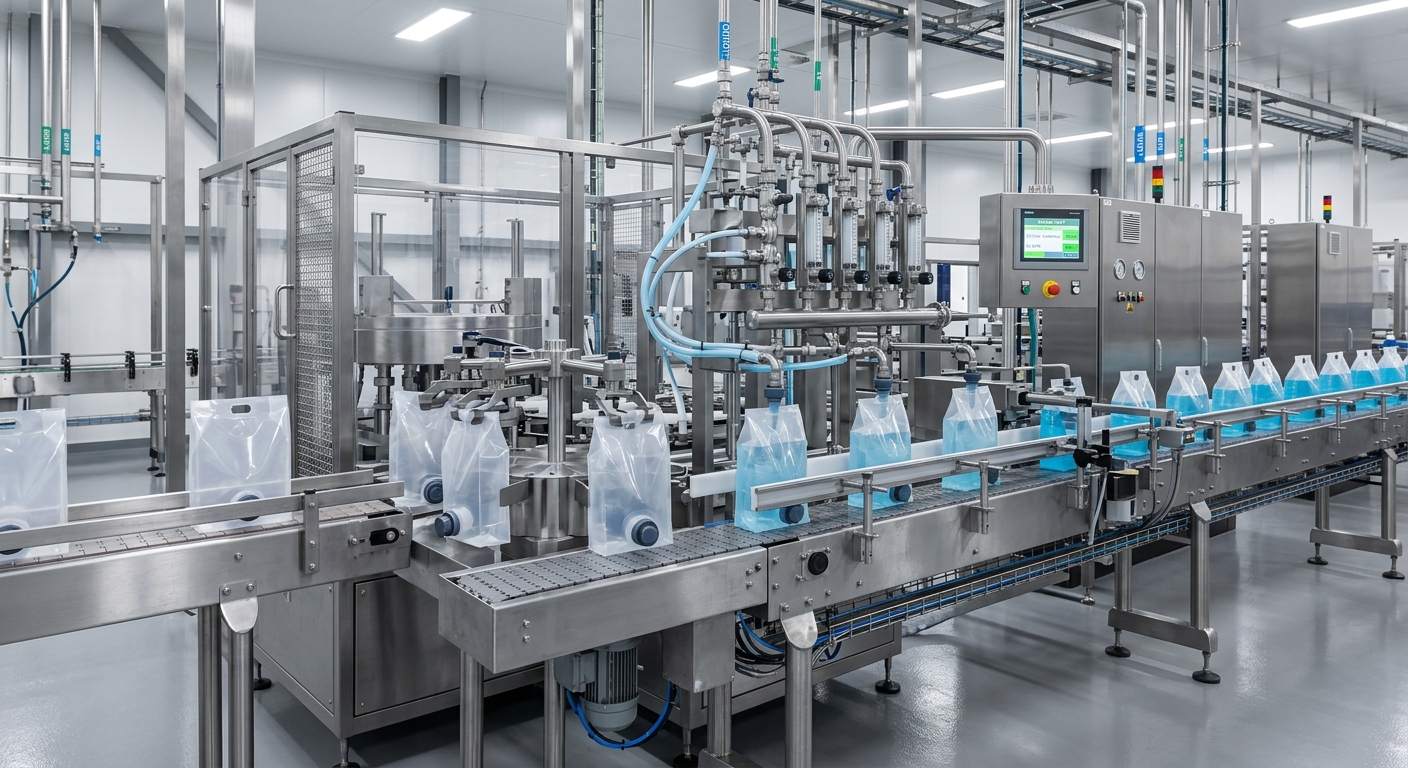
The filling process must be compatible with the bag, fitment, and cleaner. Provide the supplier with target fill volume, fill temperature, filling method, product viscosity, anticipated foam, line speed expectations, and whether the pack is filled through the fitment. These details help determine practical bag dimensions, fitment configuration, seal design, and carton-loading sequence.
Temperature requires careful attention. Some cleaning products are filled near ambient conditions, while others may be warmed to improve flow. If a buyer is considering elevated-temperature filling, the entire system should be evaluated for that process, including the film laminate, fitment, seals, and product stability. Food-sector terms such as aseptic and hot fill describe defined processing approaches and should not be applied to household cleaners without a clear process basis. For background on the distinction, see aseptic versus hot-fill bag-in-box systems.
Before commercial production, conduct line trials using representative product. Verify bag opening, fitment engagement, fill accuracy, sealing, carton insertion, leakage checks, and dispensing. A post-fill hold period and transport simulation can help identify issues that may not appear immediately after filling.
Specify the Outer Carton and Storage Conditions
The outer carton supports stacking, protects the flexible bag from abrasion and puncture, and presents handling and product information. Carton dimensions should match the filled bag profile and the selected dispensing orientation. An oversized carton can allow bag movement; a poorly proportioned carton can interfere with stable stacking or dispensing access.
Discuss anticipated distribution conditions: pallet configuration, warehouse stacking, humidity, temperature variation, potential rough handling, and export transit. Corrugated cartons can lose stiffness in high-humidity conditions, while very cold or hot environments may affect product flow and package behavior. The carton design, bag strength, and fitment position should be evaluated as one unit.
Printed cartons for household cleaners may need space for product instructions, dilution directions, precautionary language, batch identification, recycling guidance, and destination-market labeling. Ensure the artwork workflow clearly identifies which information is supplied by the buyer and which areas are reserved for variable production data.
Build a Practical Validation and Procurement Plan
Procurement is more effective when packaging requirements are documented before sampling. A clear brief reduces the risk that bag, carton, fitment, filling equipment, and end-use dispenser are developed as separate and incompatible elements.
Include these points in the request:
- Cleaner name, application, and formulation information relevant to compatibility
- Target bag capacity and acceptable fill-volume range
- Viscosity, density, pH, fragrance, solvent, and active-ingredient information where available
- Desired film appearance and required protection priorities
- Fitment, cap, tap, valve, or connector requirements
- Filling method, fill temperature, and available line configuration
- Carton orientation, dispensing position, artwork, and pallet expectations
- Destination market and relevant labeling, chemical-handling, or transport requirements
- Sample, pilot, and approval process before production
HUACANG Packaging Manufacturing Co., Ltd. is a Guangzhou-based flexible packaging manufacturer established in 1998. When working with a packaging supplier, share representative product and process information early so the proposed bag-in-box system can be reviewed as a complete pack rather than a film-only purchase.
Common Specification Mistakes to Avoid
- Choosing by capacity alone: A 5 L or 10 L requirement does not define the required film, fitment, carton, or dispensing orientation.
- Using a generic compatibility assumption: Similar-looking cleaners can have materially different pH, solvent, fragrance, and active systems.
- Separating packaging from dispensing: A bag that fills correctly may still drip, dispense slowly, or fail to empty well in the intended dispenser.
- Ignoring transport and warehouse exposure: Carton compression, humidity, heat, and rough handling can affect system performance.
- Approving samples without representative product: Water trials are useful for process checks but cannot prove compatibility with the final cleaner formula.
- Leaving market requirements until the end: Product labeling and handling obligations can affect carton artwork, closure choices, and logistics documentation.
A structured specification and validation process is usually more valuable than selecting the most complex material structure by default. Final material selection should always be confirmed with the packaging supplier and the actual filling process.
Conclusion
Bag-in-box packaging can be a practical format for household cleaning liquids when the bag film, seals, fitment, carton, filling method, and dispensing arrangement are selected together. Begin with the cleaner formula and use conditions, then validate the complete package with representative product. This approach helps buyers make a more informed decision for refill, retail, and institutional cleaning applications.
For additional supplier-selection context, review this overview of bag-in-box manufacturers and evaluation considerations.