Table of Contents
- What Bag-in-Box Filling Equipment Compatibility Means
- 1. Confirm Product and Process Conditions
- 2. Match the Bag Film and Barrier Structure
- 3. Verify Fitment and Filling Interface
- 4. Check Bag Dimensions and Machine Handling
- 5. Review Sanitation, Sealing and Validation
- 6. Confirm Storage, Transport and Dispensing Conditions
- 7. Build the Final Supplier Compatibility Checklist
- Conclusion
Bag-in-box filling equipment compatibility depends on more than the filling nozzle. This practical checklist helps brands and contract packers align the liquid product, bag construction, fitment, machine interface, sanitation process and downstream handling requirements before approving a packaging format.
What Bag-in-Box Filling Equipment Compatibility Means

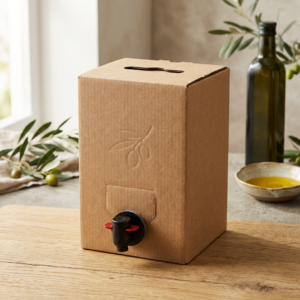
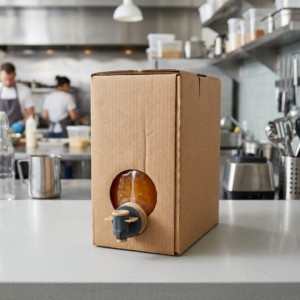
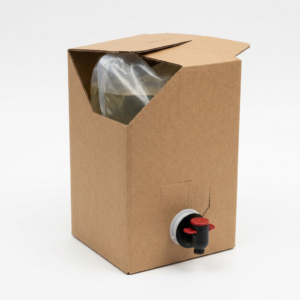
Bag-in-box filling equipment compatibility is the ability of a flexible bag, fitment, filling machine and product process to work together reliably from filling through dispensing. Bag-in-box, often shortened to BIB, is a packaging system that combines a flexible inner bag, a dispensing fitment and a protective outer carton or container.
A fitment is the molded opening, connector, valve or spout attached to the bag. It provides the connection point for filling and, in many applications, later dispensing. Compatibility therefore depends on the complete system rather than on the bag alone. A bag may have the correct nominal capacity but still be unsuitable if its fitment does not match the filling head, its film cannot tolerate the process, or its finished dimensions do not suit the machine and carton.
This checklist is intended for beverage brands, food processors, household chemical manufacturers and contract packers. Use it before requesting samples or approving production tooling. The final material, fitment and filling method should always be confirmed with the packaging supplier and the team responsible for the actual filling equipment.
For a basic explanation of the complete format, see what bag-in-box packaging is before beginning a technical review.
1. Confirm Product and Process Conditions

The liquid product determines many of the equipment and packaging requirements. Do not begin with bag size alone. First document what the machine will fill, how it will be processed and what conditions the package will experience afterward.
Record the product profile
- Product name and application, such as juice, wine, dairy liquid, sauce, concentrate, water or cleaning chemical.
- Viscosity, suspended particles, pulp, fibers, crystals or other solids that may affect flow and nozzle clearance.
- Acidity, alcohol content, oil content, solvent content and any ingredients that could interact with the film or fitment.
- Foaming tendency, sensitivity to oxygen, light sensitivity and requirements for headspace control.
- Target fill volume, acceptable fill-weight tolerance and whether the product is filled by mass, volume or another control method.
Document process conditions
List the product temperature at filling, the expected temperature range during storage and whether the package will be exposed to hot filling, pasteurization, retort-like conditions, aseptic processing or ambient filling. These terms describe different process environments and should not be treated as interchangeable. Aseptic filling involves controlled product and package sanitation, while hot filling uses elevated product temperatures followed by a defined cooling and handling process.
Also record line speed, filling sequence, product pressure, cleaning chemicals, cleaning-in-place exposure if applicable, and the time between filling and closure. The packaging supplier needs these conditions to assess film behavior, seal integrity, fitment performance and machine handling.
For beverage applications, the guide to choosing bag-in-box packaging materials for beverages can help structure the product and process information supplied to the converter.
2. Match the Bag Film and Barrier Structure

The bag film must be compatible with both the product and the filling process. Flexible packaging is usually built as a multilayer structure, meaning different layers provide functions such as sealing, mechanical strength, product contact and barrier protection.
Review the material functions
- Product-contact layer: The inner layer is selected for contact with the specific liquid and for reliable heat sealing where the bag is formed or closed.
- Barrier layer: A barrier limits the transfer of oxygen, aroma, moisture or light. The required barrier depends on the product sensitivity and intended storage conditions.
- Structural layers: Outer layers contribute to strength, puncture resistance, printability and handling through the filling line and distribution chain.
- Sealant system: The sealant must form a consistent seal under the available temperature, pressure and dwell-time conditions.
Ask the supplier to identify the proposed layer functions rather than approving a generic film description. The same nominal bag format can require different structures for oxygen-sensitive beverages, high-acid products, oily liquids or household cleaners.
Check process stress
Film selection should account for filling temperature, product pressure, bag movement, sealing jaws, vacuum or air removal, carton insertion and transportation. A structure that is suitable for ambient filling may not be suitable for a higher-temperature process. Similarly, a film that handles a low-viscosity liquid may need additional consideration when the product contains particles or requires a different filling pressure.
Do not infer barrier performance from appearance alone. Metallic-looking or opaque layers may provide visual protection, but the supplier should confirm the material structure against the product, shelf-life objective and distribution conditions. Final approval should be based on representative samples and the actual filling process.
For a broader review of film, fitment and storage decisions, use this bag-in-box packaging procurement checklist.
3. Verify Fitment and Filling Interface
The fitment is the physical and functional bridge between the bag and the equipment. Compatibility must be checked at the filling station, during closure and at the final dispensing point.
Confirm the mechanical connection
- Fitment type, shape, opening size and orientation.
- Filling-head or nozzle connection method.
- Insertion depth, sealing area and clearance around the bag opening.
- Closure method, such as a cap, plug, valve or integrated closure.
- Fitment position relative to the bag edge, carton opening and machine tooling.
Ask the filling-machine operator or equipment manufacturer for the interface drawing, not only the equipment model name. Models can be modified, and different tooling may be installed on the same base machine. The packaging supplier should compare this drawing with the proposed fitment dimensions and tolerance range.
Match product flow to the fitment
Low-viscosity liquids, viscous concentrates and particulate products can require different flow paths. A narrow opening may restrict a thicker product or increase filling resistance. Particles may also need clearance that differs from a clear liquid. Foaming products may require a controlled filling sequence or deaeration approach specified by the equipment provider.
Also verify whether the fitment is used for filling only or for both filling and dispensing. A connector that works at the filler may not be the preferred connection for a pump, tap, keg-style coupler or foodservice dispenser. For chemical products, confirm that all