Table of Contents
- Start With the Product and Use Case
- Calculate Consumption and Open-Life Needs
- Match Capacity to the Application
- Check Dispensing Equipment and Fitment Requirements
- Review Filling Conditions and Usable Fill Volume
- Consider Materials, Barrier and Storage
- Evaluate Outer Cartons and Logistics
- Validate the Specification Before Procurement
A practical B2B guide to selecting bag-in-box capacity based on liquid application, consumption rate, dispensing method, filling process, material structure and logistics requirements.
Start With the Product and Use Case

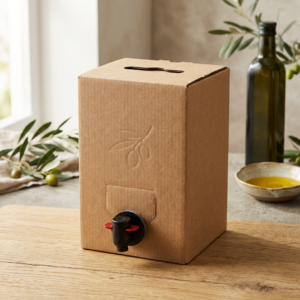
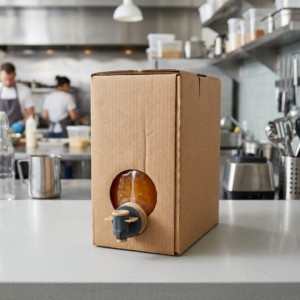
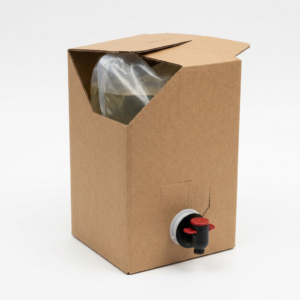
How to choose bag-in-box capacity starts with the liquid, the way it is consumed, and the dispensing environment. Bag-in-box is a liquid packaging system consisting of a flexible inner bag, a fitment or valve for filling and dispensing, and a protective outer carton. Capacity is the intended amount of liquid packed in that system, but selecting it is not simply a choice between small and large volumes.
The appropriate capacity should support the user’s consumption rate without leaving product open for longer than the product and its process allow. It must also work with the filling line, fitment, carton, handling method, warehouse layout and destination-market requirements. A large pack may reduce changeovers and packaging units per litre, while a smaller pack can improve handling, speed of use and product rotation after opening.
Begin by defining the product category, packer or end-user profile, expected daily or weekly drawdown, dispensing format and distribution model. For example, a foodservice concentrate used continuously from a dispensing unit may justify a different capacity from a cleaning liquid used intermittently by site staff. The same liquid can require different pack sizes for retail-adjacent, foodservice, institutional and industrial channels.
Buyers new to the format can review the components and operating principle in this complete guide to bag-in-box packaging. Final material structure, capacity and fitment selection should always be confirmed with the packaging supplier and the actual filling process.
Calculate Consumption and Open-Life Needs

Use consumption data before selecting a nominal bag size. Start with the expected volume used per location, per day or per service period. Then consider the longest realistic interval between replenishment, not only average demand. A pack that works during peak consumption may become impractical during slower periods if too much product remains after opening.
Open life is the period during which a product remains suitable after the package has been opened and placed into use. It depends on the liquid formulation, hygienic controls, barrier structure, dispensing method, storage temperature and filling process. It is not a fixed property of every bag-in-box pack. Product owners should establish the acceptable open-life requirement through their own product validation.
A useful planning sequence is:
- Estimate typical and low-period consumption at the point of use.
- Set the maximum acceptable time a package may remain connected after opening.
- Divide expected consumption by that period to identify a practical volume range.
- Check whether the resulting pack can be lifted, loaded and dispensed safely by the intended user.
- Validate the selection with filled-pack, dispensing and storage trials.
For applications with uneven demand, consider using more than one capacity rather than forcing a single format into every channel. A compact pack may suit low-throughput sites, while a larger format can serve high-use locations using the same product family and compatible dispensing hardware.
Match Capacity to the Application

Capacity should reflect how the liquid is used, not only how it is shipped. Beverage applications often need close coordination between product sensitivity, serving rate, dispensing connection and filling method. Juice, wine, water, dairy-based products and concentrates can have materially different packaging requirements even where the nominal volume is similar. Review bag-in-box packaging material considerations for beverages alongside capacity planning.
For foodservice sauces, edible oils, syrups and concentrates, assess whether the product flows reliably at the intended storage and use temperature. A viscous liquid may be suitable in a larger pack only when the outlet, valve and dispensing equipment are designed for its flow characteristics. The capacity should also suit the operator’s ability to replace a pack during service without spills or excessive downtime.
Household and institutional cleaning liquids require an application-specific review of chemical compatibility and dispensing. A concentrate intended for controlled dilution may be packed differently from a ready-to-use cleaner. The expected frequency of use, risk of inappropriate manual handling and compatibility of the liquid with the bag and fitment are all relevant. This household cleaner compatibility and dispensing guide provides further selection context.
For industrial liquids, confirm whether the product may separate, settle, generate pressure, react with contact materials or require special handling. Capacity does not resolve these product issues. It must be selected together with a material and closure system appropriate to the formulation.
Check Dispensing Equipment and Fitment Requirements

A fitment is the component attached to the bag that provides a controlled filling or dispensing connection. It may be a gland, tap, connector, cap or valve, depending on the packaging system. The bag capacity, fitment and dispensing equipment should be treated as one functional specification.
First, identify whether the liquid will be poured manually, dispensed through a tap, connected to a closed dispenser, pumped, or used in a dosing system. Next, document the fitting interface required by the existing equipment. A capacity change can alter bag dimensions, carton orientation, hose reach, loading position and the force needed to handle the pack. These changes can affect routine operation even if the fitment itself remains the same.
Flow rate is also relevant. Low-viscosity liquids may dispense readily through a smaller outlet, while thicker products may need a fitment and outlet configuration that supports practical emptying. Avoid selecting capacity solely on the assumption that a larger pack will provide proportional operating efficiency. Residual product, dispensing angle, pouch collapse and operator workflow need evaluation in a representative setting.
Where a contract packer or end customer uses installed machinery, provide equipment drawings, connection information and operating conditions early in the project. This allows the packaging supplier to assess whether the selected bag dimensions and fitting style are suitable for the intended format.
Review Filling Conditions and Usable Fill Volume

Nominal capacity and actual fill volume are related but should not be used interchangeably. Nominal capacity describes the bag format, while actual fill volume is the product volume loaded under the approved filling specification. The final fill level must allow the bag to be sealed correctly and must account for the liquid, process conditions and pack design.
Confirm whether filling is ambient, hot-fill or aseptic. Hot-fill is a process in which product is filled at an elevated temperature; aseptic filling is a process that fills a commercially sterile product into a suitably prepared package under controlled conditions. These systems have different requirements for bag construction, fitment hygiene, equipment and validation. Capacity decisions should therefore be reviewed with the packer, especially when a line has a defined bag-size range or loading configuration.
Temperature can influence liquid volume, bag behavior and filling accuracy. Foaming products, carbonated products, highly viscous liquids and formulations containing particulates may require additional process consideration. A larger bag also has different handling characteristics during filling, sealing, cooling and transfer than a smaller format.
For a detailed process comparison, see aseptic versus hot-fill bag-in-box guidance. Conduct production-representative trials before approving a capacity for commercial procurement.
Consider Materials, Barrier and Storage

Material selection and capacity must be evaluated together. A barrier is a packaging layer or structure designed to reduce the transmission of gases, moisture, light or aroma, depending on the material and application. Barrier needs are driven by the product’s sensitivity and intended storage conditions, not by bag size alone. However, a larger package may remain in distribution, storage or use for a different period, so its practical exposure conditions may differ.
Assess the liquid’s compatibility with the proposed films, seals and fitment components. Compatibility means the packaging materials remain suitable for contact with the product under the defined filling, storage and dispensing conditions. Review pH, alcohol content, oils, surfactants, solvents, fragrances, acidity, temperature and any other formulation characteristics relevant to the application.
Storage conditions should cover the whole supply chain: palletized warehousing, transport, temperature variation, stacking, retail or back-of-house storage, and use at the dispensing point. Outer carton strength and internal bag protection should reflect these conditions. A capacity that is easy to fill may still be unsuitable if it creates excessive handling weight or does not fit the customer’s shelving, dispenser or storage location.
Product shelf life, post-opening suitability and migration or compatibility assessments are product-specific responsibilities that require appropriate validation. Confirm final material structure with the packaging supplier and filling process before release.
Evaluate Outer Cartons and Logistics

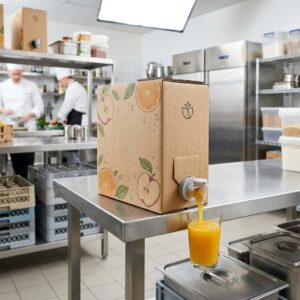
The outer carton protects the filled bag and provides the format that users handle, stack and display. Once a capacity range is identified, review the carton dimensions, board specification, opening configuration, print area and orientation with the expected supply-chain conditions in mind. The bag and carton should be engineered as a matched system rather than purchased as unrelated components.
For logistics, examine units per shipper, pallet pattern, warehouse space, manual handling practices and the destination market’s transport route. A larger capacity can reduce the number of individual packs needed for a given product volume, but it can also increase carton size and handling demands. A smaller capacity can improve placement and replenishment flexibility but may increase the number of packs a customer manages.
Printed cartons also need practical artwork planning. Product name, handling symbols, batch or traceability areas, application instructions and market-specific information should remain clear on the selected carton size. Where the same liquid is sold in multiple capacities, maintain a clear visual distinction to reduce picking or dispensing errors.
Do not approve dimensions from a drawing alone. Evaluate filled samples in representative cartons and simulate the relevant packing, transport, storage and dispensing steps where possible.
Validate the Specification Before Procurement

The strongest capacity decision is documented as a complete packaging specification. It should identify the product, intended fill volume, bag dimensions, material structure, fitment, filling conditions, carton design, storage conditions, dispensing method, artwork requirements and approval process. This helps prevent a nominal capacity from being interpreted differently by the brand owner, contract packer, supplier and end user.
Request samples or trials that reflect the intended commercial setup. Assess filling performance, seal integrity, fitment connection, carton assembly, handling, dispensing and residual product under the relevant conditions. Include operators who will load and change packs, because practical workflow issues may not be visible in a desk-based specification review.
Procurement should also account for change control. Changes to capacity can require revisions to bag dimensions, carton artwork, pallets, filling-line settings, dispenser configurations and inventory planning. Capture the approved revision and confirm which samples, drawings and test conditions form the basis of approval.
Use this bag-in-box packaging procurement checklist for brands and contract packers to organize the information needed for supplier discussions. In summary, select a capacity that fits real consumption, validated open-life expectations, dispensing equipment, filling conditions, material compatibility and logistics. Final material and format selection should be confirmed with the packaging supplier and filling process.