Table of Contents
- What Bag-in-Box Means in Foodservice
- Choosing the Right Bag-in-Box Format
- Selecting Capacity for Foodservice Operations
- Materials and Barrier Requirements
- Dispensing, Fitments and Valves
- Filling, Storage and Procurement Considerations
- Foodservice Selection Checklist
Bag-in-box packaging for foodservice helps operators manage liquid ingredients, beverages and concentrates in a flexible format. This guide explains how to choose the right bag structure, capacity, fitment and dispensing method for commercial kitchens, beverage stations and institutional catering.
What Bag-in-Box Means in Foodservice

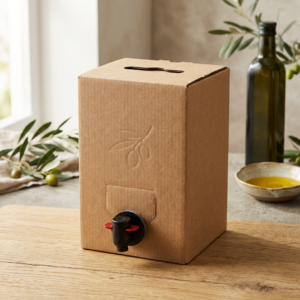
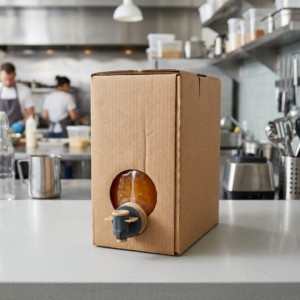
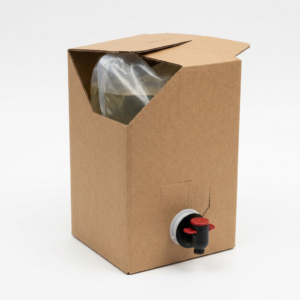
Bag-in-box packaging for foodservice is a liquid packaging system that combines a flexible inner bag, a dispensing fitment and a protective outer carton. The bag contains the product, the fitment connects to filling or dispensing equipment, and the carton supports handling, stacking and protection during distribution.
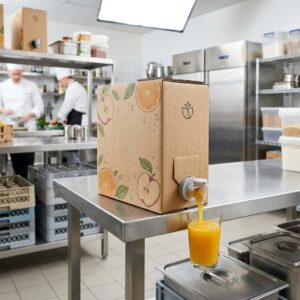
In foodservice, this format can be considered for products such as beverages, syrups, sauces, liquid ingredients, concentrates, toppings and other pump- or valve-dispensed liquids. The correct design depends on the product’s composition, sensitivity to oxygen or light, viscosity, filling process, expected usage rate and dispensing equipment.
A fitment is the rigid connection attached to the flexible bag. It may accept a cap, tap, valve or dispensing connector. A barrier layer is a material layer intended to reduce the passage of oxygen, light, moisture or aroma through the package. These terms should be defined early in a purchasing brief because they directly affect compatibility and product protection.
For an overview of the complete system, see what bag-in-box packaging is before finalizing a foodservice specification.
Choosing the Right Bag-in-Box Format

Foodservice buyers should begin with the dispensing workflow rather than the carton appearance. A package for a high-volume beverage station may be connected to dedicated equipment, while a smaller kitchen may need a manually opened bag with a simple tap. The format must fit the operator’s storage space, handling routine and cleaning procedure.
Carton orientation and access
The carton should allow the bag to sit in the intended orientation while keeping the fitment accessible. Confirm whether the package will be stored upright, placed horizontally in a machine or loaded into a cabinet. The outlet location, carton opening and internal bag position should be reviewed together. A theoretical fitment location may become difficult to use when the full package is installed in a dispenser.
Manual and equipment-assisted dispensing
Manual dispensing may suit lower-throughput applications where staff open a cap or operate a tap as needed. Equipment-assisted dispensing can improve repeatability, but the bag, connector, valve and machine must be treated as one system. Confirm connector dimensions, sealing method, product path, pressure conditions and cleaning requirements with the equipment provider.
Foodservice packaging may also need to support frequent partial use. Once the package is opened, exposure to air, handling and temperature can affect the product. The product’s food safety plan and opening-life requirements should therefore be considered alongside the package format.
Buyers evaluating a beverage application can use this guide to choose bag-in-box materials for beverages, while the final specification should remain product-specific.
Selecting Capacity for Foodservice Operations

Capacity should be selected from actual consumption and replenishment requirements, not from the largest available bag. The main question is how much product one location can use within its planned opening period while maintaining product quality and manageable handling.
Use rate and opening life
Estimate daily or weekly consumption for each foodservice location. Then compare that demand with the product’s approved opening life, which may be affected by formulation, processing, temperature and dispensing conditions. A capacity that is too large may remain open longer than intended. A capacity that is too small may increase changeovers, labor and packaging waste.
Handling and storage constraints
Full bags can be difficult to lift or load even when the empty package is lightweight. Review the weight of the filled unit, shelf or dispenser limits, employee handling steps and available cold or ambient storage. Measure the actual installation space, including clearance for loading, fitment connection and removal of the empty bag.
Capacity also affects logistics and inventory planning. A larger unit may reduce replenishment frequency, but it can require more careful protection during handling. Smaller units may support menu variety or faster rotation. The best choice is often different for a central kitchen, a quick-service beverage station, a hotel buffet and a contract catering operation.
Document the preferred capacity as a range or decision tree when demand varies across locations. Ask the supplier to confirm the available bag dimensions, carton dimensions and fitment position for each proposed capacity. Do not assume that two packages with the same nominal volume will have the same footprint or dispensing behavior.
Materials and Barrier Requirements

The inner bag must be compatible with the food or beverage throughout filling, storage and dispensing. Compatibility is not determined by the product name alone. Acidity, alcohol content, oil or fat, salt, sugar, particulates, viscosity, temperature and contact time can all influence material selection.
Barrier decisions
Some products need stronger protection from oxygen because oxidation can affect flavor, color or freshness. Light-sensitive products may require an opaque or light-protective construction. Aroma-sensitive products may need attention to aroma transmission and seal performance. Other products may have modest barrier requirements but demand greater flexibility, puncture resistance or seal reliability.
Barrier is a package-system property, not just a film label. Film structure, seal design, fitment attachment, closure integrity and the remaining headspace or air exposure can all affect performance. The supplier should review the intended shelf life, distribution route, storage temperature and filling method before recommending a structure.
Product and process testing
Provide representative product samples or a complete formulation summary where possible. Testing should consider the actual filling temperature, hold time, sealing conditions, transport handling and dispensing connection. A material that appears suitable in a short bench test may require further validation for extended storage or repeated dispensing.
For products using thermal processing, review the difference between aseptic and hot-fill bag-in-box systems. These are different processing and filling approaches, and the package construction must be matched to the selected process.
Dispensing, Fitments and Valves

Dispensing performance depends on the liquid, package geometry and equipment connection. A thin beverage, a viscous sauce and a particulate-containing ingredient may require different outlet sizes, valve designs or dispensing orientations. The correct fitment is the one that supports controlled flow without creating excessive product retention or operational difficulty.
Questions for the dispensing review
- Will the product be poured, pumped, tapped or connected to a metered dispenser?
- What connector, cap or valve does the equipment require?
- Does the product contain particles, fibers or suspended ingredients?
- How will the package be vented, if venting is required by the dispensing method?
- Can the operator connect and disconnect the package without leakage or contamination risk?
- How will the line, valve and surrounding surfaces be cleaned?
For gravity dispensing, the outlet position and package orientation are especially important. For pump systems, confirm that the pump can draw the product as the flexible bag collapses and that the equipment does not introduce unacceptable air exposure. For thicker products, evaluate flow at the lowest expected operating temperature as well as at the normal service temperature.
Ask for fitment samples or a complete technical drawing before approving artwork or tooling. The carton cutout, bag dimensions and dispensing hardware must work together in the finished package.
Filling, Storage and Procurement Considerations

Packaging selection should include the filling partner from the beginning. Confirm whether the bag will be filled cold, hot, aseptically or under another controlled process. The filling method affects material requirements, seal conditions, fitment design, sanitation controls and validation work.
Discuss product temperature at filling, fill volume tolerance, sealing equipment, bag orientation, inspection procedures and the treatment of the filled package after sealing. The supplier should understand whether the product is distributed through a cold chain, stored at ambient temperature or exposed to temperature variation. Storage limits and shelf-life claims must be established for the product and validated package system; they should not be inferred from the film description alone.
Storage and transport
Specify the expected warehouse and transport conditions, including stacking arrangement, carton protection, pallet handling and exposure to compression or vibration. Foodservice packaging is often moved through multiple handling points before reaching the kitchen. Review how the filled carton is lifted, stacked, opened and loaded into equipment.
Procurement information to provide
A useful inquiry should include product type and formulation, target capacity, annual or order quantity, filling location, filling process, storage temperature, distribution market, expected shelf life, carton requirements, fitment or valve needs, printing requirements and equipment details. A structured bag-in-box procurement checklist can help buyers organize these inputs before requesting a quotation or sample.
HUACANG Packaging Manufacturing Co., Ltd. is based in Guangzhou, China, and was established in 1998. Its 15,000 square meter facility uses 9-color printing and laminating lines for global B2B flexible packaging supply. These capabilities should be discussed in relation to the buyer’s actual structure, print, fitment and validation requirements rather than treated as a substitute for product testing.
Foodservice Selection Checklist

Before approving a bag-in-box foodservice format, use the following review points:
- Product: Record the complete product description, formulation characteristics, viscosity, particulates and sensitivity to oxygen, light or aroma loss.
- Process: Identify the filling method, filling temperature, sanitation requirements, sealing equipment and expected fill tolerance.
- Capacity: Match nominal volume to consumption, opening life, labor, filled-unit weight and storage space.
- Dispensing: Confirm outlet position, fitment dimensions, connector, valve, pump or tap, flow behavior and cleaning method.
- Protection: Define film barrier, seal integrity, puncture resistance, carton protection and expected transport conditions.
- Market: Confirm labeling, language, print layout, food-contact requirements and destination-market rules with the responsible compliance team.
- Validation: Test filled samples through filling, storage, transport, installation and dispensing before production approval.
The final material, capacity and fitment selection should be confirmed with the packaging supplier and the filling or dispensing equipment provider. A package specification is complete only when the product, process and operating environment have been considered together.
Buyers can also review bag-in-box system fundamentals when aligning internal purchasing, quality and operations teams.