Table of Contents
- What a Bag-in-Box Packaging Specification Sheet Is
- Start With the Product and Use Case
- Define the Inner Bag Structure
- Specify the Fitment and Dispensing Interface
- Record Filling and Process Conditions
- Include Outer Carton Requirements
- Set Validation, Quality and Change-Control Requirements
- Prepare the Sheet for Supplier Quotation
A practical B2B guide to creating a bag-in-box packaging specification sheet that gives suppliers, fillers and internal teams the information needed to evaluate a suitable packaging system.
What Is a Bag-in-Box Packaging Specification Sheet?
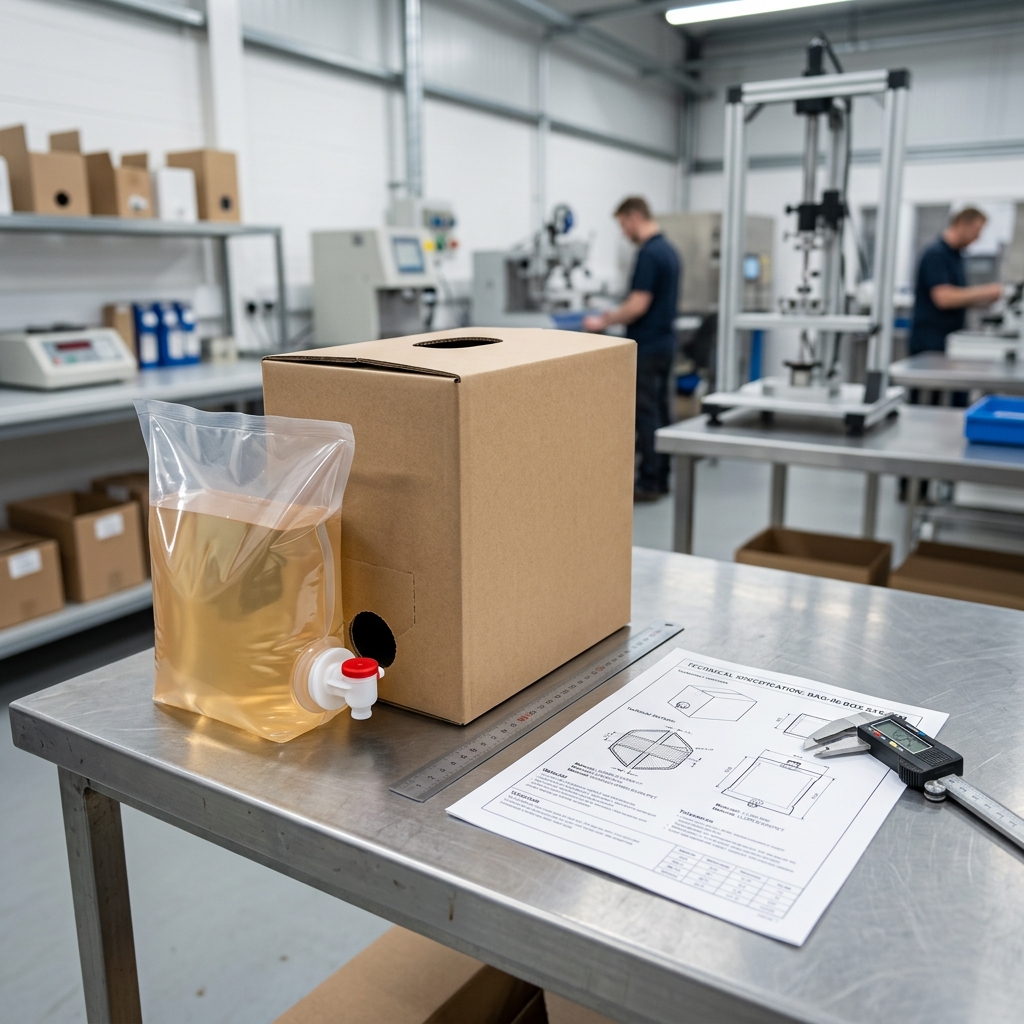
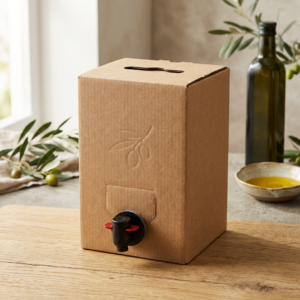
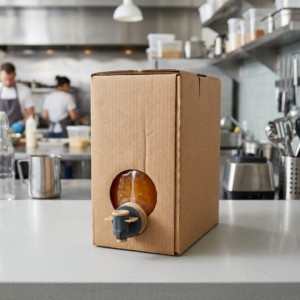
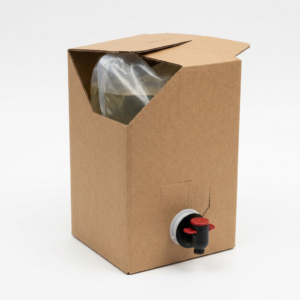
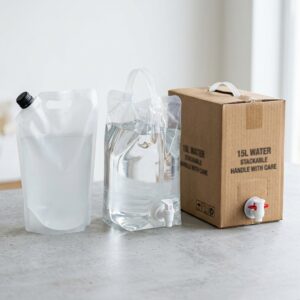
A bag-in-box packaging specification sheet is the controlled technical brief used to define a bag-in-box system before it is quoted, sampled, approved and supplied. Bag-in-box is a liquid packaging format made up of a flexible inner bag, a fitment or dispensing closure, and a protective outer carton. The specification sheet turns a general request such as “a 5-litre juice bag” into measurable requirements that a packaging supplier and filling operation can assess.
Its purpose is to align the product owner, packaging buyer, co-packer, equipment team and supplier on what the pack must contain, how it will be filled, how it will be handled, and what acceptance criteria apply. A well-prepared sheet reduces avoidable ambiguity around film structure, filling temperature, fitment geometry, bag dimensions, print artwork and shipment configuration. It does not replace compatibility trials or line trials; those remain necessary before commercial approval.
For a broader explanation of the components and operating principle, see this guide to what bag-in-box packaging is. The final specification should be confirmed with the packaging supplier and the actual filling process, particularly when the liquid is chemically active, oxygen-sensitive, hot-filled or aseptically packed.
Start With the Product and Use Case

Begin with the liquid, not the package. State the product name, product category, intended markets and planned pack capacity. Include the expected pH range where relevant, alcohol content, oil or fat content, particulate content, viscosity, fragrance, surfactants, solvents, acids, alkalis and any other ingredient group that could affect film, sealant or fitment compatibility. These details allow the supplier to identify where testing or a more resistant material structure may be needed.
Define the commercial use case as well. A bag intended for foodservice dispensing may prioritize clean pour control and a connection compatible with a dispenser. A concentrate for back-of-house dilution may need a different closure and carton arrangement. Household cleaning liquids require particular care because surfactants, fragrances and concentrated active ingredients may interact with packaging components over time. Review application-specific considerations in the bag-in-box guide for household cleaner compatibility and dispensing.
Record the target shelf-life objective, storage conditions, distribution route and whether the bag will be used in a secondary dispenser. Shelf life is the intended period during which the filled product remains within its defined quality requirements under stated storage conditions. It is a product-and-package outcome, not a property that can be assumed from a generic film description.
Define the Inner Bag Structure
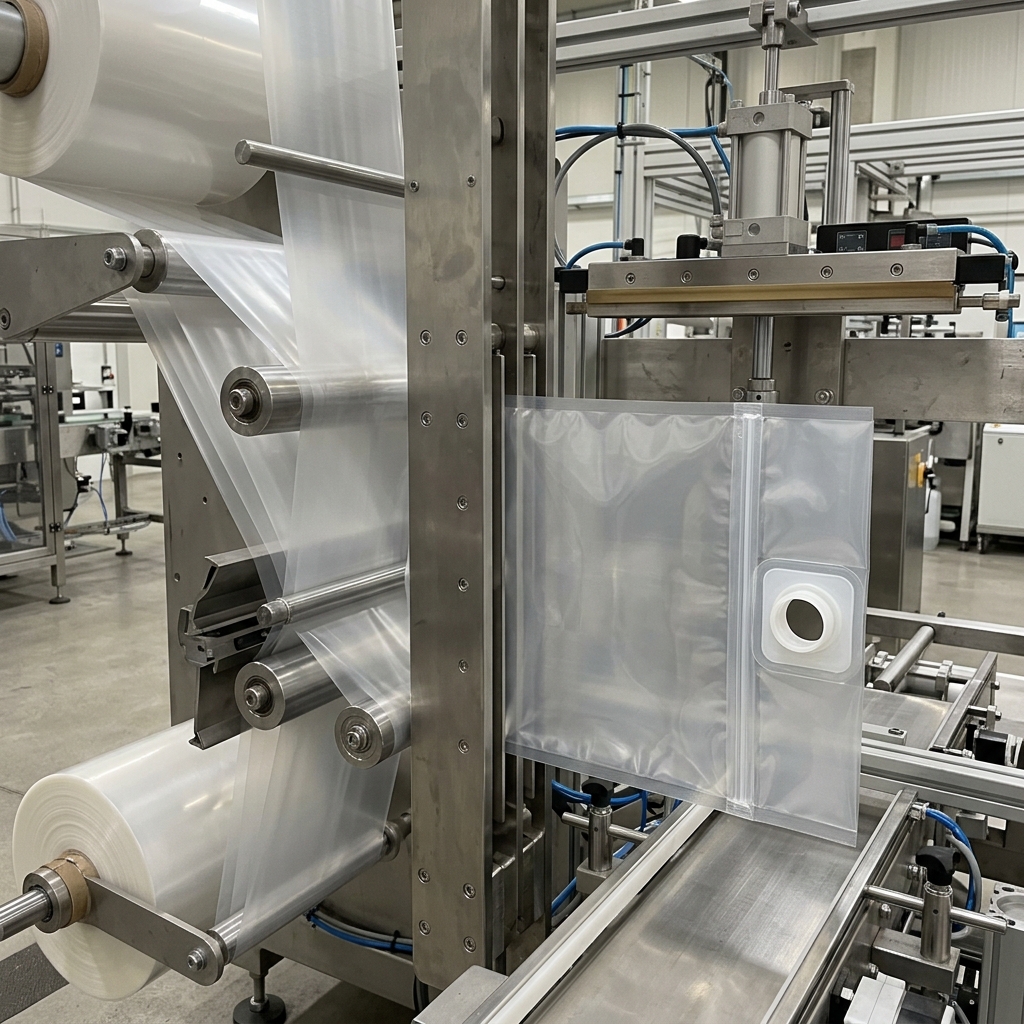
The inner bag section should identify the bag format, nominal fill volume, dimensional limits, film construction requirements and seal configuration. A film structure is the layered combination of polymer films and, where applicable, barrier layers or adhesives that gives the bag its sealing, mechanical and protective properties. Avoid specifying only “food-grade film” or “high-barrier film”; those terms do not communicate the actual product, process or storage requirements.
State whether the bag is a pillow bag, web bag, formed bag or another agreed format. Specify the nominal dimensions, tolerances where established, bag orientation, bottom or side gussets if applicable, seal locations, and the required position of the fitment. Include whether the bag must be supplied as single units, in wicketed format, or in another format compatible with the filling line.
Barrier refers to the resistance a packaging material provides against the passage of substances such as oxygen, water vapour, aroma or light. Select the required barrier direction based on the product risk: oxygen exposure may matter for some beverages and food products, while aroma retention, moisture control or chemical resistance may be more important for other liquids. The material selection process for drinks is explored in this bag-in-box material guide for beverages.
Also state color, opacity or light-protection needs, recycled-content requests where applicable, and any restrictions on materials or additives for the destination market. Do not treat a request for a particular polymer as proof of suitability. The complete laminate, seals, fitment and filled product must work together.
Specify the Fitment and Dispensing Interface
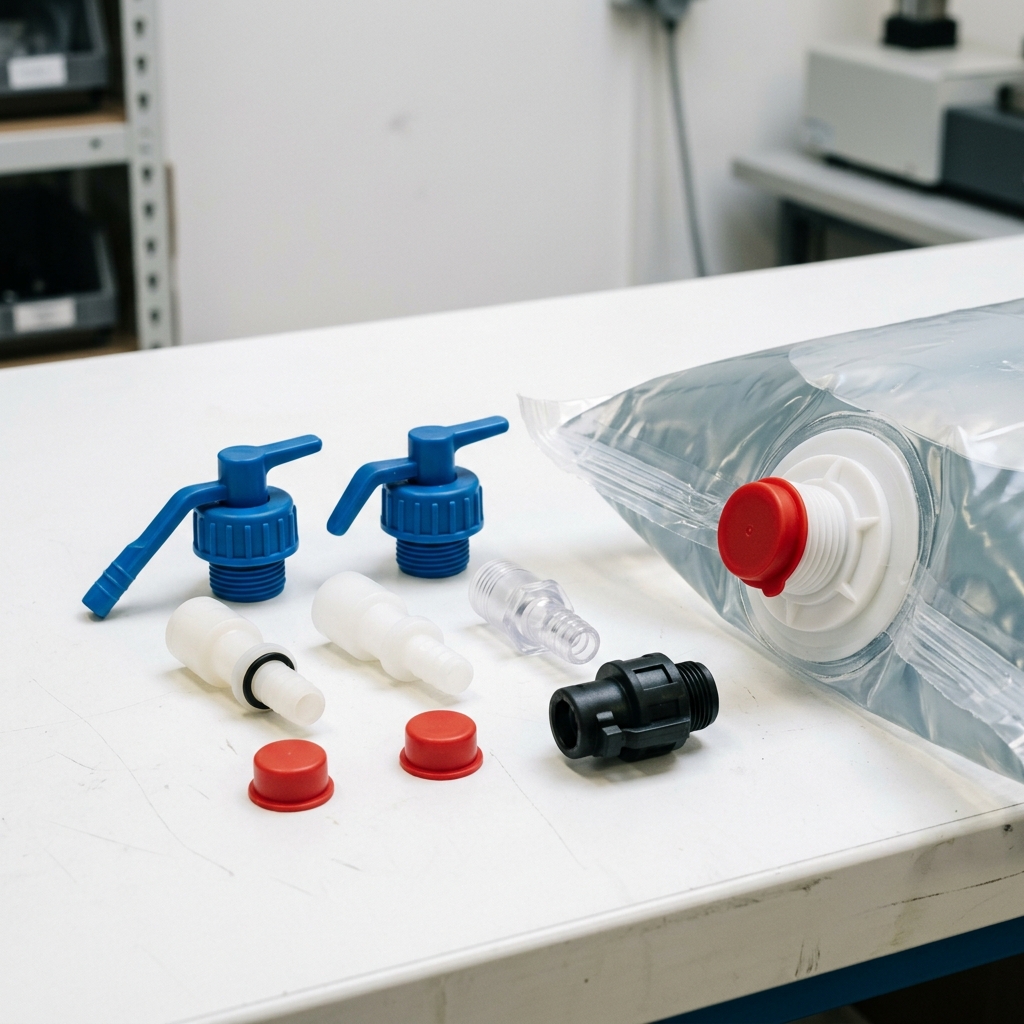
A fitment is the rigid component sealed into or attached to the flexible bag to provide filling, opening, pouring or connection to a dispensing system. In the specification sheet, identify the fitment type, material, diameter or neck geometry, location on the bag, cap or valve style, tamper-evidence requirement and intended opening method. If the system connects to a machine, include the exact connector or coupler interface and provide approved drawings or physical reference samples where available.
Describe the user workflow. Will the end user pour manually, attach a tap, connect the pack to a dispenser, or transfer the liquid through a hose? State whether repeated dispensing is expected, whether a non-drip performance objective is needed, and whether the pack will be used vertically, horizontally or suspended. A dispensing requirement without the installation orientation and user action is incomplete.
Fitments are also a common source of incompatibility. Their resin, valve components and closure system may respond differently to the product than the flexible film. Include any known compatibility concerns, required retention checks, opening-torque expectations if relevant, and a requirement for package-level validation. Confirm that the chosen fitment can be filled and handled on the intended equipment.
Record Filling and Process Conditions
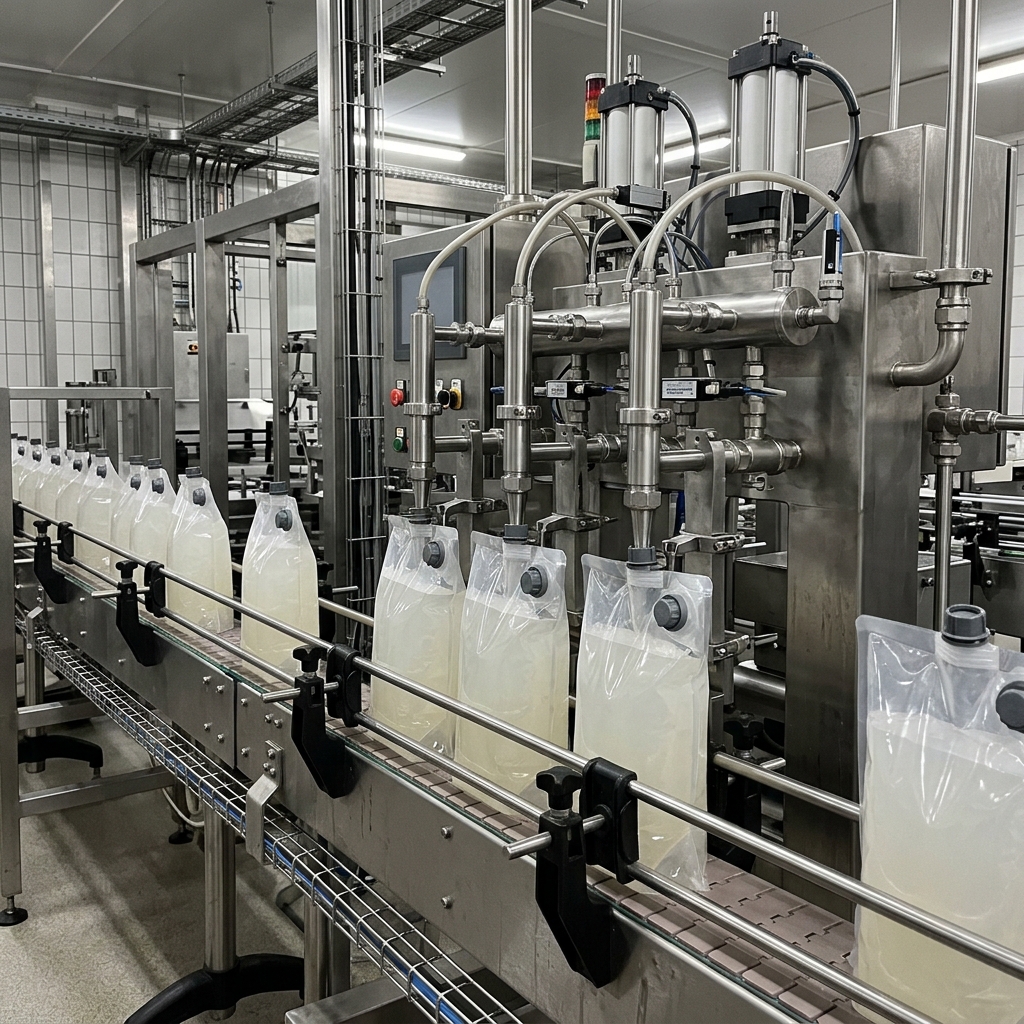
The filling section converts process knowledge into packaging requirements. Record the fill temperature range, filling method, target fill weight or volume, filling speed range where known, headspace requirement, product viscosity range and whether the pack is manually or automatically handled. Headspace is the unfilled volume left inside a package after filling. It can influence expansion allowance, handling and process consistency.
State whether the product is ambient-filled, hot-filled, aseptically filled or subject to another controlled process. Aseptic filling is a process in which a commercially sterile product is filled into a pre-sterilized package under controlled conditions. Hot filling uses elevated product temperature as part of the product preservation and packaging process. These approaches have different demands on bag construction, fitment preparation, sanitation controls and validation. See the comparison of aseptic and hot-fill bag-in-box systems before treating them as interchangeable.
List post-fill steps, including cooling, case packing, palletization, leak testing, coding and any product inversion or drop handling. If the package will be exposed to pressure during filling, transport or dispenser connection, identify the relevant conditions. A supplier can use this information to determine which prototype configuration should be tested, but the filler remains responsible for validating operation on its own line.
Include Outer Carton Requirements
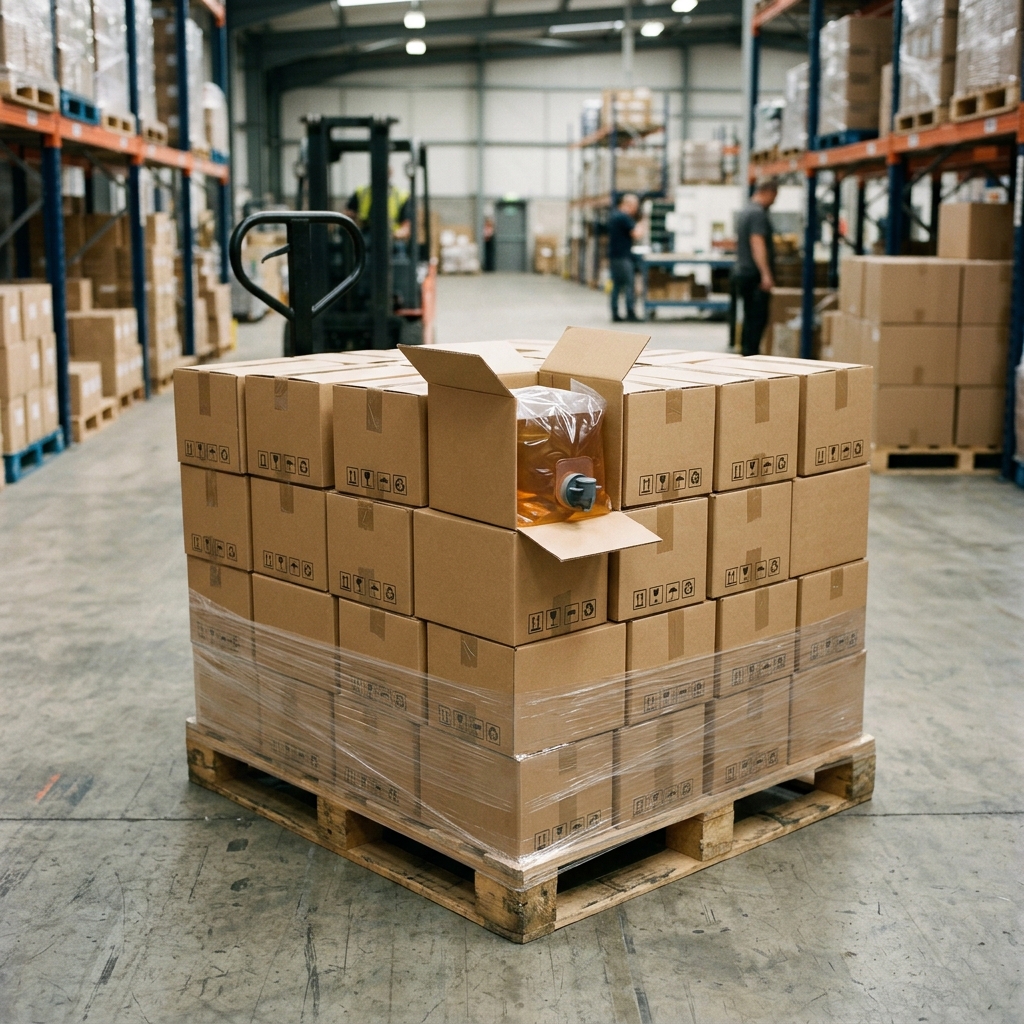
The carton is not simply a shipping box. In a bag-in-box system, it protects the filled bag, supports stacking and handling, and may provide the visible retail or foodservice presentation. Specify carton style, internal dimensions, board requirements where already established, print panels, opening features, dispensing cut-outs, carrying features and the orientation of the bag and fitment inside the case.
Give the supplier the filled gross weight, intended pallet pattern, maximum stacking condition if known, storage environment and distribution method. Identify whether the carton will be exposed to refrigerated, humid or warehouse conditions, or whether it will be placed in a dispenser. Carton requirements must be compatible with the filled bag dimensions; changes to either component can alter fit, presentation and dispensing access.
For printed cartons and bags, identify the artwork version, languages, barcode requirements, regulatory text supplied by the buyer, color references and print approval procedure. State which party owns final artwork approval. Packaging suppliers can print approved files, but the brand owner is generally responsible for the accuracy of mandatory product and market information.
Set Validation, Quality and Change-Control Requirements
Use the specification sheet to state how a proposed pack will be evaluated. Acceptance criteria should be clear enough that all parties understand what is being checked, under what conditions and against which approved sample, drawing or test method. Typical items may include visual appearance, dimensions, seal integrity, fitment placement, print registration, coding, pack cleanliness and shipment condition. Only include test methods and limits that the buyer, filler and supplier have agreed are applicable.
Compatibility testing assesses whether the product and packaging components remain suitable together over the intended storage and use period. It may include filled-pack storage, inspection for leaks or deformation, product-quality review and fitment function checks. The appropriate test plan depends on the product, material structure, process and route to market. Avoid treating an initial empty-bag inspection as proof of filled-package performance.
Include document-control details: specification number, revision, issue date, approver, effective date and change-notification requirements. Identify which changes require written approval, such as material structure, fitment, bag dimensions, carton construction, printing process or manufacturing location. This control protects both procurement continuity and product validation status when a packaging component changes.
Prepare the Sheet for Supplier Quotation
Before requesting a quotation, check that the specification identifies the product, pack capacity, bag format, material direction, fitment, filling process, carton, printing requirement, quantities, destination market and required documentation. Add annual demand forecasts only when they are planning estimates, and identify whether quantities are initial, recurring or trial requirements. A quotation based on incomplete information can be useful for budgeting, but it should not be treated as a final technical approval.
Attach supporting files where available: bag and fitment drawings, approved physical samples, carton dielines, artwork files, filling-line photos, dispenser interface details and product technical information appropriate for supplier review. The buyer should also define the required Incoterm, destination port or delivery location, shipping configuration and label requirements so the supplier can evaluate the full supply scope.
Use the bag-in-box packaging procurement checklist for brands and contract packers as a final review before issuing the request. Final material selection, bag design and fitment selection should be confirmed with the packaging supplier and the filling process after representative trials. This is particularly important when a product has unusual chemistry, demanding shelf-life objectives or a specialized dispensing interface.