Table of Contents
- What Wine Bag-in-Box Packaging Includes
- Choosing the Inner Wine Bag
- Barrier and Material Considerations
- Selecting Taps and Fitments
- Choosing the Outer Box
- Filling, Storage and Validation
- Procurement Questions for Wine Buyers
- Conclusion
A buyer-focused guide to selecting wine bag-in-box packaging, including bag structure, barrier requirements, dispensing taps, outer cartons, filling compatibility and procurement checks.
What Wine Bag-in-Box Packaging Includes

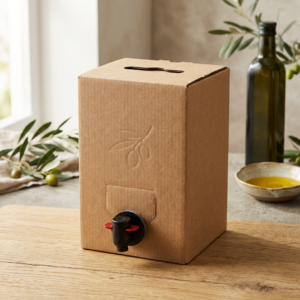
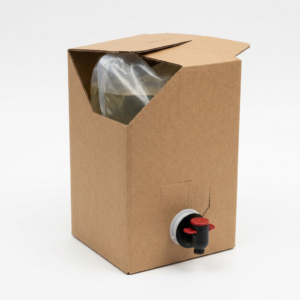
Wine bag-in-box packaging is a liquid packaging system in which wine is held in a flexible inner bag, dispensed through a tap or other fitment, and protected during handling by an outer corrugated carton. The system should be selected as one package: the bag material, seals, tap, filling method, carton and intended distribution conditions affect each other.
For wine producers, private-label buyers and contract packers, the key question is not simply which bag capacity to buy. The appropriate specification depends on the wine style, expected storage period, oxygen-management needs, filling conditions, route to market and dispensing experience required by the end user. A useful starting point is to distinguish the primary package, the liquid-contact bag and fitment, from the secondary package, the printed or plain outer carton that supports the filled bag.
Because wine can be sensitive to oxygen pickup and package interactions, a completed package should be assessed with the actual wine, filling equipment and distribution plan. For a broader explanation of the component system, see this guide to bag-in-box packaging components.
Choosing the Inner Wine Bag

The inner bag is the flexible, liquid-contact container. It is normally made from a multilayer film, meaning bonded layers of different polymers that work together to provide sealing, mechanical strength and protection from gases or moisture. Bag format should match both the wine volume and the filling line.
Choose capacity around the serving and sales model
Smaller formats can suit retail, sampling or limited household consumption. Larger formats are commonly evaluated for foodservice, hospitality, events and refill-oriented channels, where fewer changeovers and a longer dispensing window may matter. Capacity alone does not determine carton dimensions: headspace, bag geometry, tap placement and the way the bag settles inside the box all require review.
Choose bag construction around handling conditions
A bag must tolerate filling, sealing, insertion into the carton, stacking, transport and dispensing without stressing seams or the fitment area. Consider whether the product will encounter warehouse heat, repeated pallet handling, e-commerce shipment, long export transit or manual dispensing. Film thickness is only one variable; seal design, laminate construction, bag shape and fitment welding can be equally important.
Request a specification that clearly identifies the nominal fill volume, bag dimensions, film structure, fitment type and port position. Buyers should also confirm whether the proposed bag works with their filler, including how the filler grips, opens, fills and closes the package. The beverage material-selection guide from HUACANG’s bag-in-box materials resource provides a useful framework for this review.
Barrier and Material Considerations for Wine

Barrier describes a packaging material’s resistance to the movement of gases, vapours or other substances through the package. For wine bag-in-box packaging, oxygen barrier is a central consideration because oxygen exposure can affect wine quality over time. The required level is not universal: wine composition, intended shelf life, storage temperature, residual oxygen management, filling conditions and post-opening use all influence the specification.
Multilayer bag films may combine sealing layers with a barrier layer and structural layers. The supplier should explain the intended role of the proposed structure rather than relying on a generic material name. A material suitable for one beverage may not be appropriate for another wine program, particularly where the target storage period or distribution temperature changes.
Also review migration and sensory compatibility. Packaging should be evaluated for possible effects on aroma, flavour and appearance under the relevant conditions. This is especially important for wines with delicate aromatic profiles. The practical outcome is a validation program using representative wine, the final pack configuration and realistic storage conditions.
Do not treat a high-barrier film as a standalone solution. Oxygen control also depends on filling practice, headspace management, bag and tap integrity, closure performance and the time between filling and use. Final material selection should be confirmed with the packaging supplier and the filling process before commercial production.
Selecting Taps and Fitments for Wine Dispensing

A fitment is the component attached to the bag that provides an opening for filling, dispensing or both. A tap is a dispensing fitment designed to control liquid flow. In wine applications, the tap must work with the bag construction and the outer-box die-cut, while also delivering an intuitive pour for the intended user.
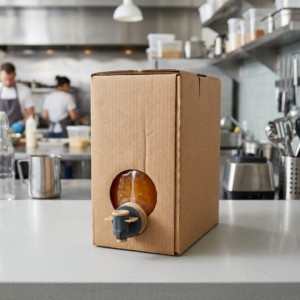
Start with the dispensing environment. Retail consumers may value straightforward opening and controlled pouring. Foodservice operators may prioritize repeatable service, access through a carton opening and compatibility with a dispenser or back-bar setup. The tap profile, actuation method, outlet orientation and tamper-evident features should be evaluated in the actual carton rather than as loose components.
Fitment selection also affects filling. Confirm the filling port geometry, capping or closure method, hygienic handling requirements and compatibility with the equipment’s tooling. A tap that is convenient in use can still cause production difficulty if it does not suit the installed filler. Leak testing and dispense trials should cover the bag-to-fitment joint, tap closure and carton access panel.
Where a program uses a specialized filling process, align package development early. The distinction between processing approaches is explained in the aseptic versus hot-fill bag-in-box guide; the relevant approach for a particular wine must be determined by the product process and commercial requirements.
Choosing the Outer Box for Protection and Presentation

The outer box protects the filled bag, carries product information and creates the dispensing interface. Its corrugated-board grade and structure should be matched to the filled weight, stacking pattern, pallet arrangement, handling method and destination climate. A carton that looks suitable at the artwork stage may not provide adequate support during long-distance transport or warehouse storage.
Review the box as a structural component. The tap aperture should hold the fitment in the intended position without obstructing activation. The top opening and loading sequence should allow consistent bag insertion. Corners, handles, tear features and dispensing panels require assessment for their impact on compression strength and user experience.
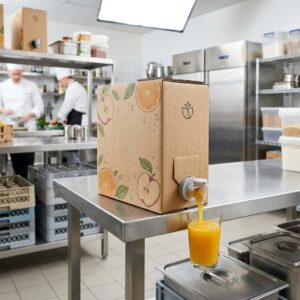
Printed cartons also need an artwork process that accommodates regulatory text, batch or date coding areas, traceability needs and destination-market language. Keep critical marks away from folds, glue areas, handles and dispensing cut-outs. For premium wine positioning, graphical finish should be considered alongside carton function, not as a substitute for it.
Ask to assess filled samples through realistic transit and storage conditions. Carton selection should be finalized alongside the bag and tap because the three components operate as an integrated system.
Filling, Storage and Validation Before Approval
Wine bag-in-box packaging must be designed around the filling operation. Share the filling temperature, product viscosity, fill-volume tolerance, target line speed, sanitation procedure, filling orientation and closure sequence with the packaging supplier. These details help determine whether the bag, fitment and seal arrangement are appropriate for the line.
Storage conditions matter before and after opening. Confirm the expected warehouse temperature range, exposure to light, pallet configuration, transport route and maximum distribution period considered by the brand. After opening, the dispensing behavior and intended rate of consumption should be considered as part of the customer experience. These factors affect the package-validation plan but do not replace product-specific shelf-life testing.
Practical qualification normally includes line trials, leak checks, seal inspection, carton fit verification, dispensing trials and storage evaluation with the final wine. For international programs, also check country-specific labeling responsibilities and any applicable food-contact compliance documentation required by the destination market. The packaging supplier can provide relevant package information, while the brand or importer remains responsible for confirming its own market obligations.
Procurement Questions for Wine Bag-in-Box Packaging
A clear request for quotation reduces avoidable revisions. Provide the product category and wine characteristics, nominal bag capacity, annual or campaign quantity, desired bag and carton format, printing requirements, filling method, tap or valve preference, destination market and planned delivery configuration. Where a tap has already been qualified on equipment, include drawings or samples and identify any non-negotiable dimensions.
Ask suppliers to state the proposed bag structure, fitment specification, carton construction, artwork requirements, sampling approach and quality-control scope. It is also useful to identify who owns final approval for product contact, filling-line compatibility, print artwork and shipping configuration. This prevents a package specification from being approved by marketing alone when technical teams still need to validate it.
For a structured buyer checklist, consult the bag-in-box packaging procurement checklist for brands and contract packers. It can help procurement, quality and operations teams align the information needed before a wine packaging project enters sampling or production.
Conclusion
Effective wine bag-in-box packaging begins with the wine and the operating conditions, then matches the bag, barrier structure, tap and carton to that brief. The strongest specification is one that has been reviewed across product quality, filling compatibility, dispensing, transport, artwork and destination-market needs. Final bag material and fitment selection should be confirmed with the packaging supplier and validated on the actual filling process before launch.